

Toy toy hota hai… toh girls’ toy kya hota hai?”
That’s what I asked a shopkeeper once when he asked me if I wanted toys “for boys or for girls.”
He looked visibly uncomfortable.
I smiled—but inside, I wasn’t smiling.
I have come to realise that even today, no matter how progressive we think we are, we still hand our children quiet messages about who they are allowed to be.
Not through slogans. But through choices. Through silences. Through what we pick off the shelf—and what we don’t..
We like to think that we’ve moved beyond “pink is for girls” and “blue is for boys.”
That we understand gender equality isn’t about sameness, but about opportunity.
And yet—
When a parent asks me what toys they should get for their son, kitchen sets and dolls never make the list.
Even more unsettling are the woke parents who say, almost with pride, “Oh, she’s not into dolls or all that princessey fluff.”
As if dolls, kitchens, dress-up and caregiving aren’t worthy pursuits for a little girl—or a little boy.
Why are we so afraid of certain kinds of play?
Do you know why children gravitate toward dolls?
Because their first and most profound connection is to a caregiver.
They’ve been fed, changed, held, rocked, cooed to.
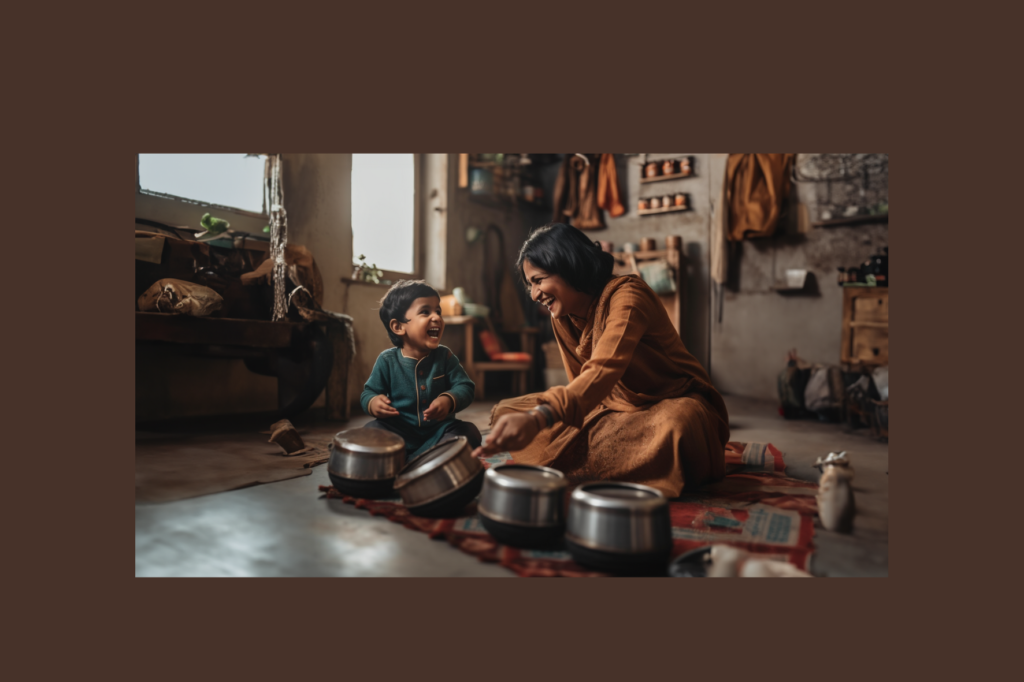
And they want to model that care in the only language they know: Play.
They show us exactly how they are spoken to at home.
Do you know why they are drawn to kitchen sets?
Because food is the first form of love they understand.
They hear the conversations around food three times a day.
Play is never random.
Play is intentional.
And if you have ever watched a child in deep, uninterrupted play—
You’ll see it: the problem-solving, the repetition, the innovation, the story-building.
This is how the brain learns.
It is the sandbox where empathy is practiced, roles are tested, problems are solved.
Now imagine—into that sacred space—we bring our labels.
“Don’t sit like that. That’s not how girls sit.”
“Don’t cry like a girl.”
Imagine if a boy was encouraged to replicate, in play, the care he receives at home.
Would he grow up more attuned to the emotional needs of others?
Would he take paternity leave with pride, and not settle for a week of paternity leave?
Imagine if a girl was given wild animals, construction tools, and space to build.
Would she walk into science labs or leadership roles because she never doubted it was hers to begin with?
And what if we chose clothes not by gender but by function—
Can I hang upside down in this?
Can I run in this?
Can I paint, climb, explore in this?
I wonder what kind of messages that would send.
So what if we dropped the labels?
What if we let the children show us how they want to play, how they want to learn, who they want to be?
What if we saw a child simply as a human, wired to explore, to connect, to create?
Because maybe the question isn’t:
“What toys should I buy for my daughter or son?”
But:
“What version of the world am I handing over to them?”
Pallavi is the Co-Founder & CEO at The Nurturant: Transforming early childhood education with holistic, research-driven approaches. She is also the Founder of Tinker Lab, leading a lab school revolution with child-led, inquiry-based learning






 )
)