



In March, we spent time at the Aarushi Shelter Home for Girls in Gurgaon, run by Salaam Baalak Trust (SBT).
It was exam season. Some of the girls were resting, some had just finished their meals. The home was moving through its usual rhythm. We walked through the space, met a staff member briefly, and spent time understanding the day-to-day functioning of the home.
SBT’s work spans multiple layers of care.
Across Delhi, they run 13 contact centres that operate through the day, and 6 long-term shelter homes. Two homes are for girls and four are for boys. They also run schools and continue follow-ups with children who have been restored to families, across Delhi, Uttar Pradesh and Bihar.
On an average day, there are about 400 children under their care. Children in the homes are typically between 6 and 18 years old. To ensure that families don’t get separated, sometimes younger siblings also stay along. One of the larger homes has close to 100 children, including children with special needs.
Their days are structured and well-planned. Children wake up in the home, have breakfast, and carry packed lunches to school. Many attend nearby private schools that are chosen with care, keeping in mind both academics and how schools respond to children from difficult circumstances.
After school, they return to the home. Teachers are available through the afternoon to help with homework and provide additional support. A doctor visits every week. For further care, children are taken to government hospitals where SBT has existing partnerships. There is also a mental health team that works with the children over time, through counselling and regular sessions.
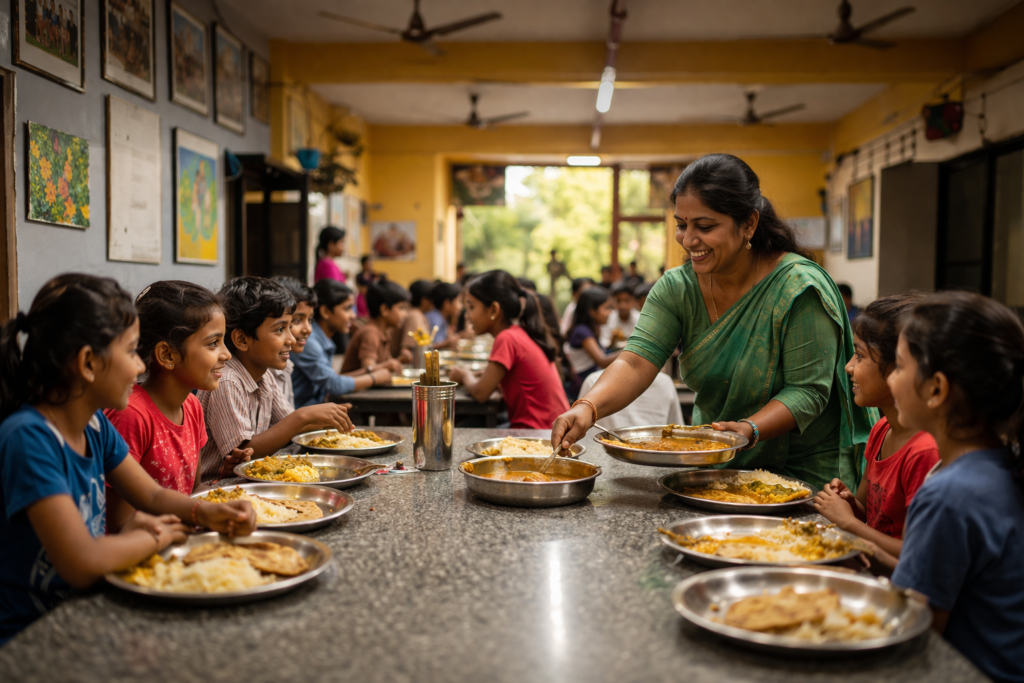
In the evenings, a mix of activities are planned depending on age and interest. Some children spend time at the park, others watch television, while some stay back to draw, paint, or engage in art-based activities. Later, everyone gathers for dinner before heading to bed. This rhythm repeats each day, holding a sense of continuity across the homes.
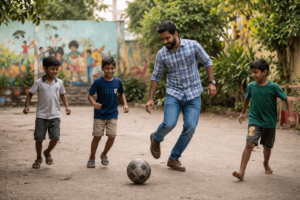
There is also a strong sense of ownership among the children. The annual theatre production is written and performed by them. Stories are chosen by the children, shaped by their experiences, and presented to large audiences. Staff support the process, but the direction comes from the children themselves. Sports play a bigger role in the boys’ homes, with football and other activities forming a regular part of the day. Festivals are celebrated together. Libraries are present in the homes, and there is growing interest in building more structured storytelling spaces over time.
One conversation really stayed with us during the visit.
Staff shared how children express their needs differently. Younger boys, especially, often seek physical comfort, something they may have received from mothers or female caregivers. When they form a connection with visitors, they tend to stay close, holding on to that presence for reassurance. It is a need that is deeply human, but not always easy to meet in institutional settings.
Girls, on the other hand, were described as taking on responsibility earlier. They often hold roles within the home, participate in committees, and navigate independence differently. Many express themselves through art and theatre, with some pursuing these interests further through partnerships. As they grow older, the need shifts towards support in navigating relationships and understanding the world beyond the home.
Care also extends beyond the home. Based on Child Welfare Committee permissions, children stay for as long as needed. When they leave and return to families, SBT continues to stay in touch. They also run an alumni network that supports young people with education, housing, medical needs, and ongoing mentorship.
Within the home, it is the staff who hold this system together. Care here often takes on the role of parenting, but at a very different scale. A single staff member may be responsible for far more children than what we would consider ideal in a family setting. When asked about qualifications, the emphasis was not on formal credentials as much as the ability to care, to stay, and to build connection over time.
It raises a question that stayed with us: what does an “institutional parent” look like for a child, and how is care experienced when it is shared across many people rather than held by one?
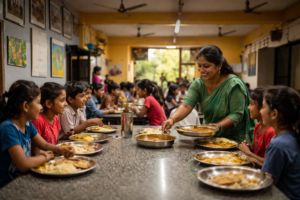
Each home runs 24 hours a day, with coordinators, caregivers, teachers, and health workers working in shifts. At contact centres, smaller teams manage teaching, health coordination, school engagement, and reporting. The work is continuous, often moving across multiple roles within a single day.
Children grow up within this system with a strong sense of independence. They learn to manage routines, take responsibility, and participate in shaping the spaces they live in.
Across this, we also found ourselves returning to the elements that shape early childhood more broadly. Where does play sit within structured days like these? How do moments of rest, imagination, and quiet time find space within institutional rhythms? What forms do social bonding and storytelling take when families are not physically present? And how might nature, creativity, and everyday skills continue to be held and expanded within these environments?
As we left, the day was continuing as usual. School, meals, conversations, rehearsals, and play. The visit offered a closer look at how care is built and sustained over time, across routines, relationships, and the people who show up every day to hold it together.
_________________________________________________________________________________________________________
Thank you to Salaam Baalak Trust for opening your doors to us and taking the time to walk us through the Aarushi Shelter Home.
It was valuable to spend time understanding the depth and continuity of your work, and to see how care is held across everyday routines, from schooling and health to art, play, and long-term support. We especially appreciated the openness with which you shared both the strengths and the ongoing realities of running these homes.
Grateful for the work you do, and for the opportunity to learn from it.




 )
)