


Play involves so much; it holds questions, curiosity, choices, and revelations. On this International Day of Play, we find ourselves circling around a particular question: What do children choose when left to themselves? And what might these choices reveal about how they see the world, learn and relate?
We’ve been noticing that play, in its truest form, is not something adults can make happen. It’s something children lead. And when we observe them closely, we saw – what they gravitate toward, what they ignore, what holds their attention, we begin to see play not just as a set of activities, but as a window into how children think, feel, and make sense of things.
What choices are made in the course of play? And what do these choices tell us?
Story 1 – Work or Play?
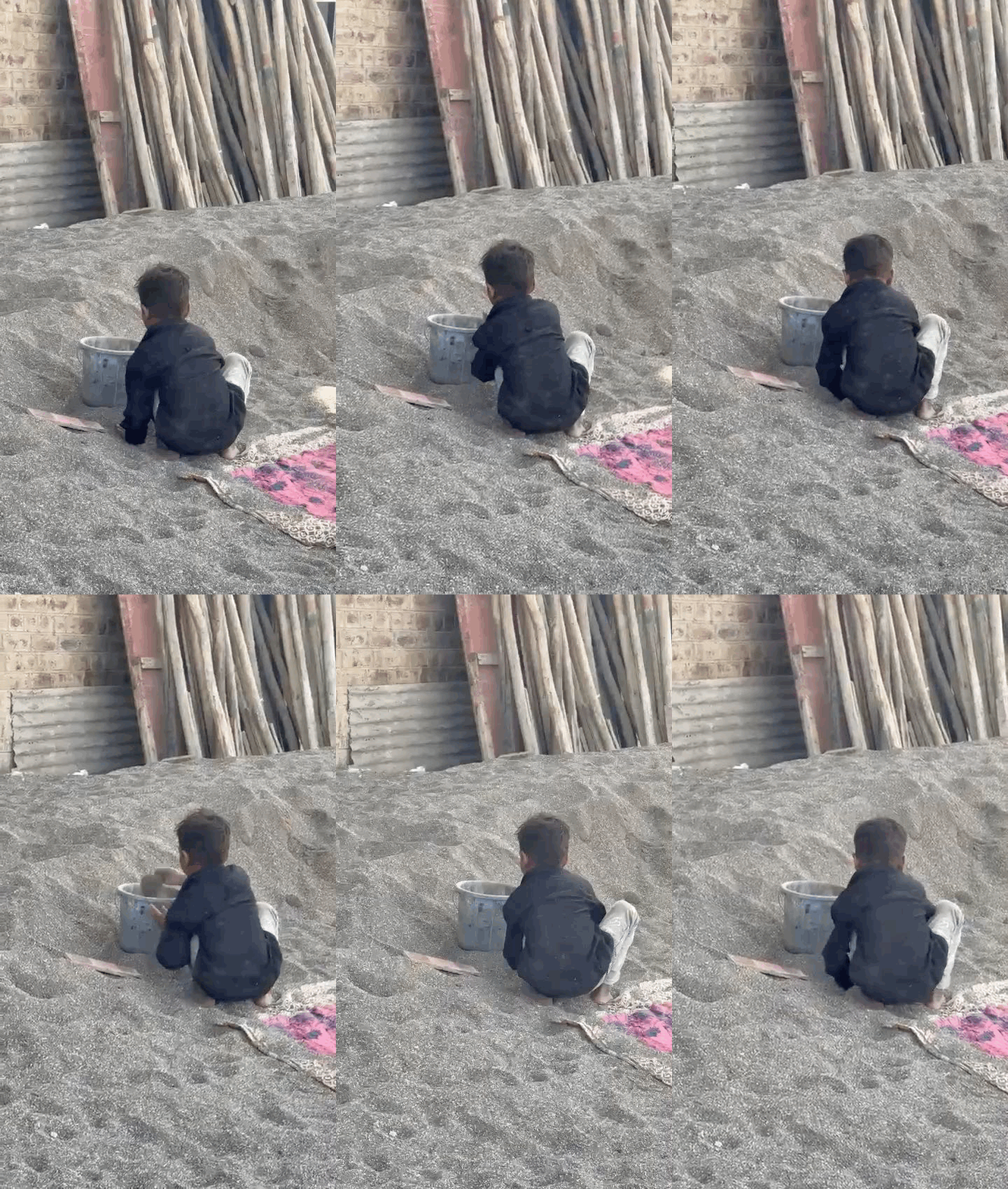
Walk by any construction site and you will spot kids, left, for the most part to their own devices while their parents go about their day of work. On a recent observation of this kind, we spotted a group of kids and just lingered. One particular boy, unaffected by the presence of us strangers, was occupied, filling sand from a huge pile into a bucket. He did this diligently until the bucket was full and then carried the bucket carefully to the other end, only to pour it all out, once again. We asked a girl, presumably his sister, who instead had chosen to chat with us what he was doing. “Ye kya kar raha hai?”(What is he doing?) Her answer came almost instantly. “Woh khel raha hai” (he’s playing).
 .
. 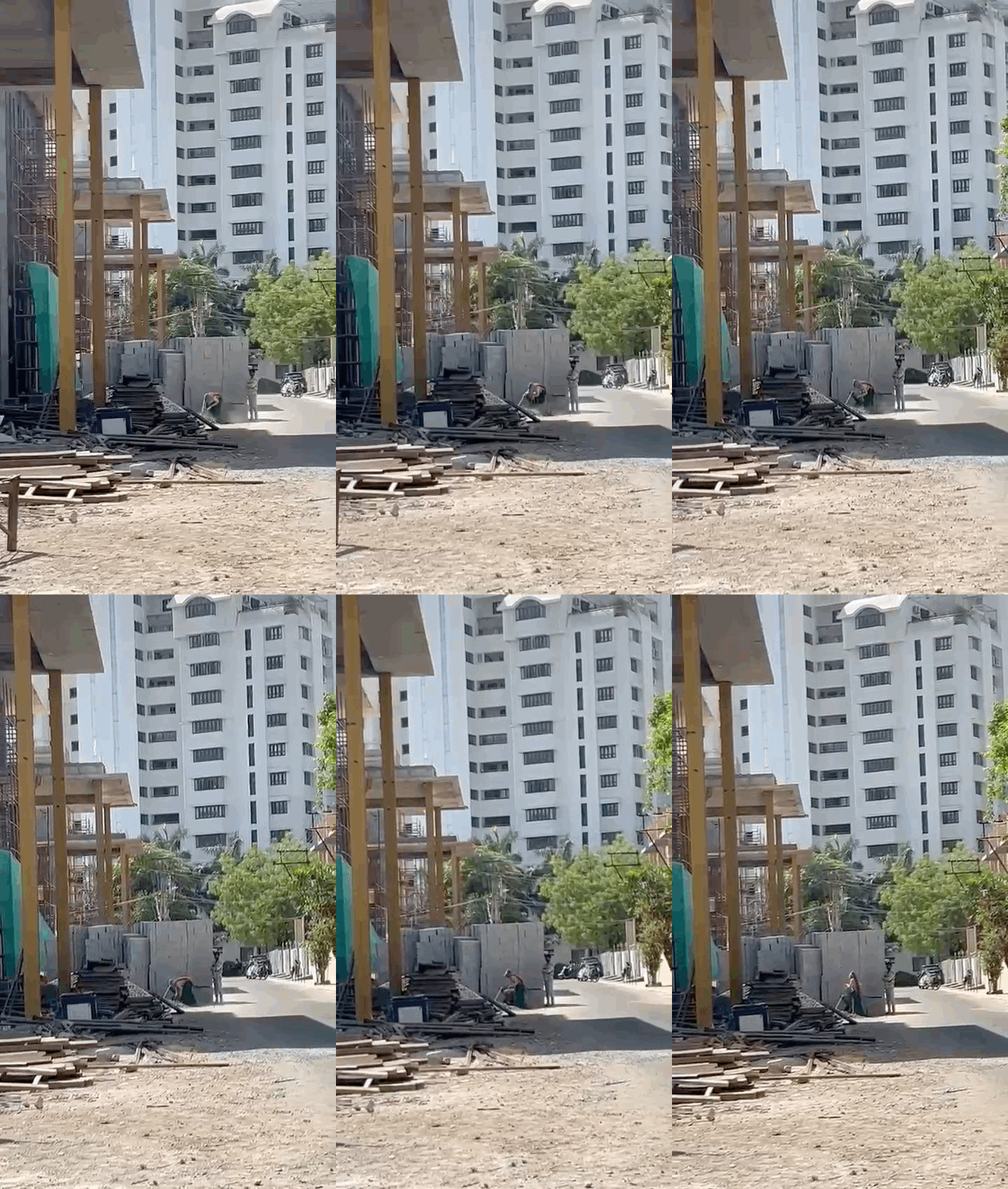
Just a few 100 meters away, were his parents, doing this exact task: Filling mud into huge baskets and carrying them across; not for play, for work.
Of all the play the child could have engaged in, and of all the materials he could have chosen to play with, what made him choose this? And what does this choice tell us?
Story 2 – My friend, the cot
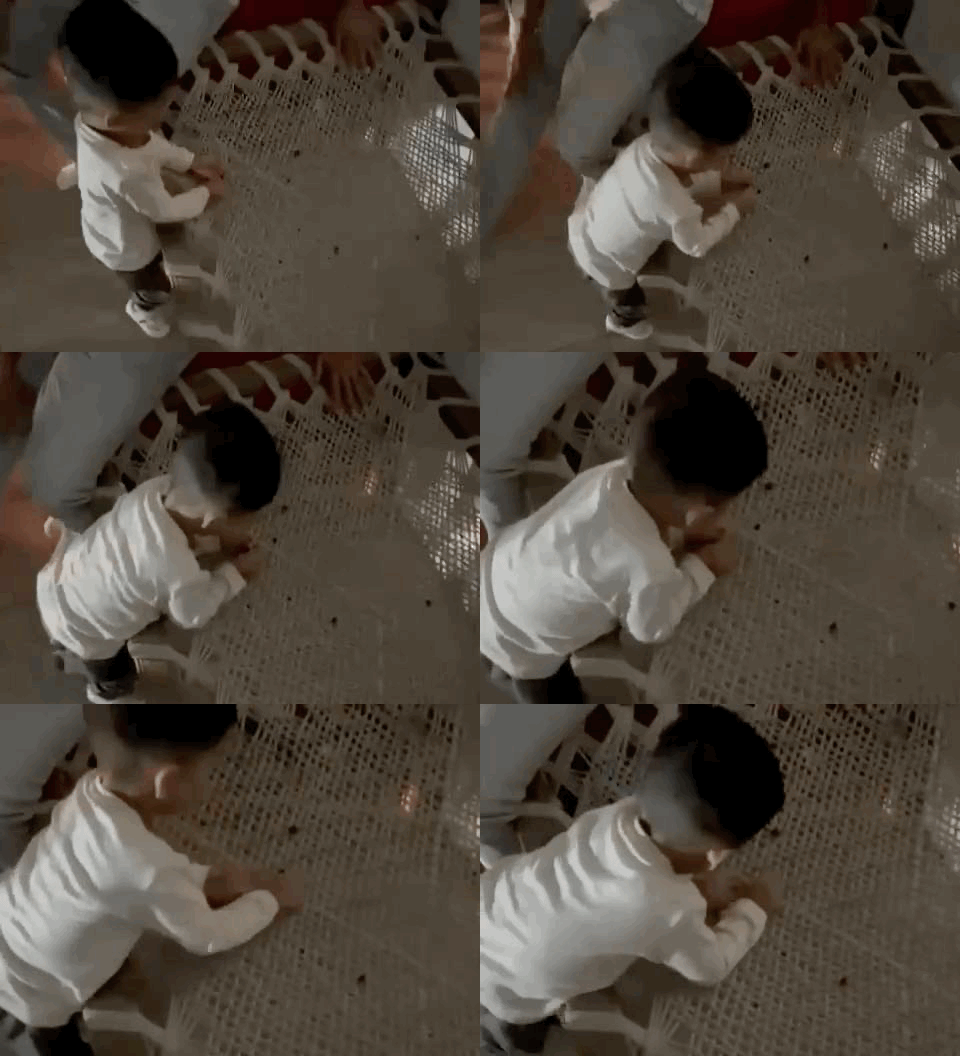
Unfazed by the family chatter around him, Niyansh snuck off, once again, to hang out with the cot, a traditionally woven charpai, a mundane fixture at the farm. This time, he had collected roses. Carefully, he pulled apart its petals, and one-by-one pushed them through the woven net of the cot. He pushed, deliberately, till they disappeared from sight. Then jumping off the cot, he crawled underneath to see where they had landed. This was not the first time we had observed Niyansh engage in this investigation, not the second time even. It was the third time. The material occasionally changed – pebbles instead of roses, tomato peel instead of stones, but his inquiry persisted over several months.
In a room full of people he knew and loved, why did Niyansh choose the cot? What did it offer him that others did not?
Story 3 – A toy for me, a tool for you
A few months back, a friend was visiting with his 2 and a half year old. I looked around myself and instantly panicked a bit. Was my house entertaining enough for someone that young? I positioned whatever ‘age appropriate’ things I owned – some lego pieces, a ball, a channapatna doll, some figurines, some childrens’ books at accessible heights should he want to grab it. Ignoring all my clumsy efforts to please him, however, Kian went on to spend the next three hours toggling between 2 activities – The first was to climb up on to the back of the sofa and crawl past people’s heads, and the second involved being completely mesmerised by a pair of silicone tongs that had been brought out to serve food.
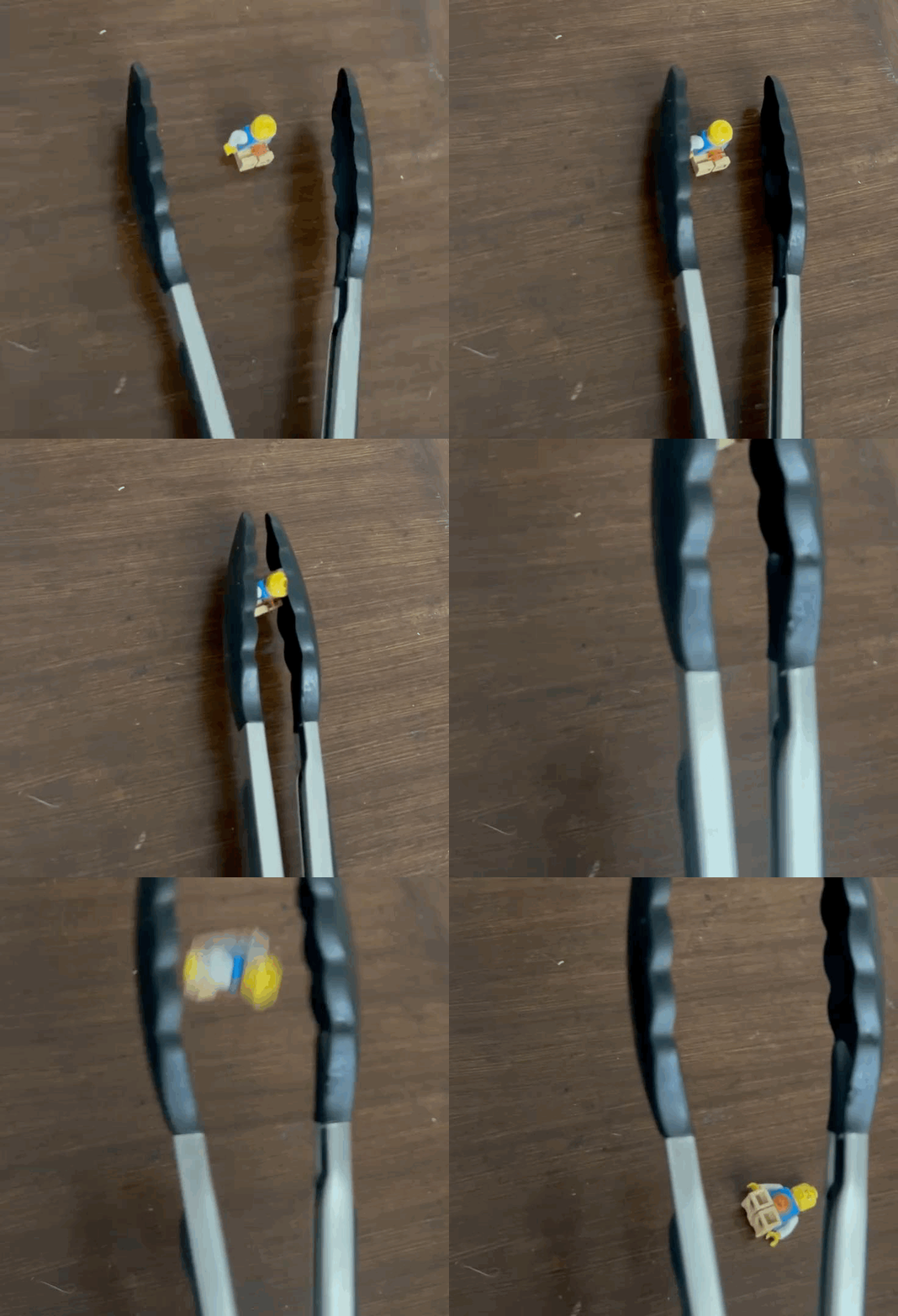
With great care, he picked up the little lego man with the tongs, went over to his mother and released it into her palms. He kept at this for a while, playing with his grip strength. Gradually, the rigour of the experiments changed; he picked up something bigger, something softer and something a little too small.
I made a mental note that day, ‘Tongs as potential toys’. Yet in the same breath, I had to wonder.. Would another two and a half year old have made the same choice of play? Would Kian himself, on another day, have made this choice?
Story 4 – Besides the obvious
We were sitting together on the floor, playing. My niece, Saanvi, kept calling out my name – looking up at me expectantly. Assuming one of the bright, colourful rings from her stacking toy had caught her attention, I picked the pink ring and handed it over. She took it gratefully from my hand, but continued to point. I handed her another, then another, thinking maybe there was one particular color she wanted, perhaps the last one, the yellow ring.
But her eyes didn’t settle. At last, she grabbed the plain, tall grey rod in the center. The part that I never really thought of as the toy itself, just something to hold the rings. She held it upright, examined its base closely, turned it around thoughtfully, fully absorbed.
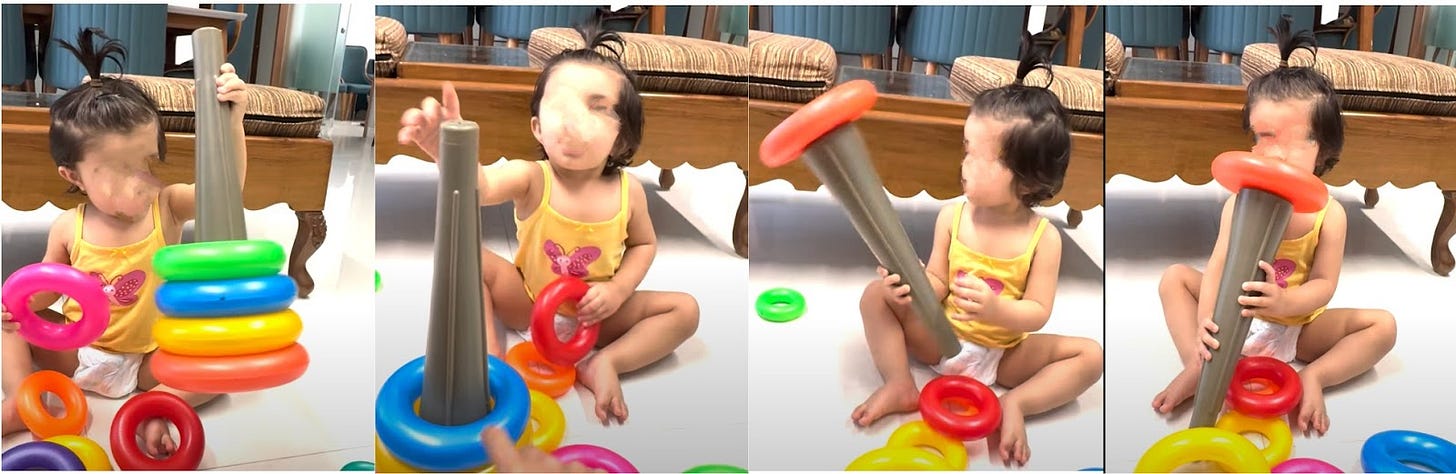
To my adult eyes, the rings were obviously the main attraction of this toy. But clearly not for Saanvi. It made me wonder: What does the child choose? How do they see things so differently?
How Kids See Museums
Recently, we found an old photograph titled “How Kids See Museums.” In the picture, two children sit on a gallery floor, not looking at the celebrated artwork on the walls, but peering into a small vent near the floor, completely captivated. Just like that and alongside this photo, we found another image from our own phone galleries. It shows a little girl in a space designed for play, with swings right behind her. Yet, she chooses instead to carefully collect stones from the ground.
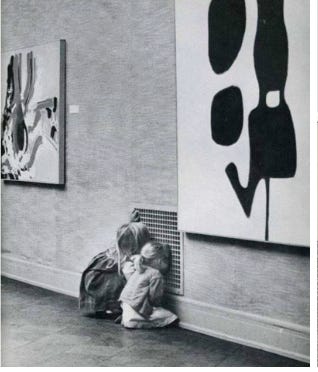
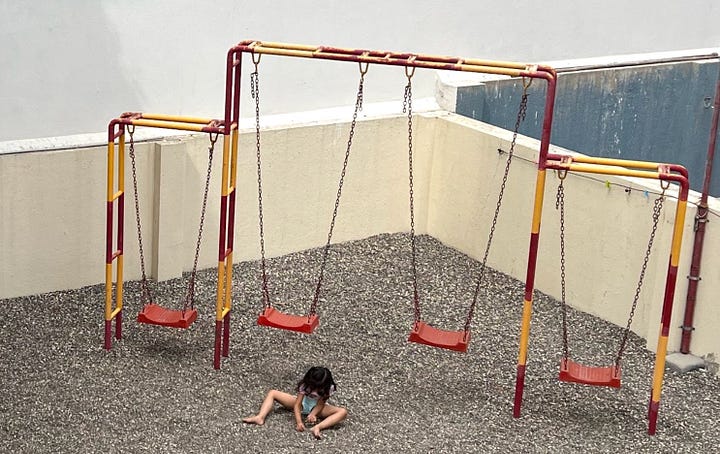
Picture on the left is from “How Kids See Museums” by Herb Slodounik, 1968, The Montana Standard newspaper and picture on the right was captured by us!
In cognitive science, learning is described as the act of grasping fragments of reality, bringing them inward, and slowly forming a personal model of the world.
Watching children at play brings this definition to life. They don’t wait for ready-made meanings – they gather, test, discard, return. They choose what to engage with, what to repeat, what to ignore.
So on the ‘International Day of Play’, we want to seed these two questions in your minds – What do children choose? And what do their choices tell us?
We are creating a Gallery of Children’s Choices :
This gallery is our way of celebrating the International Day of Play by honoring what children choose, again and again. We’re adding our observations about ‘What children choose’ – the idea is to let this question unfold when all of you reading add your bit.
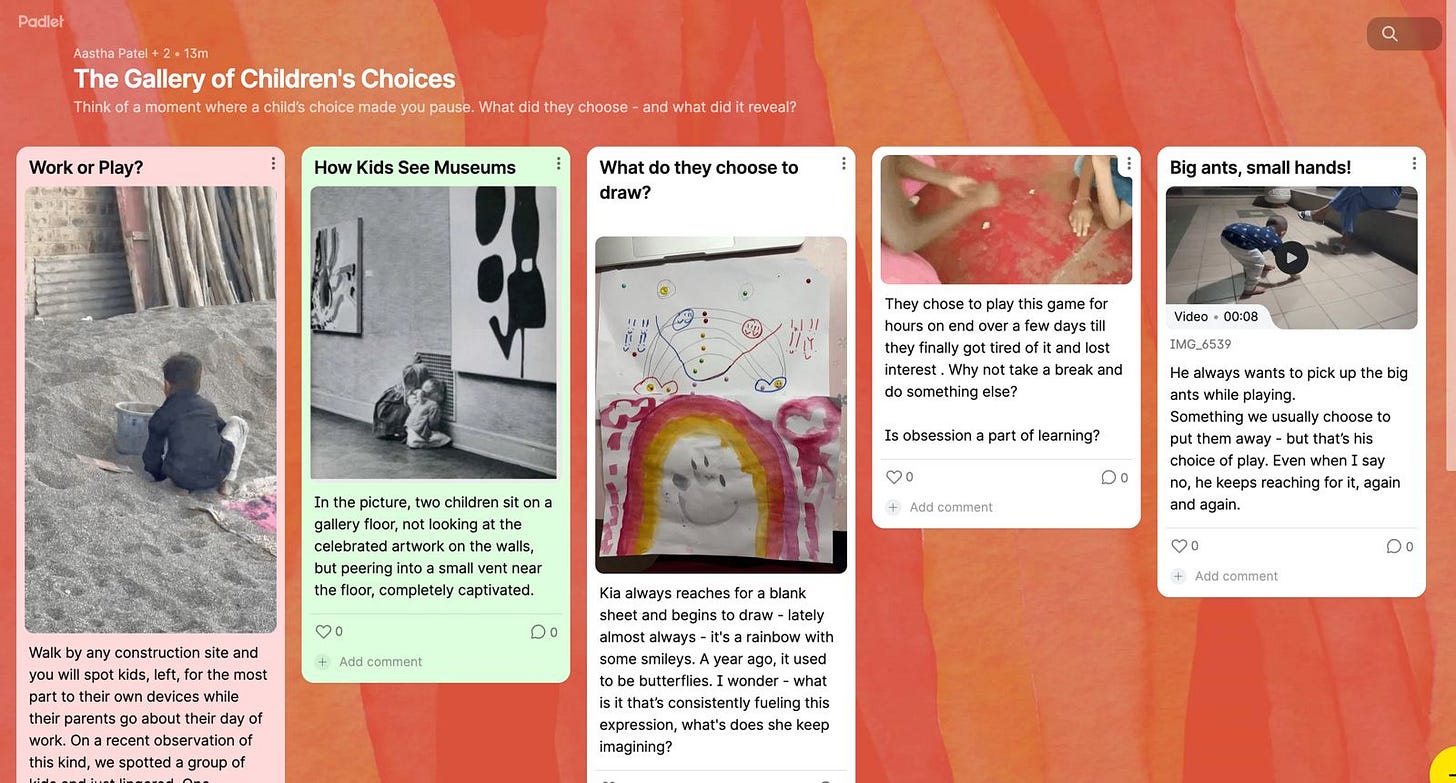
Add your own observations, stories and more to the gallery by clicking on this link or if you have your phone, scan the QR code below.

Thank you for reading. We hope these questions stay with you, just as they’ve stayed with us. Do scroll through the gallery of children’s choices, add your thoughts and help us build a shared perspective on how children learn through what they choose.
 < Click here to view the substack post directly and to subscribe to ‘Leaves in Pocket’.






 )
)