

Every school has an annual field trip. Children look forward to it for weeks, teachers plan every detail, and everyone returns with wonderful memories.
But after years of working with schools across India, I have often wondered if we have unintentionally reduced community learning to a single event on the school calendar.
During visits to schools in Iceland and Switzerland, one idea quietly stayed with me. The community wasn’t outside the school. It was part of it. Libraries, parks and neighbourhood spaces weren’t special destinations children visited once a year. They were familiar places children returned to regularly, building relationships with the people who brought those spaces to life.
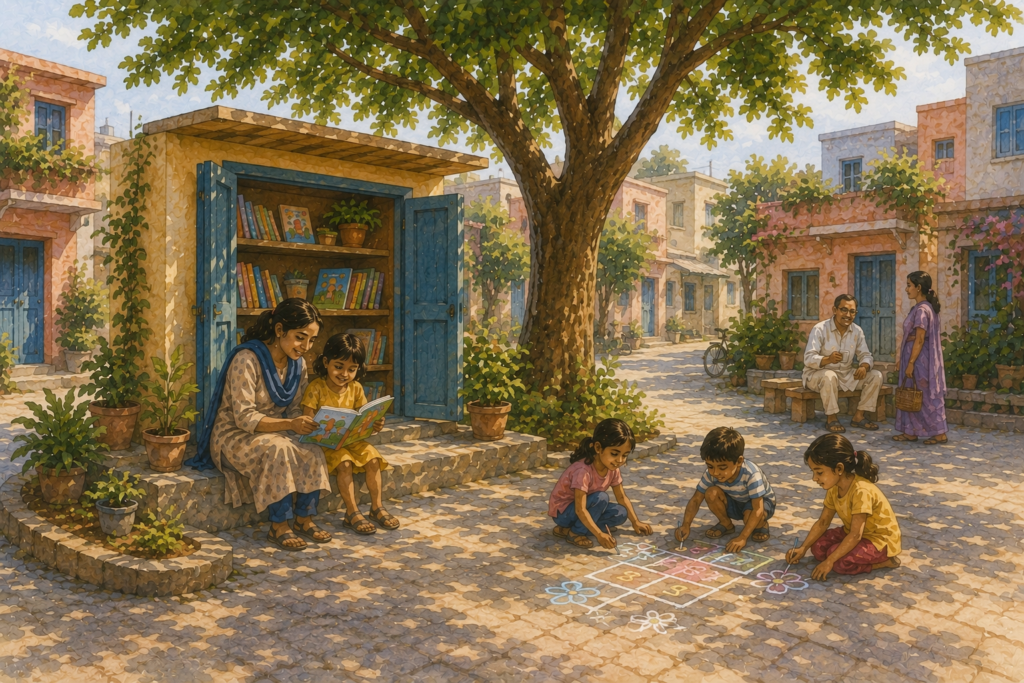
When I came back to India, I realised that our neighbourhoods are equally rich with possibilities. Almost every school is surrounded by parks, libraries, swimming academies, local businesses, artists, markets and people with stories worth sharing. The learning has always been there. We simply haven’t invited it into our children’s everyday lives.
Perhaps what we need isn’t more field trips.
Perhaps we need learning neighbourhoods.
The difference is simple.
A field trip is a visit. A learning neighbourhood is a relationship.
Imagine children returning to the same library every month until the librarian knows exactly what they love to read. Imagine a swimming academy who celebrates not just a child’s first lap, but their growing confidence. Imagine children visiting the local market often enough to understand seasons, food and community, not from a textbook, but through conversations with the people who grow, sell and prepare it.
Children don’t just learn from places.
They learn from people.
When schools build lasting relationships with the communities around them, every visit becomes more than an activity. It becomes an opportunity to belong. Children begin to recognise familiar faces, ask deeper questions and see learning as something that exists beyond classroom walls.
Building a learning neighbourhood doesn’t require grand infrastructure or expensive programmes. It begins with a simple shift in perspective: looking beyond the school gate and recognising the wealth of learning already waiting there.
Perhaps the future of education isn’t about planning better field trips.
Perhaps it’s about opening the school gate a little wider and helping every child discover that learning has always lived just beyond it, in the people, places and relationships that shape the communities they call home.



 )
)