

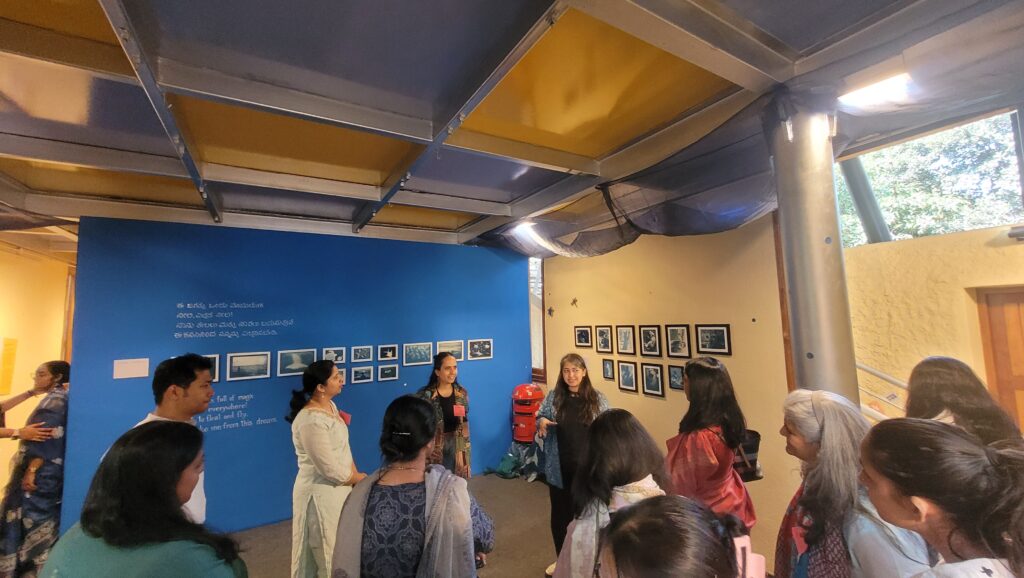
On 23 January, at Makkala Hubba in Freedom Park, Bachpan Manao gathered a small group of educators, designers, CSR leaders, parents and practitioners to reflect on what it means to invest in childhood. Before we began the conversation, we walked through the festival grounds where children were running between installations, building small structures, listening to stories and moving with ease. The energy of the space stayed with us as we sat down.
Midway through the Baithak, we shifted the language. If we speak so often about return on investment, what would childhood itself consider a return?
The post-its filled slowly.
“Joy.”
“Playing.”
“Thinking.”
“Friendship.”
“The amount of fun and excitement and engagement that anything creates.”
The words were simple and unembellished. They described experience rather than output.
One note read, “You would fall and get up and try again.” The return was not in avoiding failure, but in being allowed to fall and recover. Resilience, as something practised naturally.
“Freedom” appeared more than once. It was not defined or qualified. It stood alone, as if explanation would reduce it. The sense was that childhood values space to move and explore without constant supervision or correction.
Another note said, “Better human beings.” It was broad, but it suggested that the return childhood might care about is not immediate performance, but the shaping of character over time. Alongside it sat “Emotional well-being for everyone,” extending the idea beyond the individual child to the wider community.
Some responses were vivid and specific. “My rock or shell collection would be in a museum.” It carried both humour and seri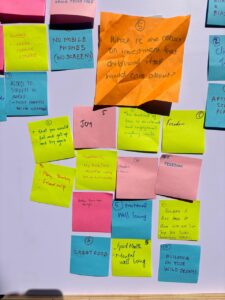 ousness. What a child treasures is not trivial in their world. The act of collecting, noticing and valuing small things becomes part of what matters.
“Lesser chores” appeared, perhaps hinting at relief from adult burdens. “Building on your wildest dreams” suggested room for imagination without immediate filtering for practicality. Another note imagined “a play area home with not just toys but slides and tinkering spaces,” an image that pointed toward experimentation and movement rather than consumption.
Mental well-being and good health were written plainly. In a conversation framed around return on investment, this felt significant. Health as an outcome in itself, not a by-product.
Across the wall, there was a noticeable absence of conventional economic language. No one wrote productivity or competitiveness. The returns described were relational and experiential.
The exercise did not dismiss accountability. It simply shifted the vantage point. When childhood becomes the evaluator, the indicators change. Instead of asking what prepares a child most efficiently for the future, we begin to ask what makes their present life feel rich and meaningful.
Seen through that lens, return is measured less in accelerated milestones and more in whether children are curious, connected and emotionally steady. Whether they are allowed to take small risks, to collect shells, to laugh, to form friendships that feel real.
The prompt did not produce a checklist. It produced a different kind of clarity. If childhood itself were keeping score, it might not be looking at grades or speed. It might be paying attention to whether life feels alive.





 )
)