



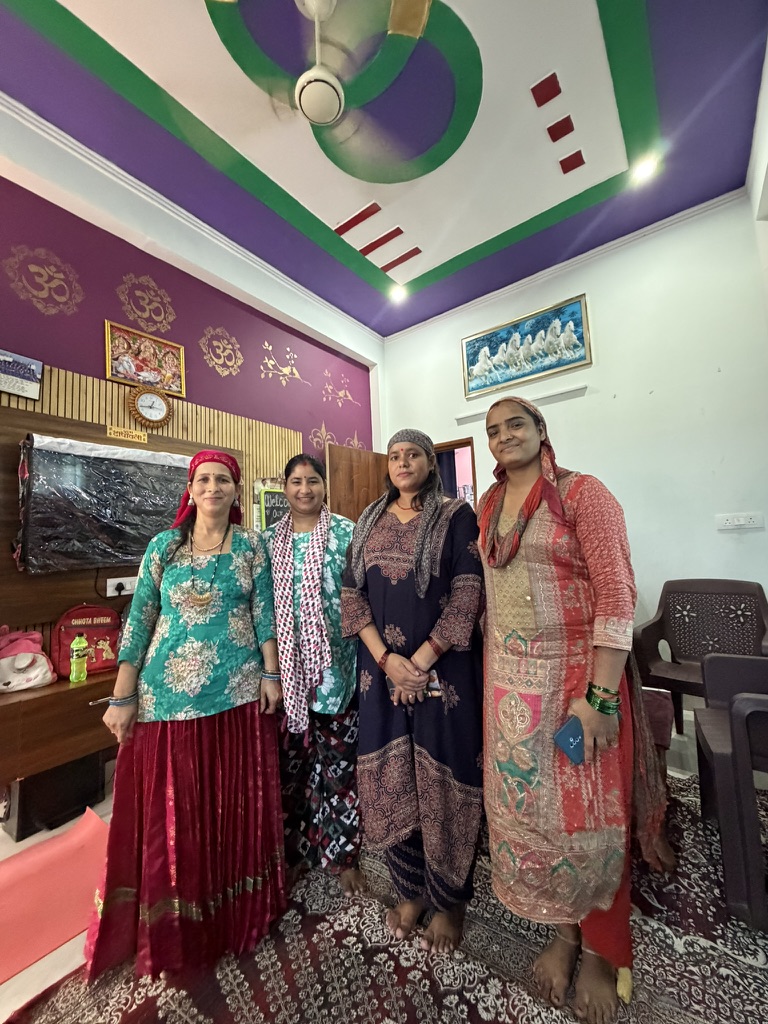
The women started singing without much hesitation..
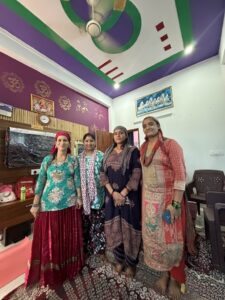
We were in a small front room in Dehradun, the kind that holds a family of six and their entire history, and we had come to talk about children. About what mothers need, what they worry over, what they wish someone had told them. Somewhere in the conversation we asked them about lullabies, they sang a few lines, then another woman joined because she knew it too, and within a minute the room had become something else.
They were laughing at each other’s voices. Correcting each other on the words. Disagreeing about which village a particular line belonged to.
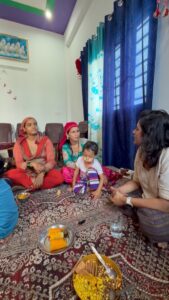
These women came down from the hills. Not from the edges of Dehradun but from further in, from villages where the road runs out before the houses do. They speak Garhwali, some Jaunsari. They came for work, for schools, for the possibility of something else for their children, which is the decision millions of Indian families have made in the past thirty years. They arrived in a city not built for them and made a life in it anyway.
What they brought fits in no suitcase.
In the villages they came from, song is not entertainment. It is closer to punctuation. There is a song for grinding and a different one for carrying water. Songs for weddings, songs for harvest, songs sung by women together when the work is long and the company is what makes it bearable.
There are songs tied to the season itself. They sang one for Bishu, which is sung when a particular plant begins to flower, and which marks the turn of the year and the mela that comes with it. You do not sing it in the wrong month. The song is attached to a specific flowering of a specific plant in a specific place, and it carries the timing of the year inside it.
I asked how they learned these.
From their grandmothers. Directly, by hearing them, repeatedly, over years.
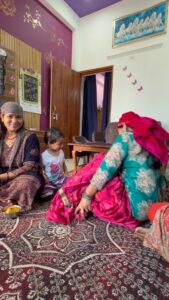
That is the entire transmission mechanism. Nothing is written. Nothing was recorded. There is no book, no archive, no recording anyone has ever made until the afternoon we sat in that room with a phone on the table.
Which means the whole thing is one generation from disappearing. Over a single generation of migration, where the grandmother stays in the village and the granddaughter grows up in Dehradun, and the song simply does not make the journey.
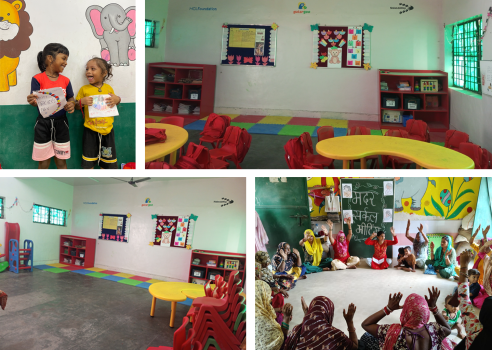
We had spent the morning at an anganwadi about an hour away, in a different community, asking a version of the same question.
When we asked those parents about lullabies, we got generic answers. Nothing personal. Nothing traditional. Nobody sang. When we asked what they made for their children, they described cloth cradles and homemade toys their own mothers had made, and then confirmed that they no longer make these. You can buy them now.
There was one detail that stayed with me. Several mothers described putting on lullabies through their phones for their children. The phone plays and the child settles. The mothers had not registered that anything was missing from this.
All but one.
Rubina had noticed the same thing, that a lullaby from the phone settled her child. Most people would stop there, satisfied with a solution that works. She did not. She decided that if the song could do that, she should be the one singing it.
So she learned it. From the phone, by repetition, the way anyone learns anything.
When she told us this, she said it reminded her of ease.
She had perhaps reached back for something she half-remembered, a sense of ease from her own childhood, found it on a smartphone, and returned it to her child in her own voice.
I have been thinking about this for weeks.
There is a version of the migration story that is only about loss, and it is a true story. The language dilutes. The practices thin. The traditions do not survive contact with the city. But what we watched in that room was not loss. It was repair. A woman noticing a gap where a song used to be, and filling it herself, with whatever tools were available, because her child needed what she had needed.
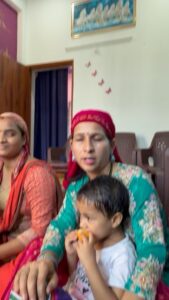
Later, one of the women said something that stopped the conversation.
She was talking about how children in the hills are raised around risk. A child wanders off to explore, and what happens next matters enormously. In some households the child is called back sharply, frightened into staying close. In others they are simply watched, and allowed to return on their own.
She had noticed, over a long time and across many families, that this difference does not stay in childhood. It shows up decades later in how a person approaches anything unfamiliar.
She was not describing a study. She was describing a pattern she had observed across a lifetime in a community small enough for her to see across generations.
One of the women showed us a game. Her child had refused to eat, which is the oldest standoff there is, and rather than escalate she had made it into something else. The food became part of a story. The feeding had a route. There was a rhythm, and a repeated line, and by the third round the girl was participating in her own feeding without noticing that she had lost the argument.
Everyone in the room laughed. Every mother there had a version of it.
I want to be precise about this, because it would be easy to call it charming and move on.
It is not charming. It is a technology. Somebody, generations back, worked out that a resistant child responds better to rhythm than to instruction, encoded that finding into a game with a song attached, and passed it to a daughter, who passed it on. It has been tested more comprehensively than most parenting advice you can buy. It costs nothing, needs no equipment, and works in a room with no electricity.
The songs came down the mountain in a form nobody planned.
Some arrived intact, carried by women who had sung them all their lives without thinking about it. Some arrived in fragments, missing a verse, argued over. Some arrived through a phone screen, which is an absurd and completely reasonable route for a Garhwali lullaby to reach a two-year-old in a rented room in Dehradun.
They arrived.
That is the thing worth noticing. Not the purity of the tradition but its stubbornness. A song survives because it is useful. A lullaby survives because children still refuse to sleep. A feeding game survives because children still refuse to eat, and because rhythm still works better than argument, and because that has not changed in two hundred years.
We spend a great deal of institutional energy asking what children need. We build frameworks, run studies, write policy, and much of it is useful. Very little of it has been tested as thoroughly as a song a mother learned from her mother, who learned it from hers, in a village that takes four hours to reach.
The women in that room were not thinking about any of this. They were singing because it was pleasant to sing together, and because someone had started, and it seemed rude not to join in.
But the transmission was happening while we sat there. Children moving around the edges of the room, half-listening, absorbing tunes they will never remember learning.
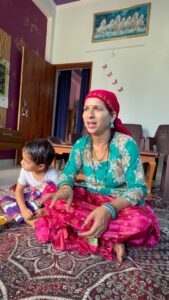
In twenty years one of them will be somewhere else entirely, holding a child who will not sleep, and something will surface that they did not know they had.
That is how it works. It has always worked that way.







 )
)