


A few months ago, the Kodathi Gate Anganwadi Centre in Bengaluru had around twelve children attending regularly.
Today, that number has grown to more than forty.
For Shiny Vijayakumar, who has spent the last ten years working at the centre, the increase in attendance reflects a larger change taking place within the community.
“Before, parents were not giving much response. Now they are very cooperative and very happy,” she says. “People from the village are coming, and families from other villages are also visiting the centre.”
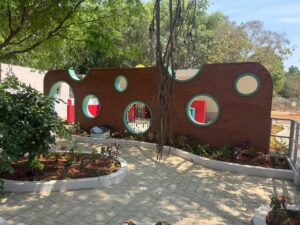
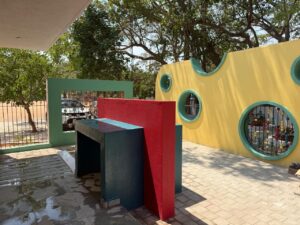
The Kodathi centre is one of two model Anganwadi centers developed under the Urban Schools Initiative by Wipro Foundation, which works to strengthen Early Childhood Care and Education through better learning environments, teacher support and community engagement.
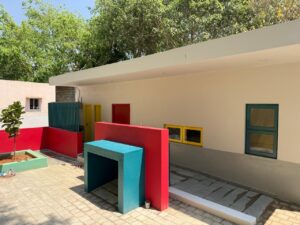
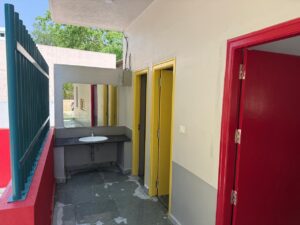
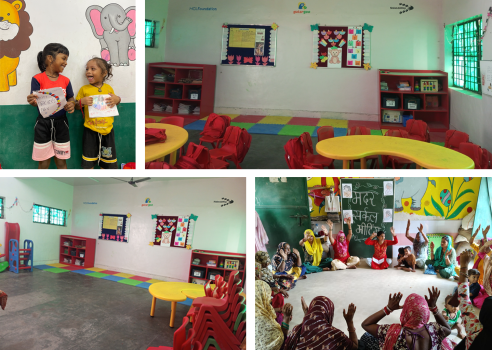
For Vijayakumar, parents’ confidence often begins with the physical environment.
“The first thing people notice is the infrastructure. Parents were not always sure whether children would be safe. The newly constructed centre feels very safe.”
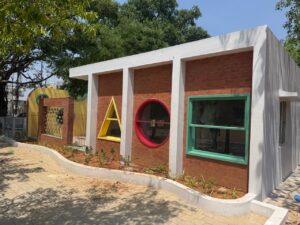
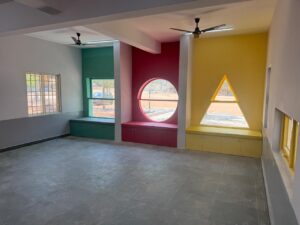
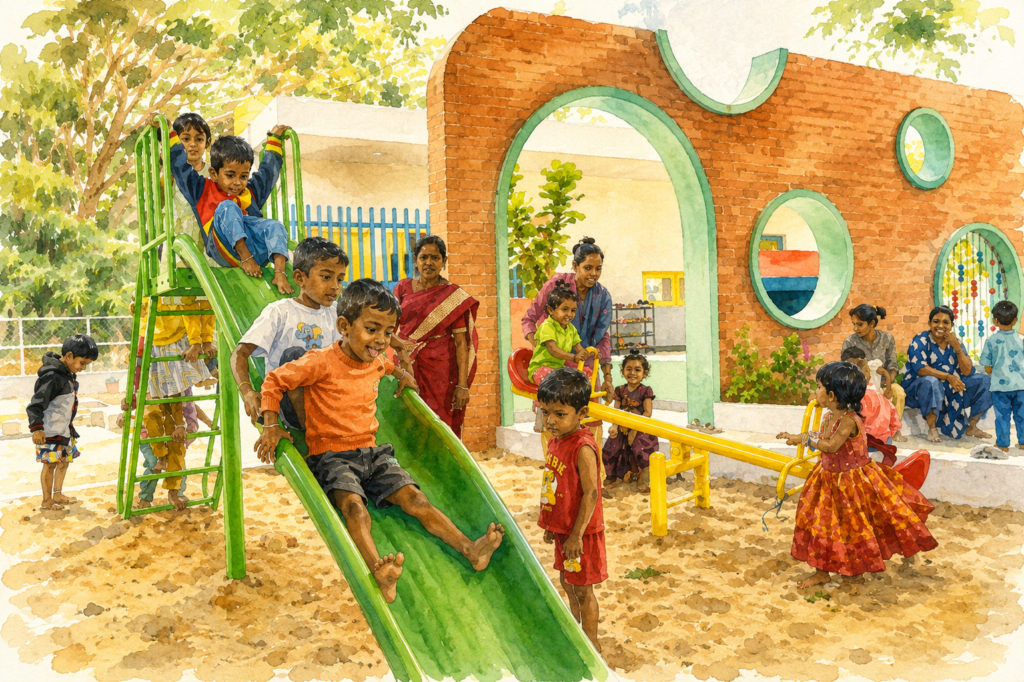
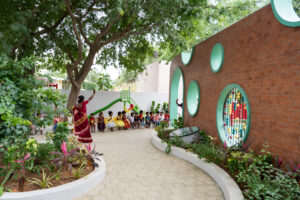
The center’s design, outdoor play spaces and child-friendly learning areas have attracted attention from community members and educators alike. Yet teachers believe the more significant changes are happening inside the classrooms.
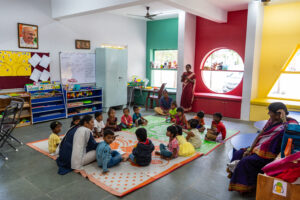
“Children used to come and sit idle. We only had a few toys. Now every morning there are activities, educational toys and opportunities for children to participate more,” she says.
For Sri Latha, the circle supervisor who has worked across both the Kodathi and Ambedkar Nagar centers for the past six years, the transformation is closely linked to changes in classroom practice.
“We have regular meetings. There is music, singing and many more learning activities now,” she says.
Teachers regularly engage with educators from Azim Premji Foundation and make active use of learning materials that introduce children to shapes, colors, animals and language through play. Songs, stories and group activities have become a regular part of the daily routine.
The centre also continues to provide nutrition support to young children, pregnant women and lactating mothers through monthly take-home rations, reflecting the Anganwadi system’s integrated approach to care, nutrition and education.
The broader idea behind this approach is simple. Meaningful improvement in public institutions happens when learning, community engagement, teacher support and physical environments work together. Families return when they can see change and trust that educators care about their children.
Kodathi appears to offer an early example of that idea in practice.
What began as an effort to improve a physical space is gradually becoming something more: a demonstration of how children, teachers and communities can thrive when care, learning and trust come together.




 )
)