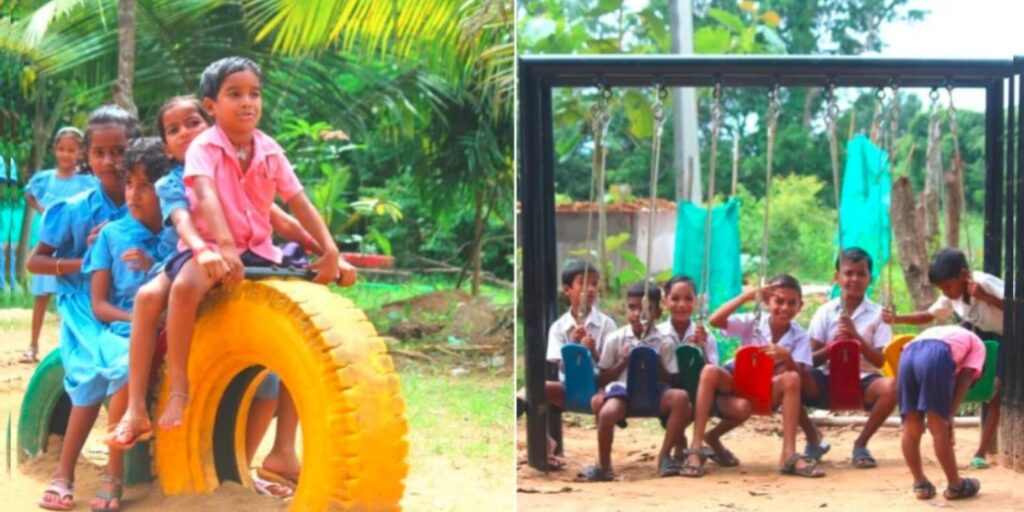
Screen time isn’t the disease, it’s the symptom. Deepika Mogilishetty, EkStep Foundation’s Chief of Policy & Partnerships, traces what actually got replaced when free play quietly disappeared from Indian childhoods: unstructured hours, public play spaces, adults with the time to be present. Drawing on Bachpan Manao’s Voices of Play findings from over 4,000 children, plus evidence from Anganwadis to J-PAL trials, she argues play isn’t a soft add-on to childhood, it’s infrastructure, and funding presence costs less than almost anything else in the sector.
On a former garbage dump, a Mobile Creches centre in Barrackpore is teaching children discipline, routine, and independence — one row of slippers at a time.
Voices of Teaching gathered educators from five Indian states to share classroom innovations born from experience, not training manuals. Ayesha Ma’am, a single-teacher educator, uses circle time to help distressed children express feelings. Pramod Sir broke down caste-based seating divisions by eating lunch with students. Lavina Ma’am rebuilt parent meetings around children’s strengths, boosting attendance. The article argues teachers generate knowledge best by hearing each other’s solutions to shared problems — the same principle behind the Dhwani toolkit. Amid gaps in school infrastructure, such spaces matter because isolated teachers finally feel heard.
Anganwadis can foster mothers’ friendships, social support, belonging, and stronger communities around childhood.
The first thing I noticed at Latika was that the parents had not left. In most schools the adults thin out by nine, and what I found instead was a village that somebody had sat down and deliberately built.
A speed limit sign at the gate is the first clue. What follows is a building that never once raises its voice: a reception desk at two heights, mirrors in every room, a ramp instead of an afterthought. This is what it looks like when a school designs backward from what a child’s body actually needs.







 )
)