


The first thing I noticed at Latika was how many adults there were.
Not staff, though there were plenty of those. Mothers and fathers in a separate area called the “Family Area”, near the entrance, talking in the unhurried way of people who have done this many times. A father waiting with a younger child on his lap. A grandmother who came along and is knitting. In this area, families had moved around the chairs to face each other, talking. In most schools and learning environments, the adults thin out by nine in the morning. Here they stayed, and nobody seemed to find this unusual.
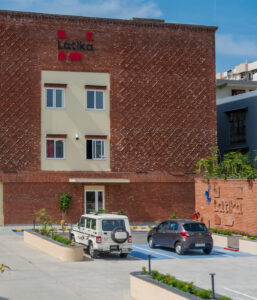
That was the first clue about what Latika actually is.
There is a man at Latika whose presence confused us for most of the morning. He has a desk, he meets families, and he is a lawyer. We could not work out what he was doing in a school.
His work begins on the day a family learns their child has a disability. Not weeks later, not once the educational plan is settled. That day, when the questions are all fear.
Who will manage their bank account when we are gone? Will they be exploited? Will they be allowed to vote, to own property, to sign their own name? What happens to my child when I am no longer here?
He works in stages, and the sequence matters. First the basic documents: birth certificate, Aadhaar, disability certificate, UIDAI. Small things, achievable things, and by achieving them together a family learns that this person is reliable. Then the entitlements and the schemes, the education plan, the health plan, guardianship at eighteen. Then, once the trust is built, the harder instruments. Special needs wills. Trusts.
And then something that is not legal at all, which he calls a letter of intent.
Parents sit down and write, in ordinary language, what their child likes. What settles them. What frightens them. What they will eat and what they will refuse. It has no standing in any court. It is written for whoever ends up caring for this child, even if only for a single day, so that person does not have to start from nothing.
I have not been able to stop thinking about that document.
He told us about a retired IAS officer, ninety years old, with a daughter of fifty-three who has Down syndrome. The office was then on the first floor of a building with no lift, so the team always went down to meet him. When the legal plan was finished, he insisted on coming up. He climbed the stairs with a nephew on one side and a helper on the other, arrived at the lawyer’s desk, and said that now this was done, he knew his daughter would be looked after after he was gone.
The advisor said he returns to that moment whenever the work gets hard.
A child with a disability in India does not arrive at a school with only educational needs. They arrive attached to a family that has been navigating a system built to exhaust them. Somewhere along the way that family has been told the assessment is not available locally, or costs more than they have, or has an eighteen-month wait. They have been handed a diagnosis with no explanation. And they have almost certainly been asked, by a relative or a neighbour, what they did wrong.
The director told us about a woman whose mother-in-law informed her, repeatedly, over years, that her son’s autism was caused by the fact that she had visited her mayka while pregnant. Her husband did not contradict this.
That woman is now a special educator. She later became principal of her own special school. She had a second son, who is also autistic, which carries a recurrence risk of roughly one in five once the first child is diagnosed. She is a trained dancer, and Latika asked her to teach dance to the other mothers in the parent support groups.
The director offered this as the clearest transformation she has witnessed. But what struck me was the shape of it. Nobody overindexed over that woman’s mother-in-law. Nobody won that argument. What changed was that she found a room where a different account of herself was available.
Latika runs support groups for mothers, for fathers, for grandparents, and for siblings, and they run separately, on purpose.
The sibling groups run for a full year. When I asked why so long, the answer was that the bond between a disabled child and their sibling does not form the way it does between typically developing brothers and sisters. Caregiving crowds it out. One child becomes a responsibility before they can become a companion. So the relationship has to be built deliberately, over months, rather than left to time and assumption.
Grandparents are included because ageing changes who is available. Fathers are included, though the director was honest that attendance is uneven. A man cannot ask his employer for time off every week to attend a parent support session. Some come anyway. Most cannot.
And the mothers’ groups, which are the largest and the fullest, turn out not to be primarily about information at all.
They are about being unwatched.
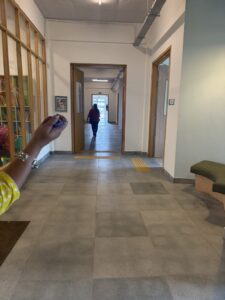
The director explained it and I have been turning it over since. In her own neighbourhood, a mother of a disabled child is looked at. Sometimes with kindness, sometimes with curiosity, sometimes with pity, and it does not much matter which, because carrying the sense of being pitied is exhausting regardless of whether the pity is real. At Latika, nobody is looking. So the mothers sing. They joke. They put mehendi on each other’s hands.
Every year there is an evening event called Samavesh. Mothers rent lehengas, do full stage makeup, and perform a dance.
She said it plainly: for some of these women it is the only occasion in the year when they do something entirely for themselves. Indian motherhood asks for a fairly complete erasure of the self at the best of times. Motherhood of a child with special needs asks for more.
There is a question that follows every parent of a child with special needs, and it is not about school.
It is: what happens after me.
Latika does not pretend that question is outside its remit. The lawyer answers part of it. The trusts and the wills answer part of it. But the part that cannot be answered on paper is answered by a programme called Aata.
Aata is for people who have finished. Twenty-one and over, graduated out of the training centre, past the age where any institution has an obligation to them. They come back twice a week, Tuesday and Thursday afternoons. They cook. They eat together. They dance.
Every third Saturday, Latika arranges transport and they go somewhere. A hike, an outing, somewhere beyond the building. Staff go along, but not to instruct. The word used was supervision, though what was described sounded closer to company.
Each person pays five rupees a day for what they use.
That detail is not incidental. It is the difference between a place that is given to you and a place that is yours.
I have been so lucky to spend this year in a lot of childhood spaces. Anganwadis in the hills where a joint family absorbs a child’s needs without anyone calling it care. Community centres in West Bengal where three educators hold forty-eight children with almost nothing. Play spaces built on love and sustained by two or three women who have been there for decades.
What the good ones have in common is that the child is never held by one person alone. There is always a web. It might be a joint family, a neighbourhood, an institution, or some combination of all three. But the moment a child depends on one adult for everything, the whole arrangement becomes fragile.
Families of children with special needs get pushed toward exactly that fragility. The mother becomes therapist, advocate, case manager, researcher, the one who argues with the school, the one who explains to the relatives, and also the mother. The web collapses into one person. Then everyone wonders why she is tired.
Latika rebuilds the web. Educators, therapists, support staff, a lawyer, other parents who went through this three years earlier and know which forms actually matter. Siblings who grow up inside the community rather than alongside it.
There is an old line about a village raising a child. It gets repeated often enough to have stopped meaning much. But standing in that waiting area, watching families sit in circles and talk to each other, I understood it differently.
The village is not something you inherit anymore. Not for most families, and certainly not for families whose children need more than the village was built to give.
It has to be constructed. Deliberately, by people who have decided it is worth constructing.
That is what Latika has done. The children can feel it, though none of them would have the words to say what it is they are feeling.







 )
)