



What if math was never just about textbooks, classrooms, or solving problems on a blackboard?
What if math already existed in our kitchens, conversations, markets, games, and everyday decisions?
Supported by Bachpan Manao, the Moms for Math initiative by Aavishkaar Center began with a simple but powerful idea: mothers already engage with math in their daily lives, even if it does not always look like the “school version” of math many of us grew up with.
For many adults, math carries memories of fear, hesitation, pressure, or the feeling that it belonged only to people who were “good at it.” Over time, this belief quietly shapes how children experience math too. Moms for Math hopes to gently shift that relationship by making math more playful, conversational, and connected to everyday life.
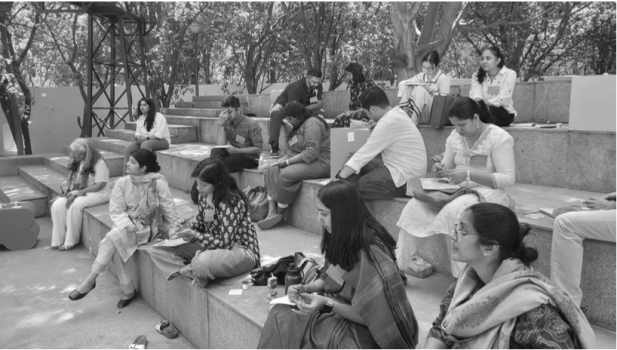
Over the past year, the initiative has grown through conversations with mothers, playful meetups, experiments with games, and the creation of a growing collection of math activities and resources for children aged 0–10 years.
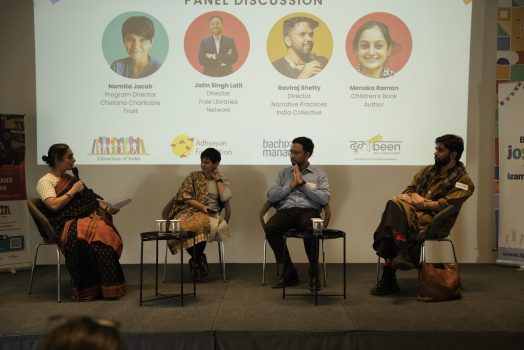
As part of this journey, Aavishkaar Center hosted the Moms for Math Webinar on 16th May 2026, bringing together parents, educators, and learning practitioners from different parts of the country to reflect on math, play, and learning at home. The session saw participation from 84 attendees, creating a warm and engaging online space filled with stories, curiosity, and shared experiences.
One of the memorable moments from the webinar was a simple but playful number-guessing activity. Participants had to guess a number another person had in mind using only five questions. What began as a game quickly became a way to experience mathematical thinking in action: asking strategic questions, identifying patterns, narrowing possibilities, and collaborating through logic and curiosity. The activity reminded participants that math can emerge naturally through play, interaction, and conversation.
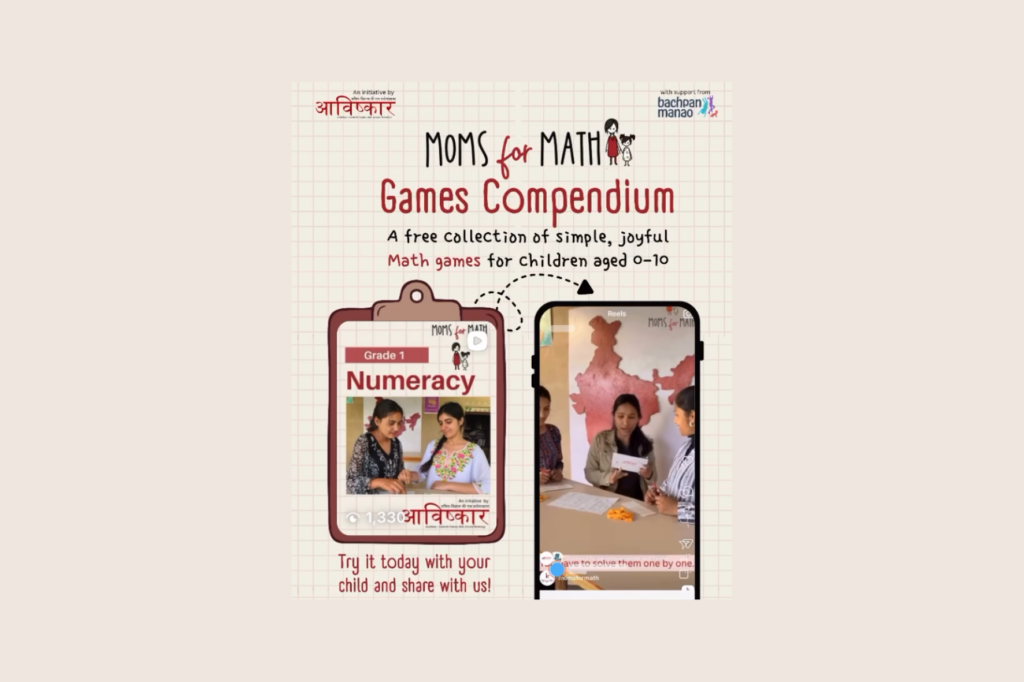
The webinar also introduced participants to the growing Moms for Math Games Compendium — a collection of playful math activities and games designed to help children engage with mathematical thinking in joyful and accessible ways. The games encourage observation, estimation, storytelling, pattern recognition, counting, and problem-solving through everyday materials and interactions.
What stood out most during the session was how deeply the conversations resonated with participants.
“I wasn’t very interested in math during school, but as an adult I’ve realised how important it is in everyday life. Somewhere along the way, I felt I had missed out on learning higher-level math myself. When I saw this session, I immediately joined because I really want to support my children better with math.”
— Webinar participant
Another participant reflected on the importance of strengthening learning relationships between mothers and children:
“I’m not a mother, but an educator working with Grade 3 children in a government school. For some time now, I’ve been thinking about how to build stronger connections between mothers and children around learning at home. When I came across this, I immediately wanted to be a part of it.”
— Webinar participant
Participants also expressed the need for more such spaces for dialogue and shared learning.
“We would love to see more workshops and online spaces like this continue.”
— Webinar participants
At its heart, Moms for Math is not only about helping children feel comfortable with math. It is also about helping adults reconnect with mathematical thinking in ways that feel joyful, familiar, and non-intimidating. The initiative continues to explore how homes, relationships, stories, games, and everyday experiences can become spaces where mathematical confidence quietly grows.
Explore the Games
Explore the growing Moms for Math Games Compendium here:

Follow Moms for Math on Instagram for updates, games, and future sessions:





 )
)