

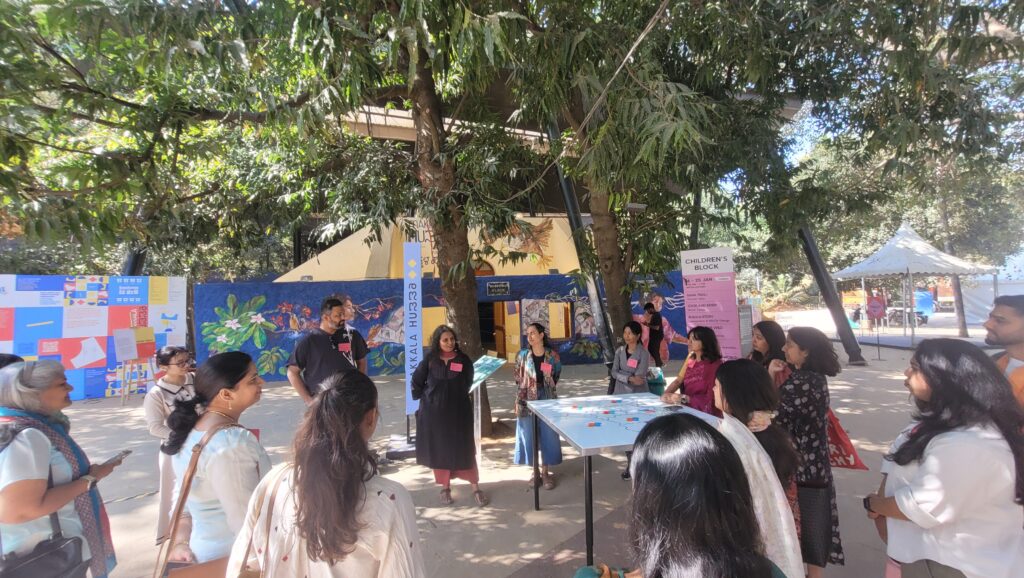
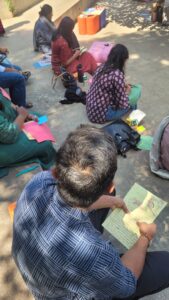
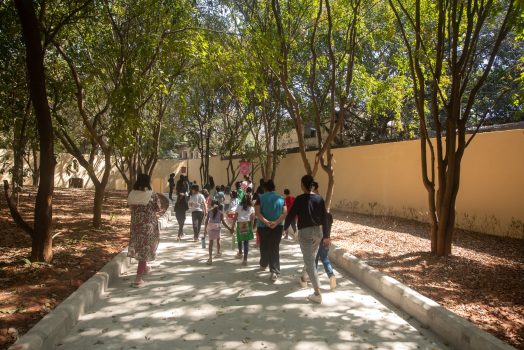
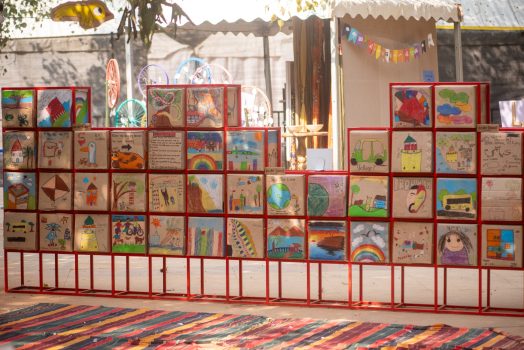
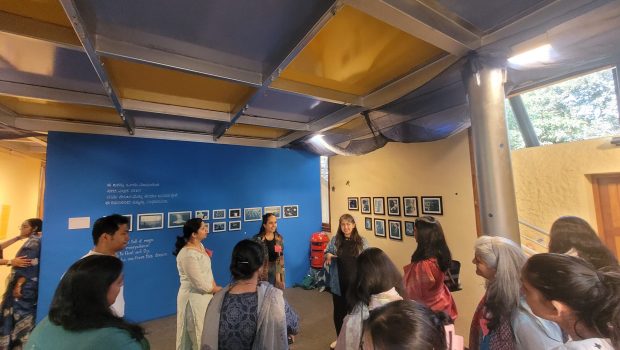
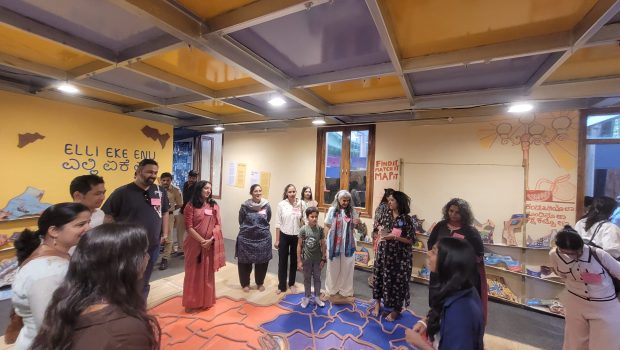
On 23 January, at Makkala Hubba in Freedom Park, Bachpan Manao invited a small group of educators, designers, parents and practitioners to spend a morning thinking about what it means to invest in childhood. After walking through the festival and sitting with prompts about memory, trade-offs and imagined futures, we ended by asking everyone to write to a child in 2050 from themselves today.
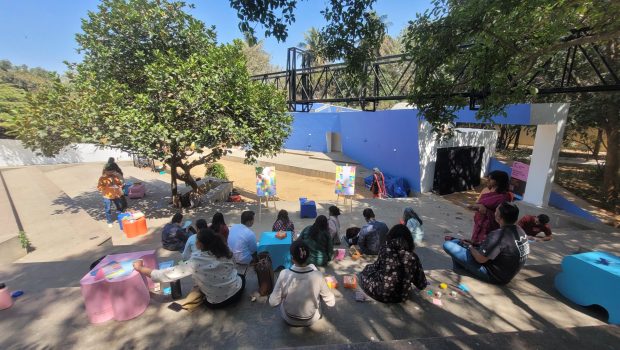
People took their time. Got comfortable in their space. Moved away from the group if needed. Tried to zone the world out and look inward. Note that they were sitting in an amphitheatre, at 11am, under the shadows of trees and the voices of children and their squeals of enjoyment coming from a distance. It was a hard question and an uncommon ask, especially for an ecosystem gathering to discuss perspectives.
The letters were honest and so moving to read, because they were possibly uncomfortable to write.
Several people began by acknowledging stress. One wrote, “I hope I did not let my stress spill into you.” Another said, “We may not have been 100%, but we tried.” There was no attempt to present adulthood as perfectly managed. The words carried an awareness that children grow inside whatever emotional weather surrounds them.
Protection came up often, but it was layered. “I will not pass down my fears.” “I will try not to protect you too much.” “I hope I protected you enough.” Those sentences held a real tension. Adults want safety for children. At the same time, they know that too much control can narrow a life.
Time appeared in small, practical ways. “I tried to spend extra hours just being there.” “Weekends were chosen for presence.” “Put digital devices away.” “Speak to loved ones.” The investment being described was not about grand plans, instead about attention. About who or what gets the hour at the end of the day.
There was uncertainty about the digital world. Some letters mentioned scrolling at the dining table. Others hoped children would “stay away from the digital world.” One imagined a future with “zero percent phone use.”
Freedom was described in personal terms. “You can experiment.” “You can make mistakes.” “You can turn around and choose another path.” These were permissions, suggesting that one of the most meaningful investments might be the freedom to try and to change direction without shame.
Some letters widened the lens. They imagined a world “not defined by race, caste, religion, gender, disability.” Others wrote about universal public transport, a pro-child policy lens, or a society that tests laws against their impact on children first. These lines carried hope into the future.
Nature showed up in vivid ways. Fruit trees. Community gardens. Mushrooms after rain. Parks in every neighbourhood. One letter imagined rollercoasters in forests. Another imagined children sleeping in burrows. The images were sensory and specific. They suggested that connection to land and material life still matters.
There were references to memory too. Trunks filled with photographs. Recipes carried forward. Stories retold. Childhood was not only about what is new. It was also about what is kept.
Health appeared often, especially mental health. Reduced stress. Adults learning to regulate their own emotions. They spoke about not sacrificing wellbeing for achievement.
What stood out across all the letters was what did not appear. No one wrote about rankings or outperforming others. Instead, they wrote about kindness, courage, integrity and being able to laugh “at nothing and everything.” The tone was thoughtful rather than grand.
The exercise shifted the conversation from systems to relationship. Earlier prompts had surfaced trade-offs in policy, infrastructure and adult schedules. The letters brought the focus closer to home. They asked each adult to consider the promises they are already living inside.
What the letters made clearer was not a new insight, but a sharper alignment. Across very different people and contexts, there was a shared understanding of what matters, even if it is not always what gets prioritised. Attention, time, freedom, emotional steadiness, and space to grow came up in different forms, but pointed in the same direction. The gap did not sit in awareness. It sat in how systems, routines, and choices are structured around that awareness. In that sense, the exercise did not introduce something new. It made visible what is already known, and where it begins to slip.
When the writing ended, there was no big conclusion. Only pages filled with ink and a shared understanding that investing in childhood is not only about what we build. It is also about how we show up, and what we are willing to change in ourselves.


 )
)