


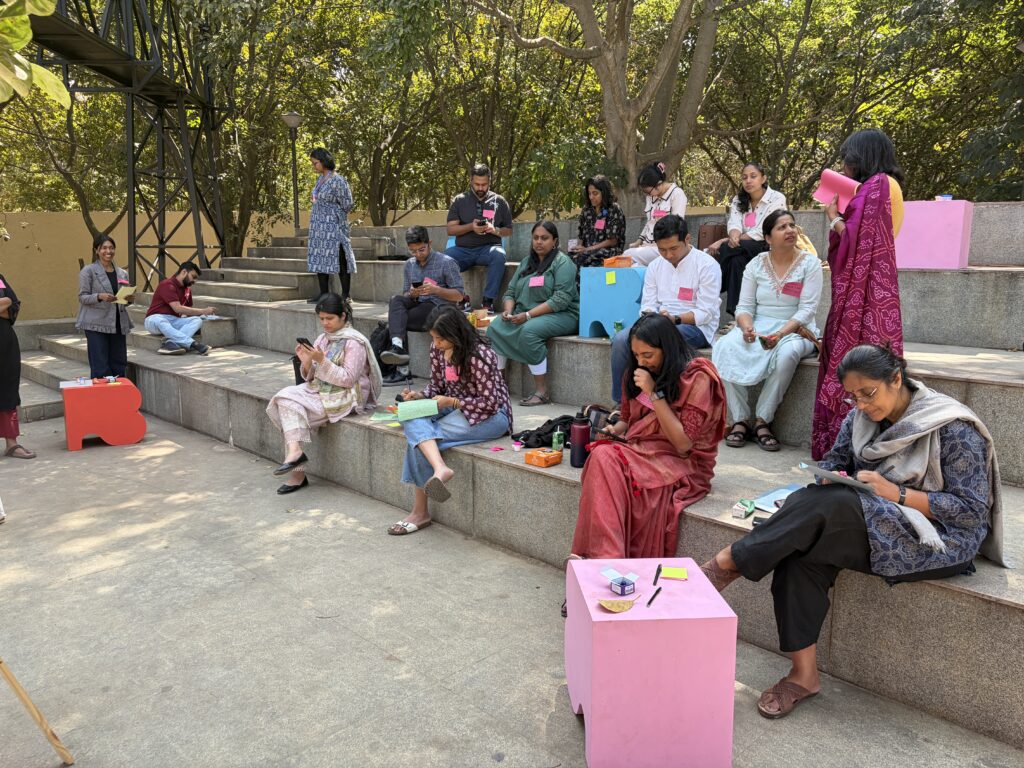
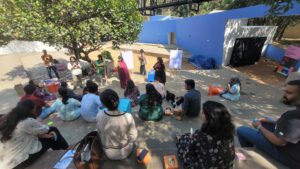
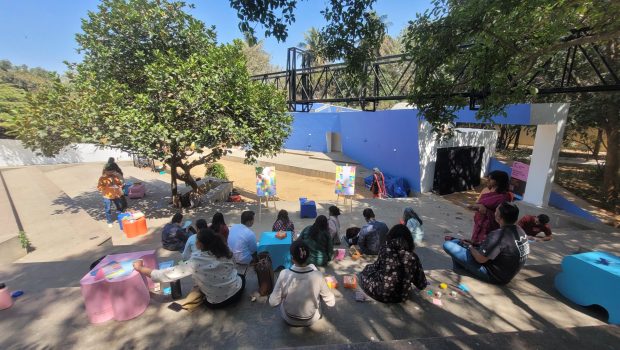
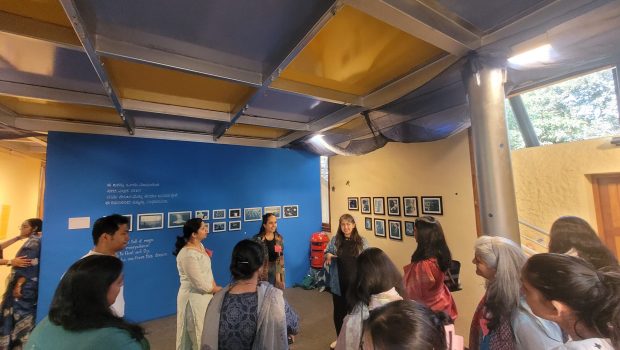
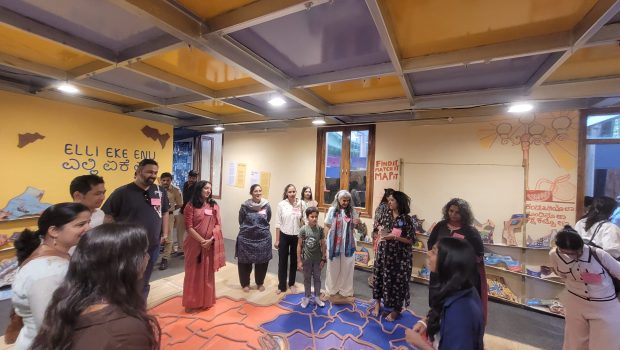
On 23 January, at Makkala Hubba in Freedom Park, Bachpan Manao invited a small group of educators, designers, CSR leaders, parents and practitioners to sit together and reflect on what it really means to invest in childhood. Over the course of the morning, we moved through different prompts. People spoke about what shaped them growing up, the trade-offs adults are making today, what children may be losing, and what kind of future would feel worth working towards. We ended by writing letters to a child in 2050.
By the end of the conversation, it became clear that when we use the word “investment,” we often default to funding, programmes and measurable outputs. Yet what surfaced in the room was wider than that. Participants were describing something that touches how we structure time, design cities, frame policy, show up as adults and define success.
What follows is not a final model. It is a working way of reimagining investing in childhood drawn from what people shared.
1. Investment as Time
Time came up repeatedly. Participants spoke about rushed schedules, packed calendars and the way adult work rhythms shape children’s days. One note on the wall read, “Be quiet while I want to work.” It captured an everyday tension that many recognised.
Investing in childhood, in this sense, includes how time is organised. It means protecting unstructured hours, allowing space for boredom, and creating room for presence where possible. It also means recognising that time pressures are not purely personal choices. They are shaped by workplace expectations, economic realities and social norms. If adult life is compressed, children often feel that compression too.
2. Investment as Space
Public space was another strong thread. Parks, cycling paths, neighbourhood mobility and access to green areas were mentioned again and again. Not just the idea of parks, but whether they are functional and maintained and whether children can use them without constant fear.
The design of a neighbourhood affects how childhood unfolds. When outdoor spaces shrink or feel inaccessible, children spend more time indoors. When cities are not planned with children in mind, they become less visible in public life. Investing in childhood includes paying attention to urban design, safe mobility and the quality of shared spaces.
3. Investment as Policy Lens
Some participants imagined applying a simple question to every policy decision: how does this affect children’s daily lives?
From that starting point came practical ideas. School psychologists as a standard feature, not an exception. Preschool available in every neighbourhood. The right to play is protected in law. Public goods accessible regardless of income.
Investment in childhood cannot sit only within education systems. It intersects with housing, labour policy, transport, digital regulation and public health. Children experience all of these systems, even when they are not explicitly designed for them.
4. Investment as Adult Behaviour
The letter-writing exercise made this dimension impossible to ignore. Many people wrote about their own behaviour. They spoke about not wanting to pass on fear, about managing stress, about avoiding overprotection.
Children grow inside the emotional climate adults create. Surveillance, academic pressure and constant correction often come from care, but they can also narrow experience. Investing in childhood includes asking whether we are listening fully, whether we allow room for mistakes, and whether we trust children a little more. This part cannot be handed over to institutions. It is embedded in daily interaction.
5. Investment as What We Value
Participants also reflected on what counts as success. Joy, friendship, emotional wellbeing and freedom were described as meaningful returns. If the only indicators that matter are performance and productivity, childhood will be shaped in that direction. If wellbeing and connection are valued openly, priorities begin to shift.
Culture influences where attention and resources flow. What we reward publicly shapes what is invested in privately.
6. Investment as Intergenerational Responsibility
Finally, there was an undercurrent of responsibility. Some letters acknowledged that adult systems have, at times, narrowed childhood space. There was a willingness to question patterns and think about what needs preserving.
Investing in childhood is not about dramatic gestures. It is about steady adjustments in how we structure time, design space, shape policy and show up in relationships. It involves recognising that childhood is not only preparation for the future, but a lived experience in the present.
This reimagination emerged from one morning’s exchange. It is not exhaustive, and it will continue to evolve. A small group has stayed connected to carry the conversation forward, and future dialogues, both in person and virtual, are already being considered.
If you would like to remain part of that ongoing exchange, we will continue to share what unfolds next.
Investing in childhood begins with paying attention to the systems and habits that surround it. From there, the work becomes clearer.




 )
)