



Childhood is never just one thing. It is shaped by the games children invent, the places they inhabit, and the quiet gestures that hold them.
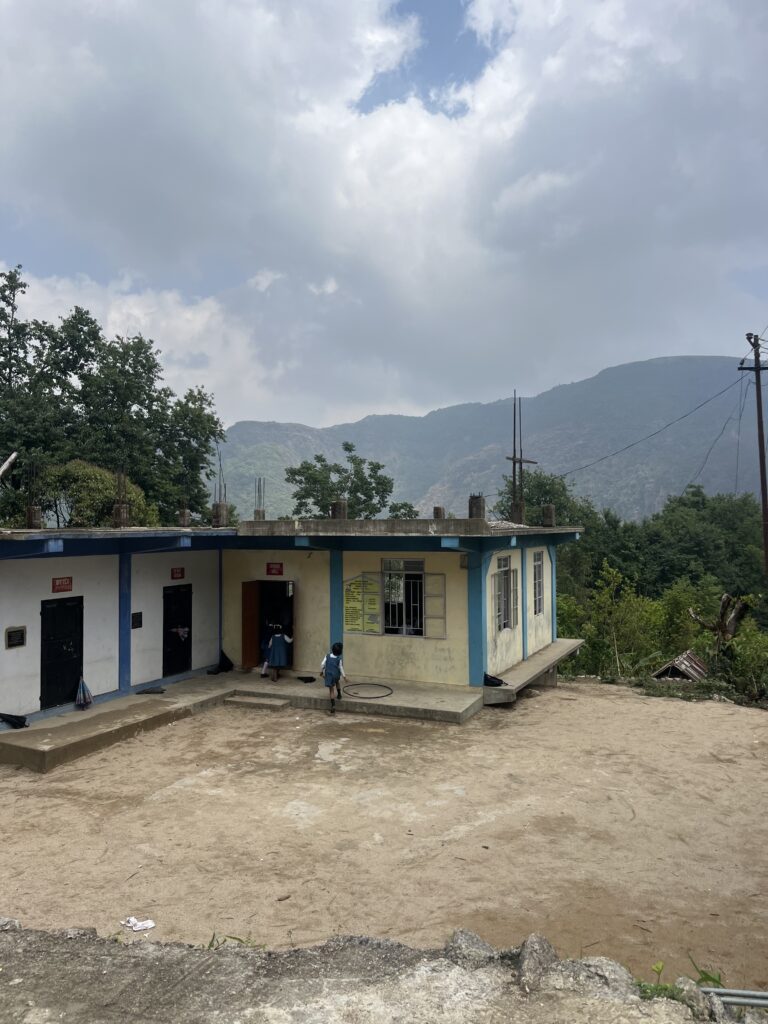
During our field visit to Meghalaya, we saw how play, space, and care folded into one another, sometimes seamlessly, sometimes unexpectedly, creating a fabric of childhood that was both fragile and resilient.
The Many Shapes of Play
Play is one of the first ways children make sense of the world. In Meghalaya, we saw how inventive and place-based it could be. Hillsides became football fields, damp courtyards transformed into lagori arenas, and hopscotch grids were scratched into mud outside Anganwadi centres. Children turned forest paths into adventure trails, stitched skipping ropes out of jute, and invented rules on the spot that only they seemed to understand.
What stood out was how play blurred into care. Older siblings carried toddlers on their hips and still found a way to chase and laugh. Grandmothers watched and laughed as their grandchildren painted (and made big messes) with turmeric. A young girl, in between helping her mother knead dough, ran to join a skipping round with friends. These moments showed us that children don’t need toys or timetables to create joy, only freedom, safety, and a community that gives permission for imagination to lead.

Spaces That Hold Childhood
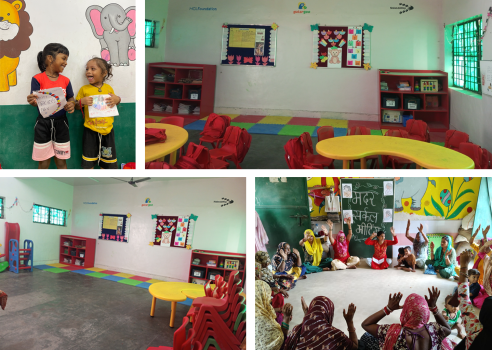
Care in Meghalaya was not just about who, but also where. Childhood took root in spaces both designed and improvised. Classrooms doubled as playgrounds after lessons. Anganwadi walls were brightened with colourful handprints and posters, created not through resources delivered but through the improvisations lead by caring adults. A library became more than a room with books, it was a refuge where children sat on siblings’ laps, read aloud, and played games transporting them to imaginary worlds.
Even home fronts, open fields, and verandahs became pauses in the day, where children lingered, observed, and learned. These spaces held care by sparking curiosity, offering safety, and stitching children into community routines. Together, they formed a living map of belonging, proof that infrastructure alone doesn’t build childhood; communities do.
Everyday Acts of Care
Everywhere we looked, care was carried in steady, ordinary acts. An Anganwadi helper washed turmeric off children’s hands between activities. A neighbour pulled children onto the parapet of the CYMC as the rain poured down. An older sister bent to tie her younger brother’s shoelace before school. An Anganwadi worker lingered after class, sounding out words with patience and warmth.
None of these were extraordinary gestures, but together they held entire childhoods in place. Care was distributed, shared between mothers, fathers, siblings, grandparents, neighbours, teachers, librarians, and even ultimate frisbee coaches. It was not a single person’s task, but a shared inheritance of responsibility and attention.
Holding It Together
In Meghalaya, we learnt that childhood is not divided neatly into categories of play, space, or care. They are interwoven: a courtyard becomes a playground because of the care that makes it safe; play carries responsibility when older children join in while carrying siblings; and care often arrives through the spaces that communities keep open for children.
The photobooks grew out of a desire to hold these intersections, not to define childhood, but to notice how it is lived. To show that what shapes a childhood is rarely grand policy or perfect infrastructure, but the overlooked gestures, improvised places, and fleeting games that communities stitch together every day.
These glimpses remind us that childhood is lived not in abstractions but in acts, places, and moments that might seem small, yet together, they shape futures.
A heartfelt thank you to Sauramandala Foundation for hosting us, and to every child, caregiver, and community who opened their worlds to us.







 )
)