

We all carry pieces of our childhood tucked safely in our memories. Close your eyes for a moment and they rise gently to the surface. Narrow lanes where we chased each other until dusk. Cousins and neighbours whose laughter filled our days. Dusty playgrounds where time moved slowly and joy felt abundant.
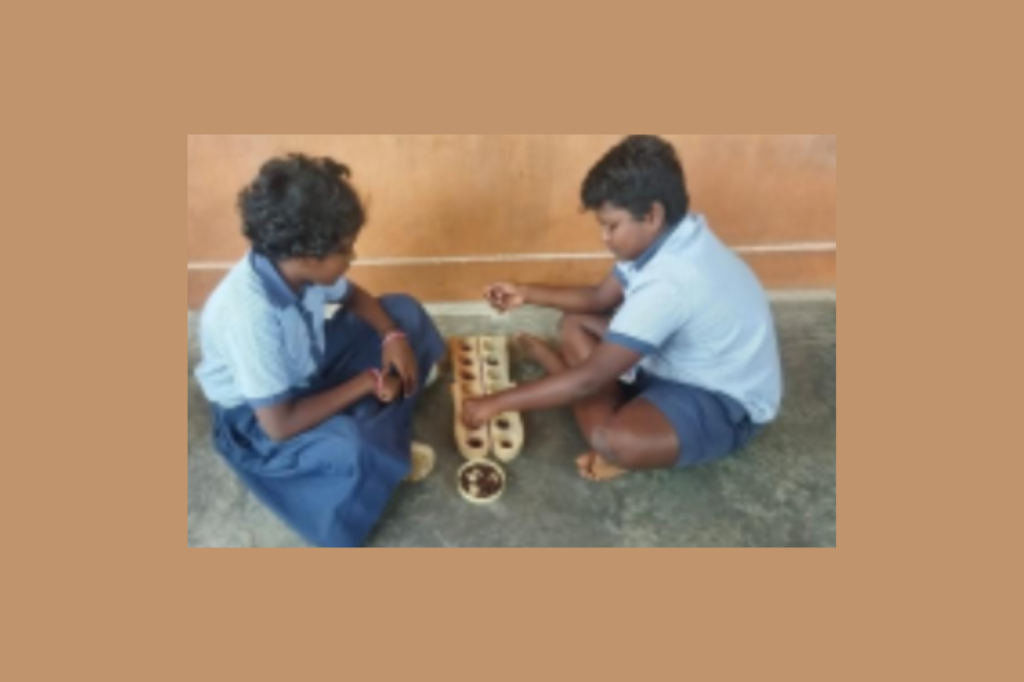
We do not remember expensive toys. What remains alive are the simple games that cost nothing but gave us everything. Pallanguli under a neem tree. Hide and seek around the house. Tyre rolling along village paths. Hopping across chalk drawn squares. These were not just games. They were the language of imagination, friendship, and freedom.
Today, childhood looks very different.
Urbanisation has reduced safe open spaces. Technology slips easily into a child’s hand. Parents enrol children in multiple structured activities. Childhood slowly turns into a schedule. Even in government schools, increasing academic pressure has quietly pushed play aside.
Yet play is never just play. It builds cooperation, coordination, sharing, patience, problem solving, creativity, and confidence. Skills that worksheets alone cannot teach.
Reclaiming Play in Classrooms
Vazhai Foundation works at the intersection of child wellbeing, education, and community development, using approaches such as play and socio emotional learning to support children’s holistic growth.
Through its work with government primary and pre primary schools, a recurring observation emerged. Learning materials were often locked away in cupboards, protected from children instead of being accessible to them.
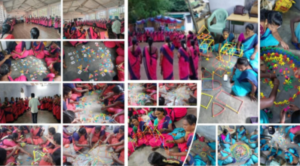
To shift this mindset, Vazhai designed a voluntary play based workshop for teachers. There were no presentations and no theory sessions. Only play.
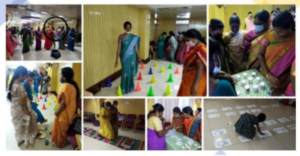
What began as a small workshop expecting around 40 teachers saw an overwhelming response, with more than 100 teachers choosing to participate. The experience helped teachers reconnect with the joy of play and reflect on their classroom practices.
This shift translated quickly into action. Teachers began introducing play based activities, reorganising classroom spaces, and making materials more accessible. Parents started noticing visible changes in children’s confidence, participation, and happiness.
From Classrooms to Play Labs
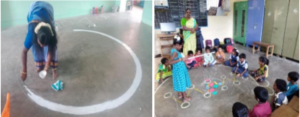
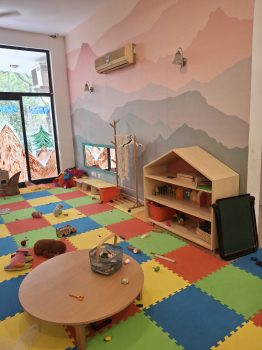
The momentum from these workshops led to the creation of model pre primary classrooms designed around accessible learning corners and open ended materials.
As these classrooms demonstrated impact, the approach began to expand into play labs and resource centres across schools. These spaces created environments where children could explore, create, and collaborate more freely.
Over time, this work has reached a growing number of schools and children, aligning with national efforts such as the National Curriculum Framework for the Foundational Stage and NCERT’s toy based pedagogy.
Extending Play Beyond the Classroom
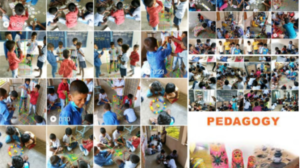
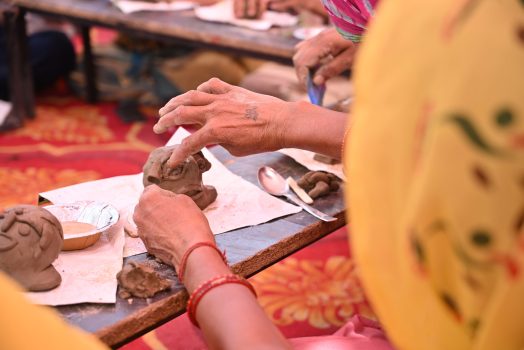
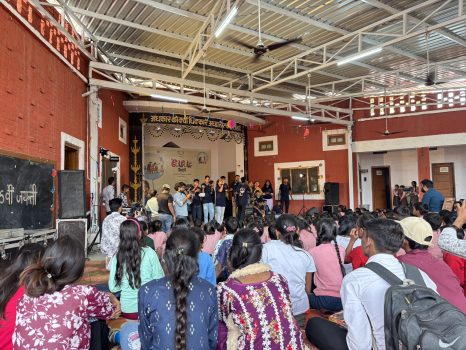
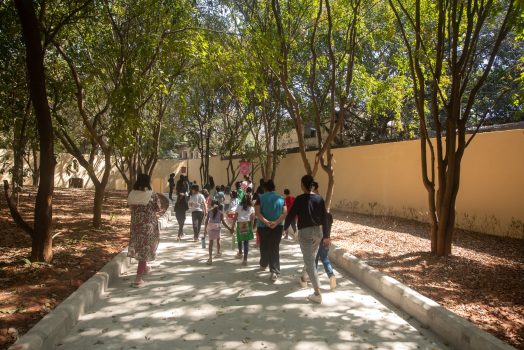
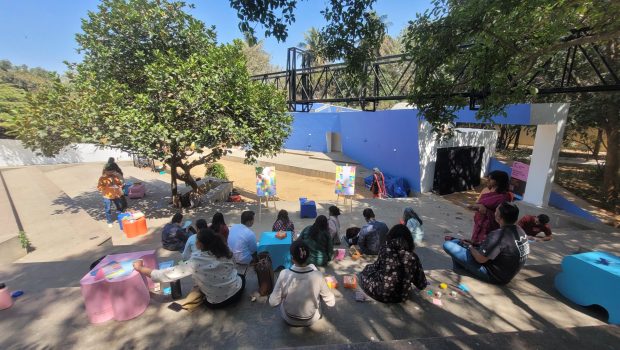
Recognising that learning does not stop at school gates, Vazhai also initiated Play Festivals to bring parents and communities into the experience of play.
Across multiple government schools, these festivals created shared spaces where children and parents could play together. Participation varied across schools, but the outcome was consistent. Parents began to see play not as a distraction, but as an essential part of learning and wellbeing.
These festivals helped reposition schools as spaces of joy, connection, and community.
The Gap Beyond School Hours
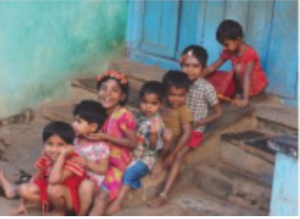 Children spend a significant part of their day in school, but outside those hours, meaningful play opportunities remain limited.
Parents often have limited time. Safe outdoor spaces are shrinking. Screens are increasingly becoming the default form of recreation.
This highlights the need for solutions that extend beyond the school day and into the community.
A Community Led Vision for Childhood
To address this, Vazhai envisions Community Wellbeing Centres within neighbourhoods and village clusters. These centres would be safe, child friendly spaces where play, creativity, and socio emotional learning can thrive.
Each centre would include thoughtfully designed learning corners along with indoor and outdoor play opportunities. They would remain accessible after school hours and on weekends.
These spaces can also serve as hubs for Anganwadi workers, teachers, and parents, strengthening play based and wellbeing practices across the ecosystem.
A Shared Responsibility
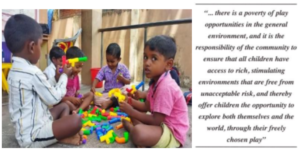
At its heart, this work is about shifting how we see childhood.
When communities come together to create spaces for play, they are investing in confident, creative, and emotionally secure children.
Play is not a luxury. It is a right. It is a shared responsibility.
Note on Data and References
A detailed report on programme reach and engagement can be shared upon request.
Key references informing this work include:
- International Play Association, Declaration on the Child’s Right to Play
- International Play Association, Play in the Lives of Children and Adolescents
- National Council of Educational Research and Training, Toy Based Pedagogy Guidelines
- National Curriculum Framework for the Foundational Stage
 )
)