


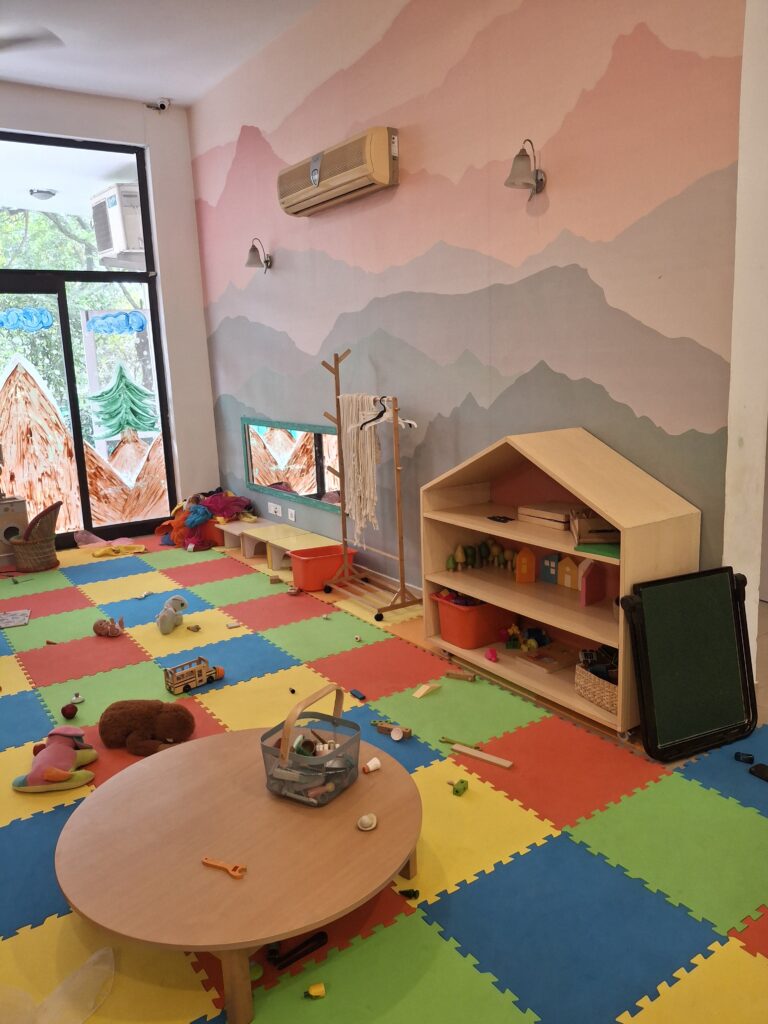
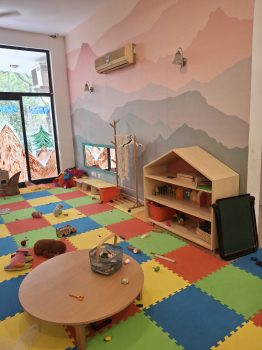
I visited Tinker Lab with a simple intention: to understand the space, and to get a sense of the pedagogy that shapes how children and educators interact there. What unfolded, however, was not just an observation of a learning environment but an invitation to rethink how we see children, and perhaps more importantly, how we see ourselves as adults around them.
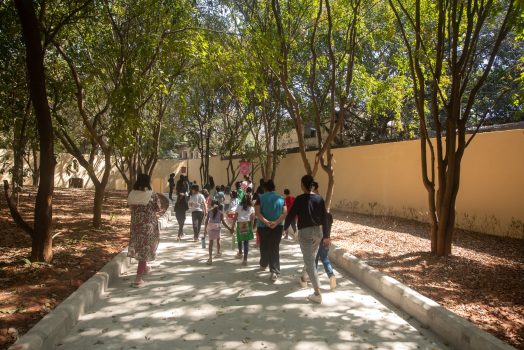
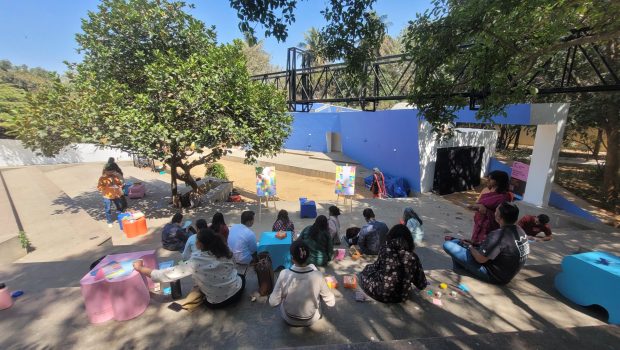
Raju and Vaishnavi walked me through the space, beginning with the outdoors. There were no elaborate structures or expensive materials. Instead, there were pots, pans, and everyday objects placed intentionally, yet without instruction.
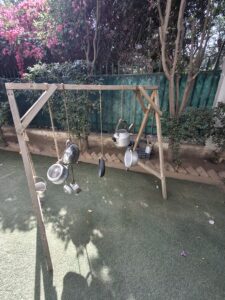
Children used these to explore sound, rhythm, and movement. There was no right way to engage, no prescribed outcome. Just possibilities.
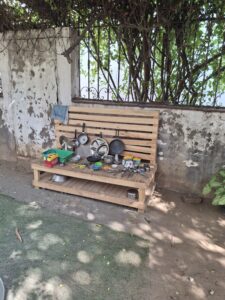
In another corner, a small garden invited children to participate in the slow, patient act of growing. Nearby, a pretend kitchen opened up a world of imagination of cooking, of family, of everyday life. The space seemed to suggest that play does not need to be designed in complexity to be meaningful; Children do not need elaborate tools to begin exploring the world.
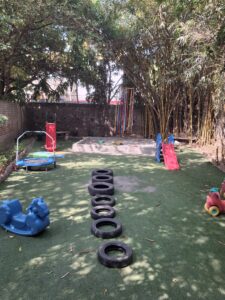
This is also exactly what ‘Bachpan is Gr8’ talks about: we don’t need to do much to celebrate the 8 wonders of childhood i.e. Play, Social Bonding, All-round skills, Education, Creativity, Stories, Nature, and Quiet Time. Simplicity is more than enough because children find that abundance around them easily. They have no trouble making the most of their environment. And a pre-school like TinkerLab showed me exactly that.
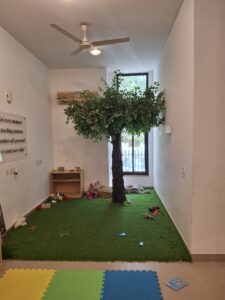
What also stood out was not just what was present in the space, but what was absent —– urgency, instruction, and constant adult direction.
Inside, the rhythm of the day reflected this same philosophy. The day begins with free play – a period where children move, explore, and engage on their own terms. This is followed by more structured sessions. But even here, “structure” does not mean rigidity.
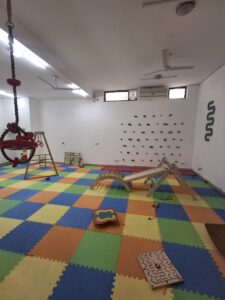
Raju described how educators pay close attention to children’s responses —- their energy, their interests, their engagement. The sessions unfold not as a fixed script, but as a conversation between the child, the educator, and the moment.
This requires something deeper than planning. It requires presence.
At the heart of Tinker Lab’s pedagogy is the role of the educator— not as an instructor, but as an observer, a listener, a co-traveller. Educators are encouraged to step back from the instinct to constantly guide or correct. Instead, they learn to watch. To notice. To wait.
They observe how children interact with materials, with each other, and with themselves. They intervene not out of habit, but out of intention.
And this is not easy work.
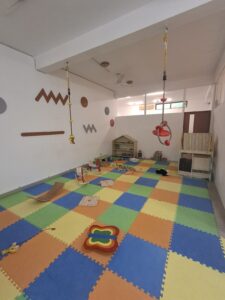
Because to truly observe a child, one must first become aware of one’s own impulses i.e. the urge to correct, to interpret, to impose meaning. Much of the work at Tinker Lab, therefore, is not directed at children, but at educators themselves.
Educators constantly engage in ongoing reflection examining their expectations, their assumptions, and the beliefs they carry about children and learning. They begin to ask:
“Why do I interpret this behaviour in a certain way?”
“What makes me feel the need to step in?”
“Where do these responses come from?”
This process of reflection is not an add-on to the pedagogy. It is the pedagogy.
Raju spoke about a framework that Pallavi is developing — one that emerges from years of observing children and working with educators. At its core is a simple yet profound shift: learning to see children without immediately filtering them through adult assumptions.
To see, before interpreting.
To notice, before judging.
To stay with what is, before deciding what it should be.
This way of seeing is not natural to us anymore. It has to be relearned. And perhaps that is what felt most striking during the visit.
The transformation of the educator is not a byproduct of the system — it is central to it. As educators begin to shift how they see and respond, something subtle changes in the environment. Children, in turn, seem to respond to this shift. They move differently, engage differently, express differently.
It becomes clear that the learning space is not defined only by materials or activities, but by the quality of attention within it.
In many ways, Tinker Lab reflects a deeper truth that Bachpan Manao often returns to:
That childhood does not need to be constantly shaped and directed.
That sometimes, what children need most is not more input but more space.
And that for this to happen, adults must first learn to pause.
To pause their assumptions.
To pause their need to intervene.
To pause long enough to truly see the child in front of them.
Because in the end, the question is not just how children learn.
It is whether we, as adults, are willing to learn how to be with them differently.

 )
)