


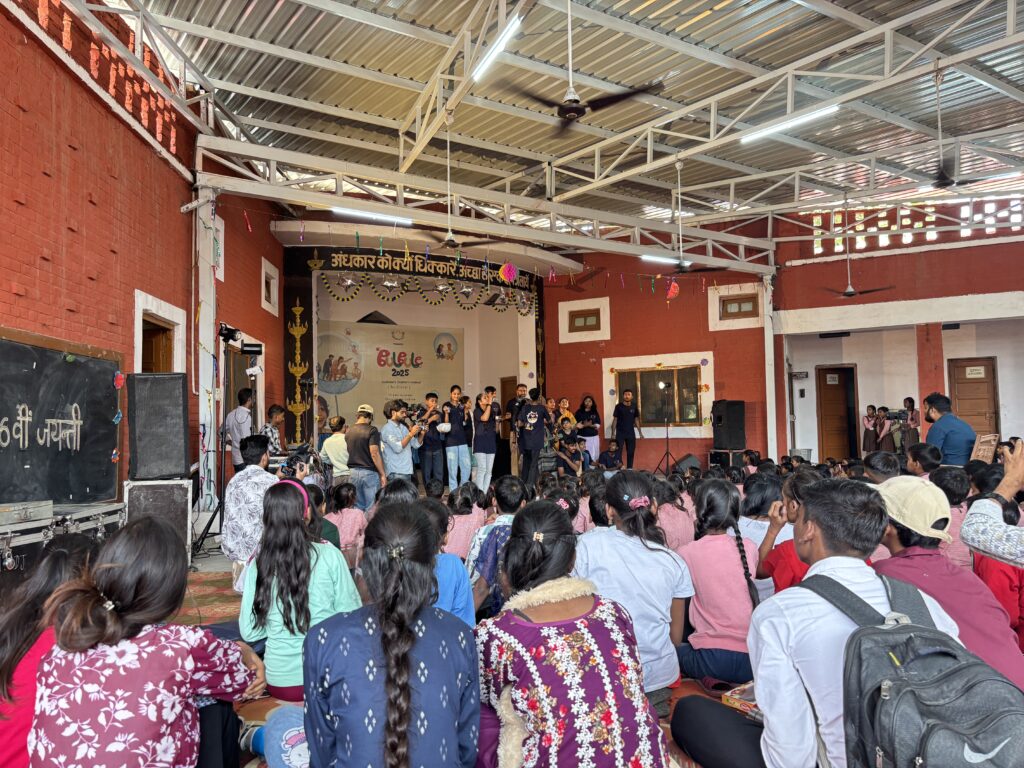
Bulbule Festival began with a simple but powerful idea, to create a space where children could find their voice and expression through arts and making. A space that stretches time for them, where moments do not rush past but stay long enough to be shaped, questioned, and remembered. Over the years, we noticed that Lucknow lacks a space like this, one where children encounter arts and culture not as “separate activities,” but as something woven into everyday life, community, and friendship. Not something to be learned only in school, but something to be lived. This intention, to build a space before building a programme—became the first seed from which Bulbule – the bright bubbles of hope – emerged and took the shape of a two day festival.
Swatantra Talim has been working closely with children from primary government schools of the Bijnaur Cluster (Sarojini Nagar Block). For many of these children, Bulbule opened a doorway to experiences that crossed the roads of puppetry, stories, performances, making, and play. Now in its third edition, the festival carries lessons from the past two years, lessons that come not only from what worked, but from what had to be rethought, reshaped, and grown collectively.
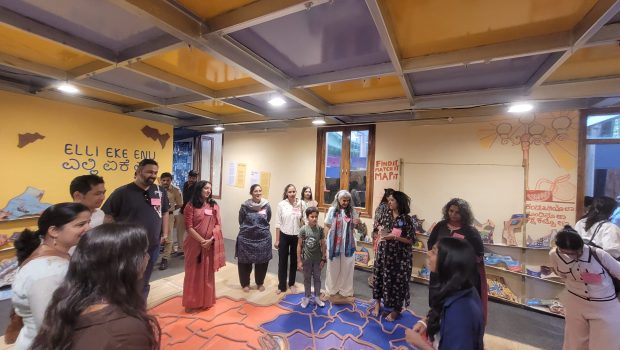
As we returned to the basics of the festival, one shift quietly shaped everything that followed: Bulbule would not be planned for children, but shaped with them. As the plan moved forward, each small idea became a brick, and those bricks slowly formed Bulbule’s walls—held together by people, materials, making, logistics, designs, and themes, all converging into a space that could hold children’s voices.
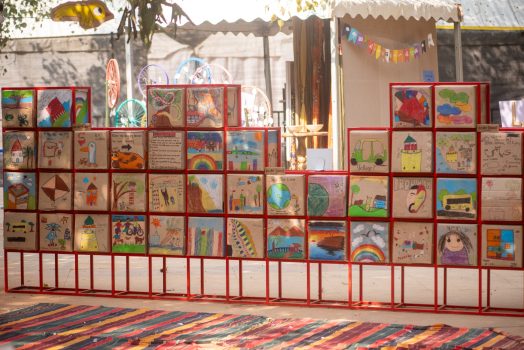
During this journey, a few children from the Malsarai Learning Centre stepped in, they moved across roles with ease: assisting facilitations, shaping ideas, communicating with different stakeholders, and responding to challenges as they emerged. When a teacher during the festival, felt disappointed after noticing a few items from her school missing in the exhibition, Kajal stepped forward. She listened, explained how the displays had shifted during installation, and walked the teacher through the space until the concern dissolved. Elsewhere, Sushpendra and Ishant took charge of the History Zone—designing not just activities, but the props and materials that invited exploration. During preparation days, Pushpendra recollected how he found himself so absorbed in making that nights stretched past his usual limits, until Chandan bhaiya reminded him it was time to rest. These kids came in as volunteers but soon became our anchors.
As things started moving, distinctions between senior and junior began to soften. Roles shifted fluidly. Children stepped into facilitation, and adults learned to step back. Kabir, a nine years old, co-facilitated tabla and making sessions alongside Vijay and Tushar, experiencing a quiet reversal from learner to facilitator. Later, during reflections, he noted how difficult it was when children didn’t listen or slipped into small conflicts. His observation drew smiles from the group, not because it was amusing, but because it revealed how responsibility reshapes perspective. Thus the festival preparations became an arena where Ideas were imagined together, spaces were assembled collectively and took form through shared decisions.
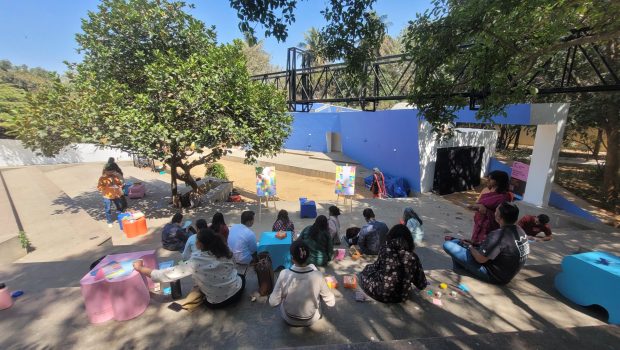
Workshop preparations around themes such as animation, Kathak, storytelling, and tabla were shaped with the intention that they would not end with the festival. Materials were chosen from what children could easily find around them, allowing learning to travel back into their everyday lives. Jaya, one of the facilitators, conducted her Kathak workshop not only as a dance form but as an experiential practice. To enrich the session beyond teaching steps, she introduced a small making activity in which children created bendi and maang-tika together. Movement slipped into making, and an art form found its way into something children could touch, wear, and take home. What remained was not just an object, but a relationship—one that felt open to being returned to in the future. Facilitators like Jaya carried this intention of keeping Bulbule alive beyond its two days, often stepping beyond their defined roles, designing activities and arranging materials independently—to make the art form more alive and leave behind new pathways for expression
Another delightful experience came up on the bus rides. Each morning, children, volunteers, teachers, and drivers boarded as strangers; each evening, they returned with shared food, stories, and tired smiles. Care travelled with them. When parents from (a newly added) school hesitated to send their children, Sufiya sat with them, shared her phone number, explained the festival, and took responsibility for accompanying the children both ways. Trust did not arrive through forms or assurances, but through presence.
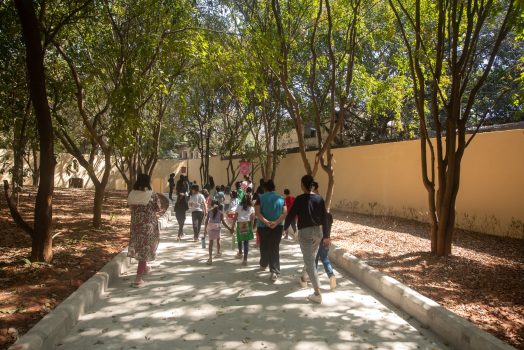
For two days, the festival grew like one of the trees on the Literacy House campus. Its branches held play and expression with care, moving freely in the open air. Children navigated these branches like leaves, flowing through new exposures and experiences. The rest of the team worked at the roots, supported by many collaborators and friends, holding the space steady so the tree could bloom again.

 )
)