

What does it look like for a community to come together to celebrate children and childhood?
I found a glimpse of an answer in an anganwadi.
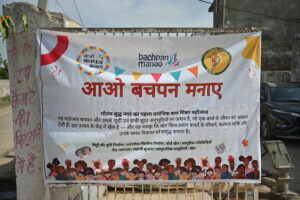
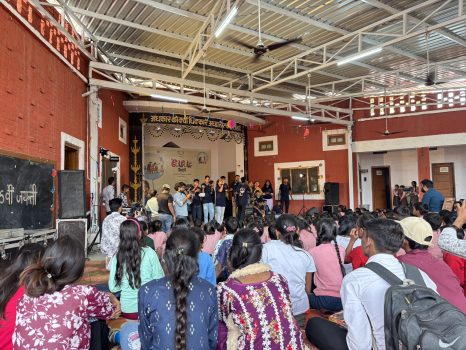
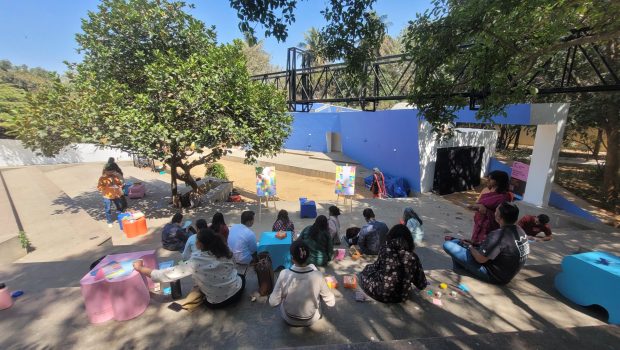
At the Pachaytan Anganwadi Center in Greater Noida, a children’s festival called Aao Bachpan Manaye unfolded not as a formal event, but as something far more alive. Organised by Let’s Educate Children in Need (LECIN), the gathering brought together over 300 people—children, parents, grandparents, Anganwadi workers, teachers, headmasters, and officials. But what stood out was not the scale. It was the spirit.
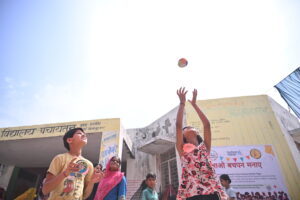
The anganwadi, often seen as a site for service delivery, felt transformed. It was no longer just a place where children came to receive nutrition or early education. It became a space of colour, sound, and movement—a space that belonged to the community.
What made this transformation particularly special was how it began. The festival was not designed for the community; it was created with them. They named it. They decided when it should be held. They shaped how their own cultural practices would find expression within it. And on the day of the festival, that ownership came alive.
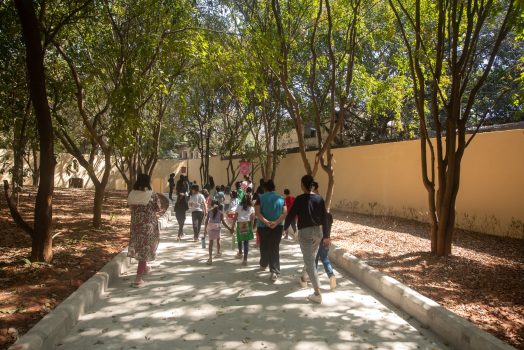
A group of women walked together, from the village to the anganwadi, singing. Their voices announced the beginning of the festival before anyone formally opened it. There was no ribbon-cutting ceremony, no stage-managed moment. Just song, rhythm, and a quiet assertion: this is ours.
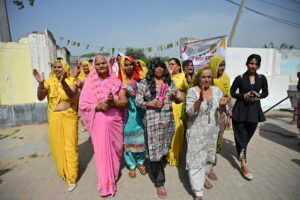
And the singing didn’t stop.
It continued through the day, pulling others in—especially mothers, who joined in, laughed, danced, and created an atmosphere that felt less like a program and more like a celebration that had always existed.
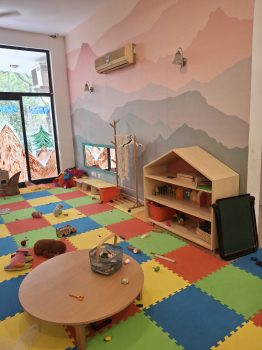
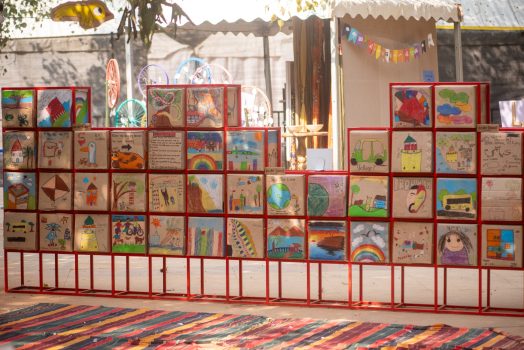
Children, meanwhile, moved through the space with a kind of freedom that is increasingly rare. The anganwadi had been set up with different activity stations: toys, free play, storytelling, clay, and art. But what was striking was not the stations themselves—it was how children engaged with them.
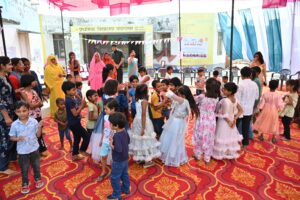
They wandered. They chose. They lingered where they wanted. They left when they wished.
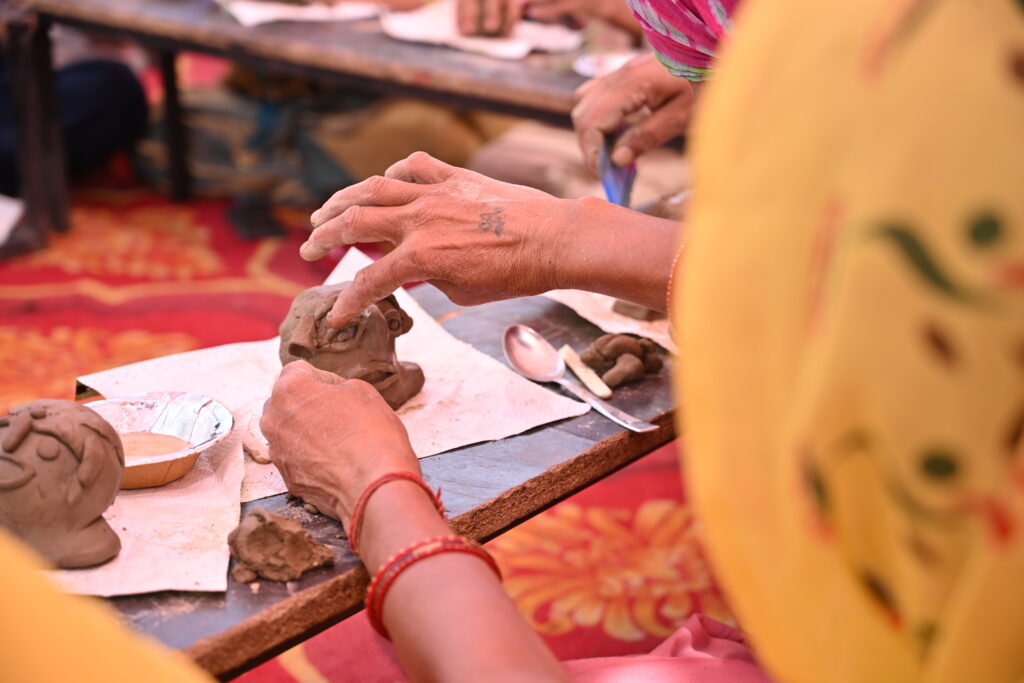
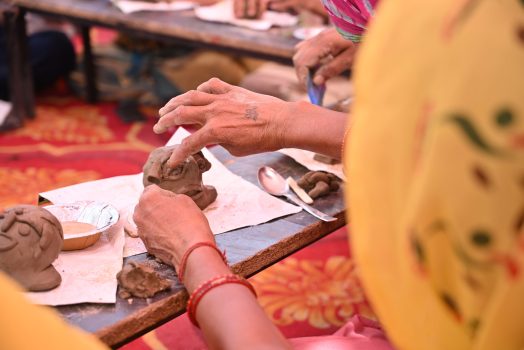
At one corner, a toy maker from Rajasthan showed children how to create their own toys. Elsewhere, children sat listening to stories, or dipped their hands into clay, shaping and reshaping with quiet concentration. Some ran freely, inventing their own games in between.
There was no rush to move them along. No sense of “what next.”
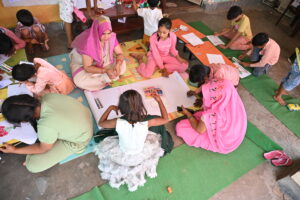
Parents didn’t just stand at the edges as observers. Many moved with their children, participating alongside them, rediscovering something that perhaps had been set aside in the busyness of adulthood.
And then there were the grandparents.
At first, they hesitated. “We are too old to play,” they said. It is a sentence that carries more than just age; it carries years of distancing oneself from play, from lightness, from permission.
But the facilitators gently insisted: “no one is too old to play.”
Games were brought to them. Invitations were extended. And slowly, something shifted.
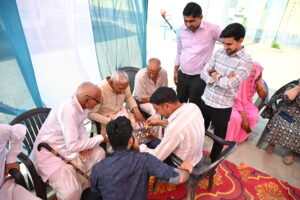
To watch elders and children play together, to see laughter travel across generations was to witness something magical. It was not just about play. It was about reclaiming childhood and feeling abundance.
The festival also brought together Anganwadi workers from neighbouring centres, along with teachers and school leaders. Officials from the Integrated Child Development Services (ICDS), including the CDPO, were present too. Their presence mattered. It signalled that this was not just a community moment, but one that institutions were willing to recognise and learn from.
The team from LECIN shared their highlights too – “The festival highlighted the immense potential of community-led learning initiatives. Seeing children, parents, teachers, and community members come together to celebrate childhood reminded us that learning is not just academic – it is experiential, inclusive, and joyful. The support of the community, who opened their homes and hearts to help with mats, cots, and arrangements, was particularly moving. Moments like these reaffirm our belief that early childhood education thrives when it is co-owned, celebrated, and lived by the community.”
What emerged over the course of the day was not just a well-run event, but a different imagination of what an anganwadi space and event could be.
Not just a site of delivery but a site of belonging.
Not just a place children come to but a place a community gathers around.
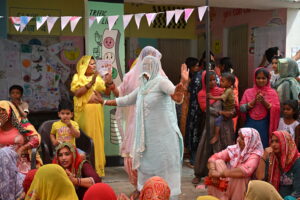
The most enduring memory, however, is not of any single activity or moment. It was of a feeling – a collective energy that held the space together. The singing mothers. The wandering children. The hesitant grandparents who slowly joined in. The conversations between parents. The shared laughter.
It felt like a reminder of something we already know, but often forget: that childhood is not an individual journey. It is a shared one.
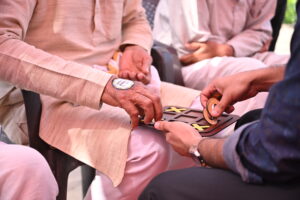
This was the first time such a festival had been organised at the Pachaytan Anganwadi Center. And yet, it did not feel like a beginning. It felt like a return to community, to play, and to joy. The festival showcased how easy it was to bring alive the idea of ‘Bachpan is Gr8’. Play, Social Bonding, Creativity, Stories….these do not require much at all. All one needs for this is presence with the children. Everything else will flow like magic.
As the day came to a close, a CDPO official reflected on the possibility of taking this idea to other anganwadis across the district. It is an exciting thought. But replication, if it is to be meaningful, must carry forward what made this festival special not just the structure of stalls or activities, but the spirit of participation and ownership.
Because what Aao Bachpan Manaye offered was not just a model.
It offered a question: What might change if we saw anganwadis not just as centres for children but as spaces where communities came together to celebrate childhood?


 )
)