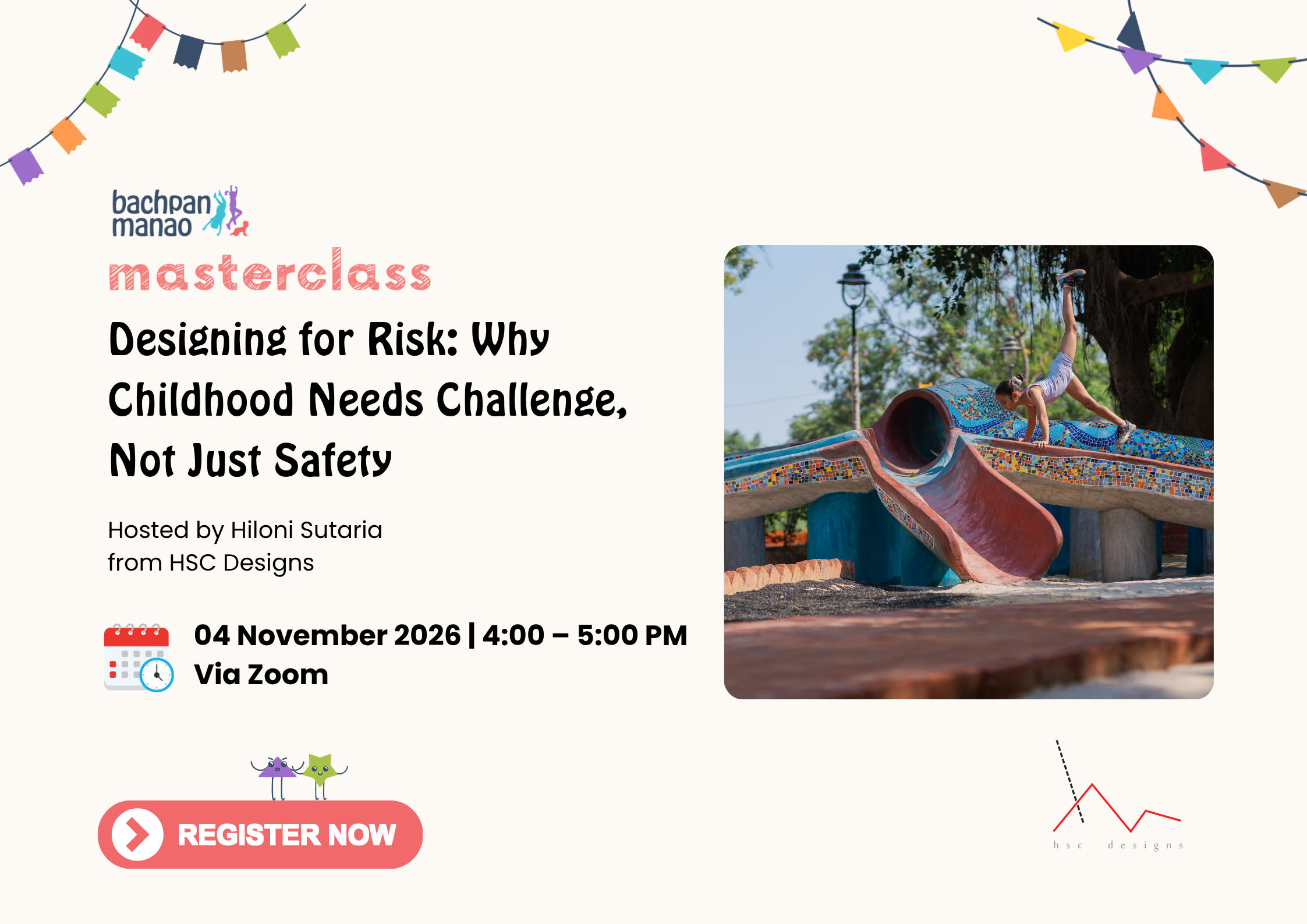




Designing for Risk: Why Childhood Needs Challenge, Not Just Safety
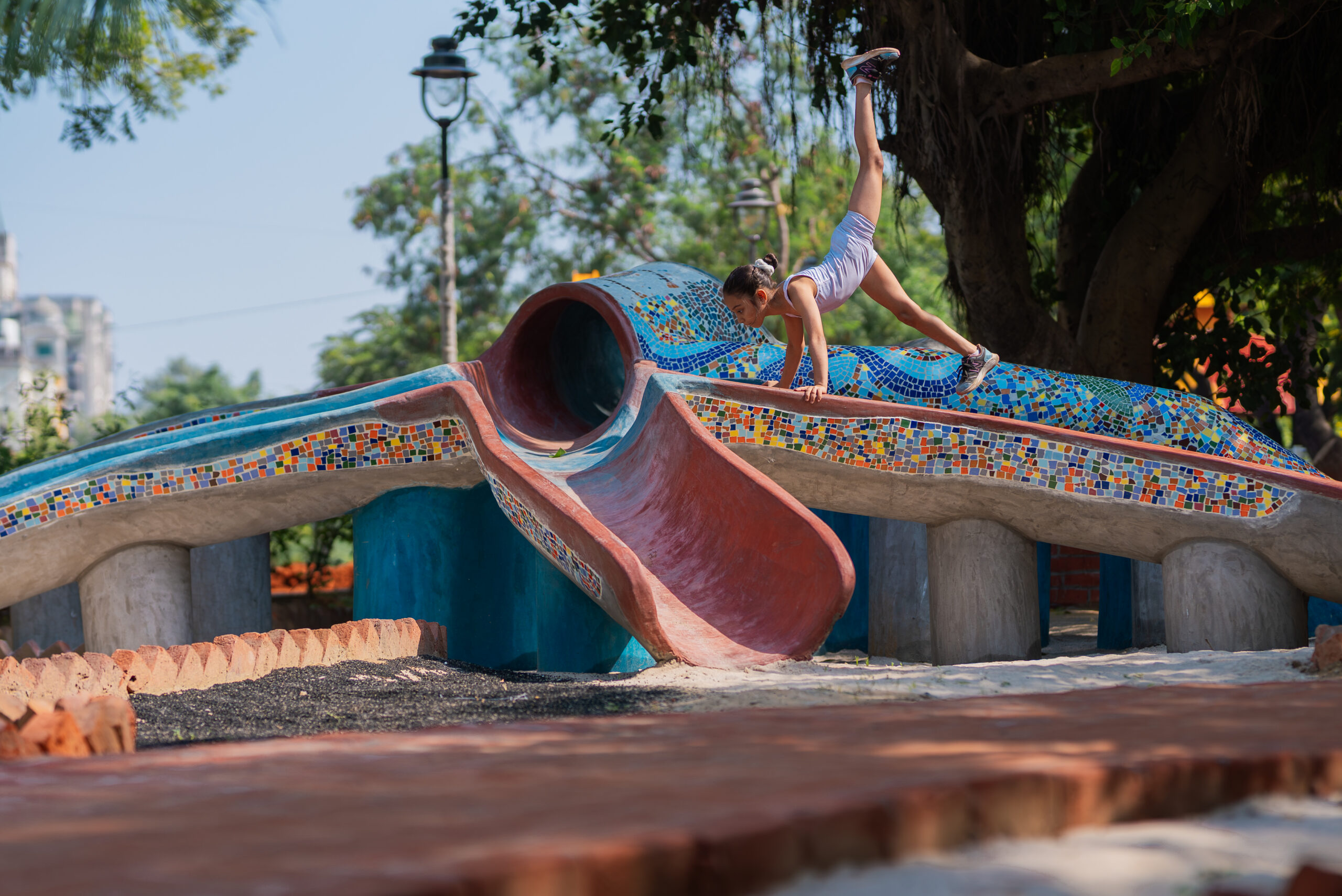
Designing for Risk: Why Childhood Needs Challenge, Not Just Safety explores how the environments we create for children influence the way they move, sense, judge, experiment, and become independent.
Using HSC Designs’ experience of designing play spaces, the session looks beyond conventional playground equipment to examine play as a spatial experience.
Through project stories, observations of how children actually occupy spaces, and simple participatory exercises, the masterclass explores how climbing, balancing, crawling, hiding, speed, texture, changing levels, and open-ended materials can become tools for development.
At the centre of the session is one question:
Have our attempts to make children’s environments safer also made them less challenging?
The session proposes an alternative: remove hazards, but retain meaningful risk.
Rather than designing spaces where adults determine exactly how children should play, can we create landscapes that allow children to discover their own ways of playing?
What to expect?
- Understand the distinction between risk and hazard.
- Recognise the developmental value of challenge and self-directed play.
- Understand how spatial design can engage balance, movement, touch, depth, scale, and other sensory experiences.
- Learn to observe spaces from the height, scale, and perspective of a child.
- Recognise opportunities for risky and open-ended play in ordinary environments, not only purpose-built playgrounds.
- Learn a simple method for evaluating an existing children’s space.
This masterclass is designed for:
- Parents and caregivers
- Early childhood and primary school educators
- Anganwadi workers
- School principals and administrators
- Architects and landscape architects
- Designers of schools, parks, and public spaces
- NGOs working in childhood and education
- Curriculum designers
- Urban planners
- Government bodies and policymakers involved in children’s spaces



 )