


Virudhunagar, a bustling industrial hub in Tamil Nadu, is known for its spinning mills, garment units, power looms, match and firecracker factories. Thousands of women keep these industries running. But behind the rhythm of machines and the pace of production lies another rhythm entirely — one of fatigue, quiet resilience, and stories rarely heard.
A Day in a Worker’s Life
Inside a dim garment factory, the sound of sewing machines never stops. Women sit shoulder-to-shoulder, heads down, fingers moving fast. The air is thick with fine lint. Heat sticks to the skin. Among them is Mari, 36, a widow and mother of two.
Her day begins before the sun. She cooks, packs lunch, gets her children ready, and is on the factory floor by 7 a.m. Her shifts run 12 hours long. Mari has been working since she was married off as a teenager. Years of standing, lifting, inhaling dust and fibre have left her body worn down. Her legs swell often. She’s had surgeries. Some days, she can barely walk. After a workplace injury and with worsening health, she had to quit.
Her husband had died earlier, from kidney failure. Mari was left alone to carry the family forward. When things got desperate, she made a decision she still carries heavily: she pulled her 15-year-old daughter out of school and sent her to work in a power loom.
“I wanted to study,” her daughter said quietly. “I used todream of becoming a teacher. Now I have to help my family.”
The Turning Point
It was during a crutch trust outreach session that Mari’s story surfaced. The team met her and her daughter and listened. The health crisis. The school dropout. The helplessness.
“No one told us we had options,” Mari said. Her words were not angry, just tired.
That meeting became more than a case. It became a question: how many other families are making the same choices simply because they don’t know what support exists?
Crutch Trust acted. Their focus widened. Workplace safety. Social security. Access to welfare schemes. A new phase of work began.
Women Organising, Women Leading
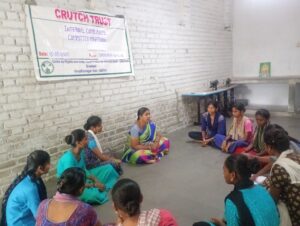
The first step was listening. crutch trust helped form worker support groups and factory committees. Here, women began to talk. About unsafe conditions. About medical bills. About the feeling of being invisible.
Through workshops, women learned about occupational health, eſi benefits, and government insurance schemes. For Mari and her daughter, these weren’t abstract terms. They were lifelines.
Mari enrolled in the Pradhan Mantri Jeevan Jyoti Bima Yojana. With crutch trust’s support, her daughter returned to school on a scholarship. Her eyes lit up. “Now, I can dream again,” she said.
From Individual to Collective
Across Virudhunagar, these efforts grew. Worker groups from over 50 industries began pushing for change with factory managements. In one power loom, workers and owners jointly held a camp linking staff to the Chief Minister’s Comprehensive Health Insurance Scheme.
They also formed a canteen committee. Meals improved. So did morale.
“We’ve learned to work together,” one woman said. “We’re not alone anymore.”
Over 1,000 workers have now been enrolled in PMJJBY through crutch trust. That’s ₹2 lakh in coverage per person. ₹20 crore in collective protection.
Fewer families now face the impossible choice of sending a child to work. Fewer daughters are being pushed into early marriage. More women are asking questions. Demanding better.
Looking Ahead
Change hasn’t been fast. But it has been real. Fpirst-aid kits are appearing where none existed. Factory inspections are no longer seen as a threat, but as support. Some children once on the verge of dropping out are back in classrooms. “I want to make my mother proud,” one young girl said. crutch trust continues this work — not alone, but alongside women who once felt powerless. Together, they are shaping safer workplaces, informed communities, and a future where dignity is not a luxury. This story is still being written. But today, it’s being written with eyes open and voices rising. We invite you to be part of it.
About the Author
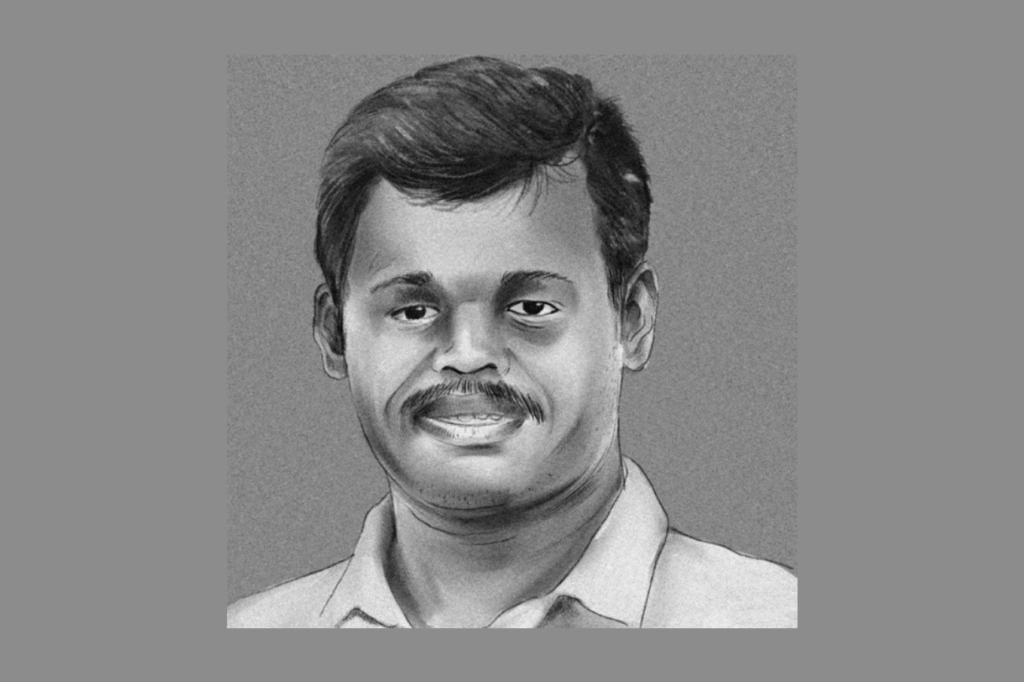
S. Manikandan is a development professional with over nine years of experience in women’s empowerment and child rights. He has led initiatives ensuring child rights and women’s safety, while building community-driven solutions. A Community Innovator Fellow from NITI Aayog, he focuses on creating safer, more supportive environments for women and children.
About the Storytelling Fellowship
This fellowship was created to give people working at the heart of social change a rare space to pause, reflect, and write—not reports or case studies, but real stories. Ten fellows came together to explore what it means to witness, to listen, and to share experiences that are often left unseen. With time, mentorship, and care, they shaped narratives that move beyond data or impact statements—stories that evoke, that remind us what it truly means to care, to act, and to stay present.




 )
)