

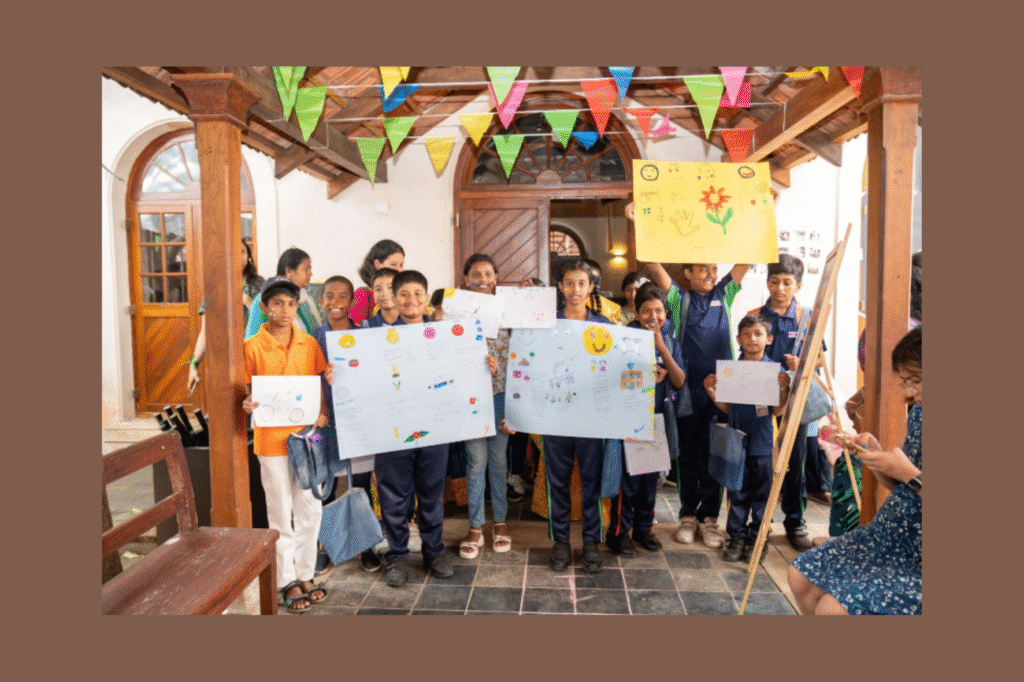
“Finally, an honest confession: We, the adults, were nervous—but we disciplined ourselves to take a backseat and just watch. We are happy that we did, for the children did wonderfully. They had great fun, and came up with such awesome outputs—we were left with sheer admiration.” — Facilitator, Voices of Play Event (DIKSHA)
This is what happened across India when adults created space for children to lead. Not as an experiment, or a study, or to collect data, but because we were genuinely curious about what children would say if we stopped talking long enough to listen.
Through Voices of Play events and observation sessions across classrooms, playgrounds, and communities, we watched and listened. Over this past year, we learned five things that changed how we see childhood, learning, and our own role in it.
Children know what they need
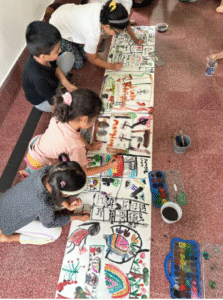
They already knew what the problems with play are. When we asked, they named everything holding them back: lack of space, lack of time, lack of permission, gender bias, age restrictions, neighbors who scold, teachers who cancel PE periods.
They didn’t just list problems, they came with solutions. They told us they needed playgrounds where no one stops them, rules that include younger kids, spaces that stay open and accessible.
Children know what they need. We just need to ask.
Observation reveals what we miss
Even in 2025, girls are still being told they’re too old to play, while boys the same age run free. It wasn’t research that told us this. It was a 12-year-old speaking her truth at a Voice of Play event.
We tend to hurry past these moments in our day-to-day lives with children. But when we slow down to listen and observe, we notice what we’d otherwise stay blind to.
Play is already learning
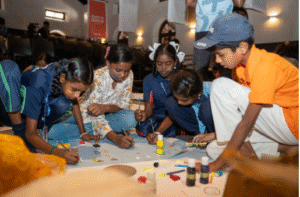
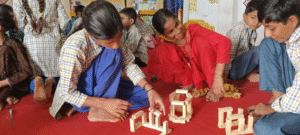
Watch children in the park or on the beach. They play with mud and sand, and stones, and leaves and sea shells. They stack, pour, balance, completely absorbed.
To an adult passing by, it may look frivolous. But look closer and you’ll see it carries all the seriousness of learning. We don’t call it learning. Yet everything about it is.
The most powerful learning happens when no one is trying to control and teach.
Children need time, not timers

Picture this: a child is halfway through a math problem, pencil hovering, finally beginning to see the pattern. Then the bell rings. Notebooks snap shut. Within minutes, the class has moved on to history. The unfinished thought gets left behind.
This is what school time looks like. Learning gets chopped into thirty-five minute blocks, even though curiosity doesn’t work that way. An idea might need an hour, or two, or a whole afternoon to fully form.
Children already know what learning looks like. It’s unhurried, curious, absorbed. We’re the ones who keep interrupting.
Seeing children as experts

We tell ourselves that children are small, still learning, not quite ready. This assumption creates a kind of distance that makes genuine observation difficult.
But what if we flipped that? What if we saw children the way we see any expert: as people whose thinking is valuable, whose observations matter, whose logic deserves our attention?
You’ll be surprised to see what they can teach us.
This Children’s week, we remind ourselves that the more we observe children, the more we start to separate the act of learning from the act of teaching.
When we watch without rushing to fix, when we listen without preparing our response, when we allow silence and slowness and detours, children show us what they’re really capable of.
What will you learn from a child today?
This draws from contributions submitted as part of Voices of Play 2025 by Shaishav Child Rights, Latika Foundation, Opentree Foundation, Squirrels Play School, Pyar Ki Dor, Gyanprakash Foundation, DIKSHA, Papagoya, NEAID, Gramothan, Pagaria Foundation, Samanta Foundation, Bikash Saathi, Dream A Dream, LECIN, Troyworld, Shiksharth, Gram Urja, Swatantra Talim, Umoya Sport, and Sportathon.
Voices of Play is a Bachpan Manao Collabaction anchored by Shiksharth, REACH Collective and EkStep Foundation.





 )
)