


I first met Ullesh through a conversation about scholarships. What he didn’t say in words, his eyes carried — steady, serious, older than his age.
As I listened, I kept thinking: how do you grow up holding a schoolbag in one hand and a tiffin carrier in the other? How do you chase dreams while cooking, cleaning, caring — all before the first bell rings?
This story is not about overcoming. It’s about continuing. It’s about a boy who kept showing up — to the kitchen, to school, to life — even when nothing around him said he had to.
Writing this made me sit with his silences, his memories, and his resolve. I hope you do too.
This is Ullesh’s story of loss, grit, and the quiet pursuit of a future no one imagined for him.
In the labor colonies of Bangalore, dust settles on everything. On schoolbooks. On tarpaulin roofs. On the shoulders of children who grow up too fast.
Ullesh was five when he and his brother started playing hide-and-seek between brick piles and scaffoldings, their laughter drowned out by the thud of hammers. Their parents built homes for others. They lived in one made of tin.
He doesn’t remember much of Raichur, the place they left behind. Just that here, in Ibbaluru, his mother’s hands were always sore. The rain always got in. And the air smelled like wet cement and effort.
Then one afternoon, a woman appeared. Prema Teacher. She found the boys covered in dust, hair matted, eyes wary. She spoke gently. Promised their parents a safe place,a space to learn while they worked.
At Sampark’s early learning centre, Ullesh learned to read, count, sing. But what stayed with him was the feel of Prema Teacher’s hand in his—leading him to school. He was six. His uniform scratched at his skin. But he didn’t want to let go.
At eleven, everything shifted. His mother, Sankaramma, died without warning. The silence in their one-room home was sudden and complete. That morning, Ullesh stood alone at the stove. He’d never cooked before. She used to call him “Kappe” and made his dosas extra crisp. He tried to make one. It burned. He ate it anyway.
From then on, he cooked every morning. Packed tiffins. Got his brother ready. Swept the floor. Walked to school. Came home. Did it all again the next day. And the one after that.
In class, he never let his grades slip. On the track, he ran like he was being chased by everything he refused to become. He became a state-level sprinter. Topped math in Class 10. Passed Class 12 with distinction.
But college costs money. And they had none. So he turned again to Sampark. The ones who had once led him out of the rubble. They helped him find a scholarship, a seat in a college that once felt out of reach.
Today, Ullesh studies B.Com by day. At night, he presses clothes in an apartment complex. He wants to be an IAS officer. Not for the title. For what it means to someone who’s seen how little systems offer people like him.
He speaks of Ambedkar like someone who’s memorised not just the name, but the weight behind it.
And some nights, in a quiet kitchen, when he flips a dosa just right—golden, crisp, not burnt—he hears her voice again.
“Kappe.”
And he keeps going.
About the Author
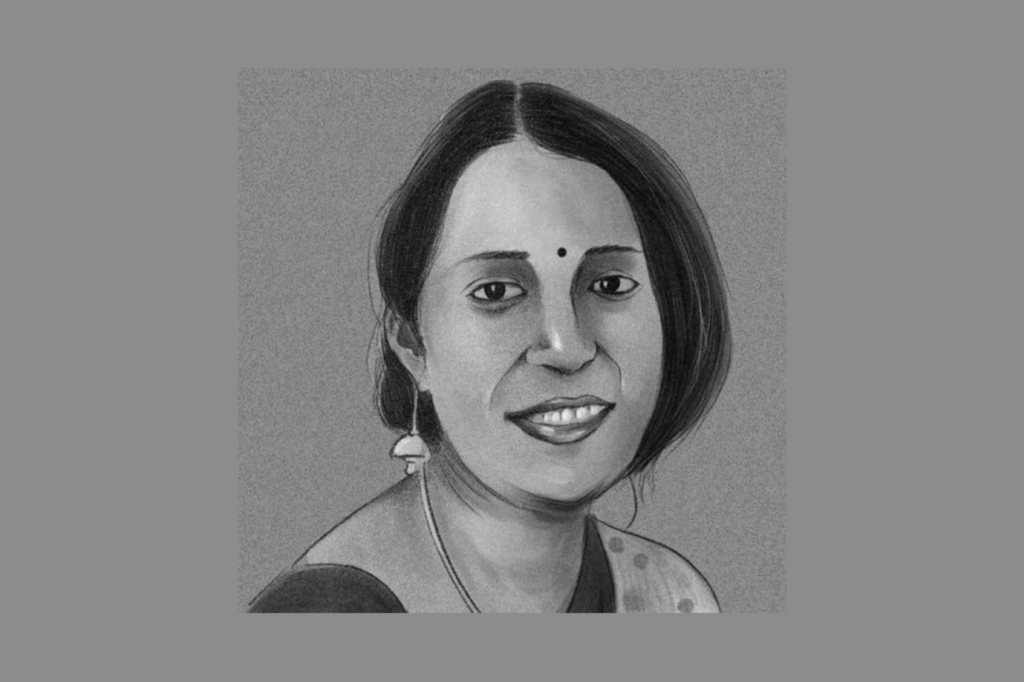
Manjula K, Programme Manager at Sampark, is a development professional with over 12 years of experience, including 8 years in the social sector. With a Master’s degree in Rural Development, she specializes in bridging gaps for marginalized children through holistic early childhood care and education.
About the Storytelling Fellowship
This fellowship was created to give people working at the heart of social change a rare space to pause, reflect, and write—not reports or case studies, but real stories. Ten fellows came together to explore what it means to witness, to listen, and to share experiences that are often left unseen. With time, mentorship, and care, they shaped narratives that move beyond data or impact statements—stories that evoke, that remind us what it truly means to care, to act, and to stay present




 )
)