


What We Learned in Meghalaya
Our time in Meghalaya was not just about observing. It was about listening, to the people who hold care every day.
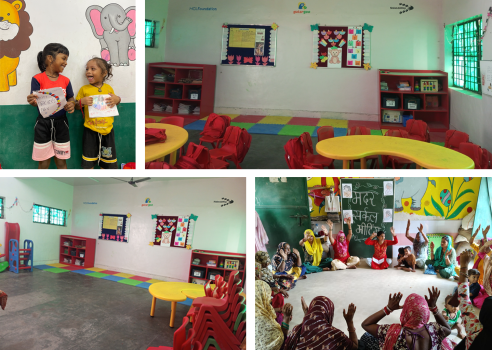
Through field visits across Anganwadis, libraries, CMYCs, schools, and homes, we built persona sketches of caregivers and community anchors:
- An Anganwadi worker in a leaking asbestos hut who improvised with turmeric handprints when resources were scarce.
- A librarian who transformed from shy to spirited, creating a space where reading, emotions, and play coexisted.
- An Ultimate Frisbee coach, barely 20, who saw play as freedom and advocated for girls to stay back and play after school.
- Mothers and grandmothers balancing survival with nurturing, often carrying memory, song, and worry as their tools of care.
- Fathers, some stern and absent, others breaking norms to be hands-on and emotionally present.
From these stories, clear patterns emerged:
- Play was pedagogy. Games, song, and gesture taught as much as chalk and talk.
- Care was layered. Often invisible, gendered, intergenerational, and yet indispensable.
- Spaces mattered. Joy, silence, and community shaped how children learned and felt safe.
- Technology was present, but not central. It supported, but never replaced, the stories and rhythms of people.
This report is both mirror and map. A mirror reflecting how diverse, layered, and often unseen caregiving is. And a map pointing towards how we might reimagine systems to better accompany these realities, rather than override them.
It leaves us with one simple lesson: if a space is not joyful, it is not working. Let joy be our data, and care our curriculum.








 )
)