

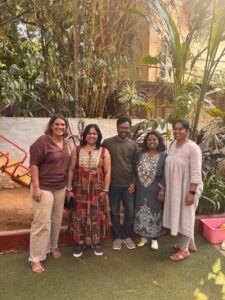
It was early morning in Bengaluru. As the city slowly stirred awake, three of us from Dharmalife—Panchalee, Jharna, and Sreeram—set out on an exposure visit that promised a deep dive into three very different, yet deeply inspiring, early childhood education models.
Our mission was clear: to learn, unlearn, and return with ideas that could spark joy and possibility in the rural preschools we support.
Day 1: Laughter in Learning – Makkala Jagriti
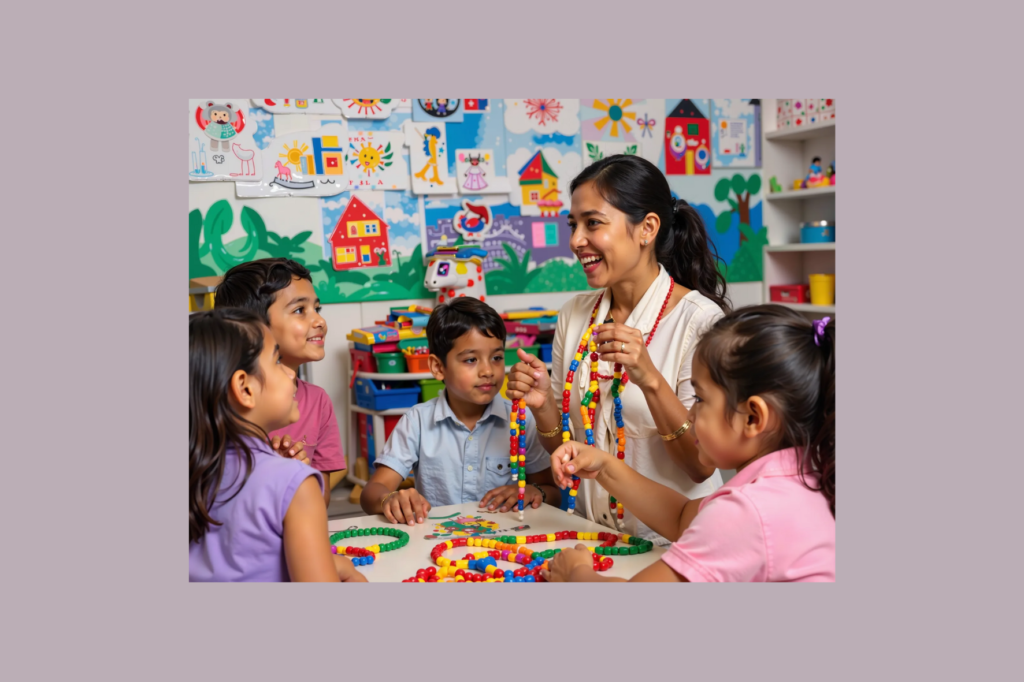
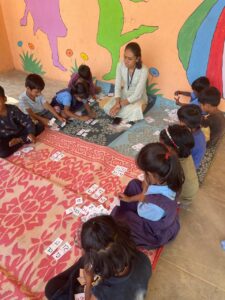 We stepped into a government Anganwadi transformed. Gone were the dull walls and rigid routines we often associate with public preschools. Instead, Makkala Jagriti had created an inviting space, rich with stories, songs, and the gentle hum of curiosity.
A teacher at Makkala Jagriti smiled as she guided a group of children through a story circle and shared,
“When children start their day with a song and a smile, they carry that joy into everything they do. The circle time has become our little magic ritual.”
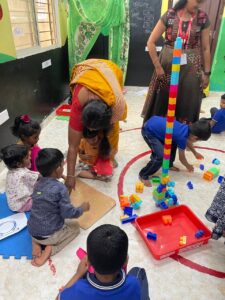 Children began their day in a circle—singing, sharing, and settling into a rhythm. Then came the corners—literacy, numeracy, art, and pretend play—each corner inviting a different kind of magic. We saw how structure didn’t mean rigidity—but rather a rhythm that allowed children to know what comes next, giving them comfort and space to explore. The toy library was a revelation—thoughtfully curated, joyfully used, and even sustainably maintained. It was a reminder that play is not a luxury. It is learning. Parents weren’t just spectators here—they were co-travelers. Through center walks and discussion modules, families were drawn closer to their children’s worlds.
We left with a quiet sense of awe—and a camera roll full of ideas.
Day 2: Bridging Gaps – Gubbachi Learning Community
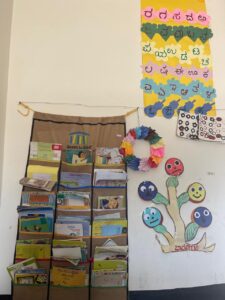 At Gubbachi, the classrooms hummed with quiet concentration. Here, literacy and numeracy took center stage, but never at the cost of care. We saw two distinct age groups—older children preparing for formal school with structured lessons, and younger ones playing with sounds, colors, and books from Room to Read. The preschool classroom might have been small, but the dreams it held were large. We met teachers who had built routines for mixed-level learning, balancing worksheets with storytelling, group work with individual attention. What stood out was their intentionality—everything had a purpose, whether it was a task, a transition, or a conversation.
A trainer from Gubbachi reflected,
“We don’t just teach children to read—we create a space where they can belong, where learning doesn’t scare them but helps them dream.”
Outside, the community center was taking shape—an effort to reach children who couldn’t come to school, especially when parents were away for work. Here, we witnessed early learning not as a classroom practice but as a community ethic.
Day 2, Afternoon: Wonder in the Everyday – Papagoya
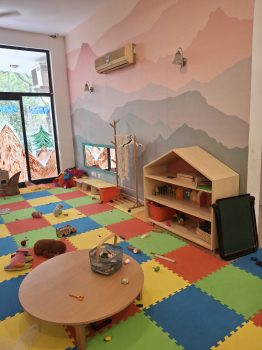
In Papagoya, everything slowed down. Shoes were left at the entrance. Laughter echoed in the hallway. And the children? They led the way. This private preschool, inspired by the Norwegian kindergarten model, was a masterclass in what happens when children are trusted with time, space, and choice. We watched children eat independently, explore nature, and have their emotions named and respected. Their schedule was both gentle and structured, their curriculum expansive—from food and movement to ethics and philosophy. The 1:4 and 1:7 adult-child ratio seemed extravagant at first—but in action, it translated into meaningful, trusting relationships. We talked to educators about their professional growth routines—daily reflections, skill-building sessions, and yes, joy. Papagoya’s model might be resource-rich, but it reminded us that some of the most powerful tools—like empathy, curiosity, and trust—are free.
So What Do We Take Back?
As we returned home, our hearts and notebooks were full. But one idea echoed across every visit:
Children thrive where adults are intentional, spaces are joyful, and learning is rooted in love.
Whether it’s an Anganwadi in a city slum, a government school in a migrant settlement, or a private playschool inspired by Nordic traditions—when the child is at the center, everything changes.
“We saw children confidently handling cutlery, exploring textures in the garden, and telling stories through their drawings. It was a reminder that when we trust children, they rise beautifully.” shared Jharna from Dharmalife.
Seeds for Dharmalife’s Rural Preschools
These visits were more than exposure—they were invitation letters from the future.
Inspired by what they saw, the Dharmalife team is now working to embed these learnings into its rural preschool programs. Here’s what they’re bringing home:
- Designing structured yet flexible routines where play and learning go hand-in-hand.
- Creating toy libraries that foster joy, while planning for sustainability.
- Crafting curricula that blend readiness for school with readiness for life.
- Building a culture where parents and educators walk together in supporting the child.
- And most importantly, continuing to believe in the power of community to raise a child.
We believe childhood is not a race to the top, but a journey of wonder. Thanks to Makkala Jagriti, Gubbachi, and Papagoya, we’ve come back inspired—and ready to dream bolder. Let’s continue to make childhood joyful—one preschool, one parent, one play corner at a time.
 )
)