


Play. It’s everywhere, yet somehow never enough.
That’s really the heart of this work we have been doing at Bachpan Manao (BM). We didn’t begin with a new programme or toolkit. We began with a question: What could shift the way we think about childhood in India?
And after months of listening, across communities, classrooms, kitchens, state departments, and field sites, it became clear. The real gap isn’t just in access. Or in policies. Or in the tools.
The real gap is in narrative.
Too often, our conversations about childhood begin with what’s missing, ki yeh nahi hai, woh nahi hai, samajh nahi aata. But what if we started from abundance? What if we saw the first eight years of life not as a crisis to be solved, but as a natural, powerful, even joyful period of growth?
That mindset shift changes everything. Because when you start from abundance, you see different possibilities. You don’t just try to “fix” the system, you nurture it.
That’s how BM began. Not as a campaign. Not as an intervention. But as a message. A message to every adult who cares for a child:
The children are doing just fine. It’s we who need to remember.
Abundance as Anchor
India’s early childhood ecosystem is full of tireless work: training Anganwadi workers, building creches in informal settlements, and developing local play materials. But what could lift this entire ecosystem? A shared, joyful frame. One that doesn’t reduce children to beneficiaries or metrics, but sees them in their full possibility.
And that frame is play.
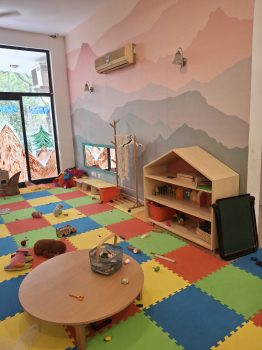
Play is not a luxury. Not a side activity. Not a “nice to have.” It is the how of learning. It is how children live, breathe, grow, and discover the world.
And it’s also how adults heal.
In a BM workshop, we posed the same question to children and adults: What does a thriving childhood look like?
- The adults responded with nostalgia.
- The children responded with presence.
That’s the distance we’re trying to close.
We’ve seen teachers laughing through play-based training sessions, turning to facilitators mid-activity and saying:
“Itna maza aa raha hai na humko, bachon ko kitna maza aaya hoga!”
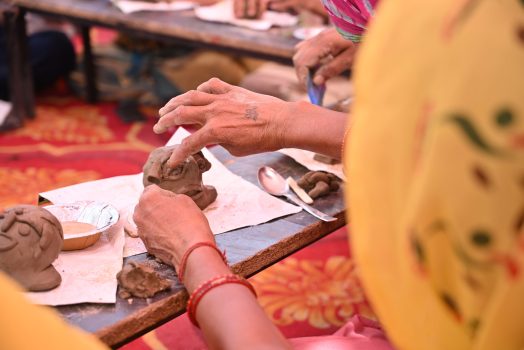
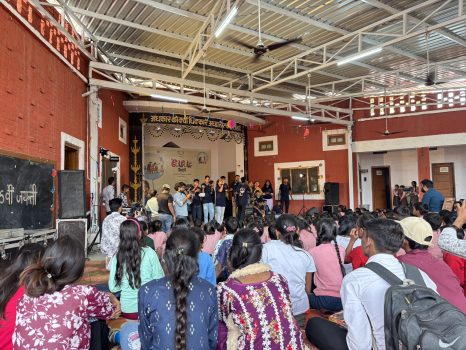
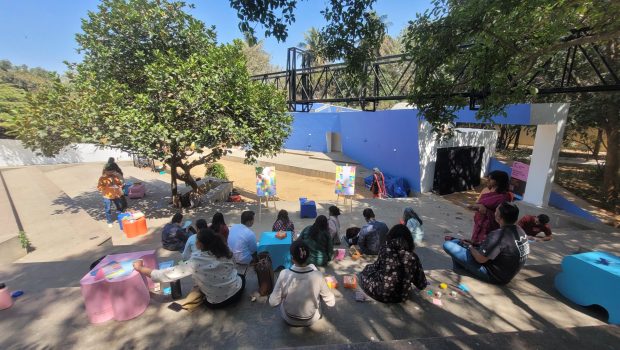
That’s the power of play, not just as a pedagogy, but as a methodology of training, of remembering, of reconnecting.
Reimagining Play-Based Assessment
If we genuinely believe play is how children learn, then assessment must shift, too.
Right now, so much of early assessment is about what a child can or can’t do—red, green, or amber. Right, wrong, or late. But children don’t think like that. Children fall, laugh, and try again. They don’t need to be told they’ve failed—they need to be trusted to try again.
What would it look like to develop play-based assessment models for early grades?
- Where growth is seen as cyclical.
- Where a stumble is just part of learning.
- Where feedback feels like encouragement, not evaluation.
Because if we’re watching closely, we’ll see: children are already assessing themselves every time they say “ek aur baar!” and try again. That’s the core of a growth mindset. Let’s build systems that honour it.
The Role of Technology: Amplifier, Not Answer
We’re often asked: What about tech? Our answer is clear: tech can amplify, but it cannot replace what is fundamentally human.
In BM, we use tech tools, a lullaby repository, a WhatsApp bot, radio formats, podcast stories, but always with one purpose: to support the caring adult. Because the adult, be it parent, teacher, or Anganwadi worker, is the bridge between the child and the world.
And the evidence is consistent: too much screen time in the early years impacts motor skills, attention spans, and emotional regulation. The Indian Academy of Pediatrics, NEP, and global ECE guidelines are all aligned on this. The role of tech in early years must be carefully designed, carefully delivered, and adult-facing first.
The real challenge? Not the tool, but the feeling. Does the message light a spark? Does it make someone say, “I want to try this with my child”?
Tech’s value lies in making the right message reach the right adult at the right time, with joy, in their own language, at their own pace. Whether it’s through a bot, a Pitara, or a community radio song. That’s where abundance meets scale.
Building a Whole Society Movement
BM is not just about content or curriculum. It’s about building spaces of possibility.
- Spaces where librarians become early years champions.
- Where play becomes the language of professional development.
- Where fathers learn lullabies again.
- Where policy meets playgrounds.
And above all, it’s about collaboration—between the sarkar, samaj, and bazaar. Across Collab-Actors. We have seen that thriving childhoods are not the responsibility of any one actor. They are a shared obligation.
- If a park in your area is broken—let’s fix it.
- If a migrant child lacks a crèche— let’s create one.
- If your child is playing—let’s sit beside them.
Because creating thriving childhoods doesn’t start in Parliament or in policy. It starts with presence. With paying attention. With play.
And looking ahead?
We hope that by 2035, we won’t need to say “play-based learning” anymore. It’ll just be called learning. That every mohalla will have a playground. That every Anganwadi worker will be seen not just as a provider, but as a nurturer of potential. That assessment will reflect the resilience of a child saying “phir se khelte hain” instead of a red mark on a sheet.
Because the children haven’t forgotten how to play.
We have.
But remembering is still within reach.

 )
)