


“E Gaja, Gajaaaaa… tor maa daakche!” (Gaja’s friend yells out—your mother is calling!)
The sun’s almost down. Birds flap home across the reddening sky. Cows shuffle into their sheds, their tails swaying like pendulums.
And Gaja?
A blur of brown legs and a spinning bicycle tyre. He chases it down a narrow trail, guiding it with a stick, shrieking,
“Aaschiiiiiii!”
(I’m cominggg!)
But his legs don’t slow. He isn’t ready to stop playing—not yet.
• • •
Gaja is named after the Gajaburu hills, and he wears the name well. He climbs like a goat, dives like a swan, races like a deer through the wild green edges of his village. The world outside fills him with life.
But once the school bag straps dig into his shoulders, something dims.
The blackboard chalk screeches like nails on metal. The teacher’s anchal whips in the fan’s breeze, making his head spin.
“Murga ban ja!”
(Become a rooster!)
He squats outside the classroom, bent over in punishment, peeking through his legs at the shadow of a tree, trying to guess how long until school ends.
• • •
School never made sense—until the day a storyteller didi came. She sat under the banyan tree and told them about the pangolin.Shy, toothless, covered in scales. A creature so gentle it curls into a ball when scared.
Gaja was hooked.
That was the first time school had his full attention.
Later, he received a small book—Pangolin Protectors. He carried it everywhere, tracing the pages with his fingers, reading it again and again. The pangolin became his secret friend, his private obsession.
• • •
One day, while playing near the forest, Gaja and his friends
saw it.
An Indian pangolin.
His friends grabbed pebbles, ready to throw. Gaja stepped forward.
“Thaam, tora sob thaam… O amader kichu korbe na!”
(Stop, all of you. It won’t harm us.)
They froze.
“How do you know?” they asked.
Gaja told them about the storyteller didi, the story, the pages of the book. The pangolin, meanwhile, vanished into the bushes—quiet as it came.
• • •
At home, the obsession continued.
“Thammi, tui bonrui’r moton fokla!”
(Grandma, you’re toothless like a pangolin!)
She grinned through her puffed rice.
But Ma? Not amused.
Still holding the rolling pin, she stormed out of the kitchen. “Bonrui, bonrui… aj thammi, kaal tor bon! Ektu pora shuna nei?”
(Pangolin this, pangolin that—yesterday your sister was shy like one, today grandma’s toothless like one. Will you study or not?)
• • •
Then came the school call.
Ma feared the worst—another complaint. “Ei bonrui’r golpo-er jonyei sheshmesh amader ghor-e aagun lagbe, dekho!”
(This pangolin story will burn our house down.)
But when Baba arrived, the scene was different. Gaja was standing in front of reporters, smiling nervously. Teachers were clapping. The headmaster came forward.
“Your son saved a pangolin today. And more than that— he alerted the forest department. The poachers were caught. An entire trafficking racket has been busted, thanks to him.”
A cash reward was announced—for Gaja and for the school. The teachers had already decided: the school would use the funds to build a science lab and train teachers in storytelling.
“Gaja has shown us,” the headmaster said, “that sometimes one story can do more than a hundred instructions.”
Gaja peeked in through the door. His father stood inside, speechless.
Everyone laughed when the teacher added,
“Brace yourself. Your home might soon be filled with jackals and jesters, peacocks and pranksters—because we’re all going to tell stories now.”
• • •
And Gaja?
He just stood at the threshold, still holding his tyre stick. For once, it wasn’t rolling. He didn’t need to run anymore.
His story had already travelled.
About the Author
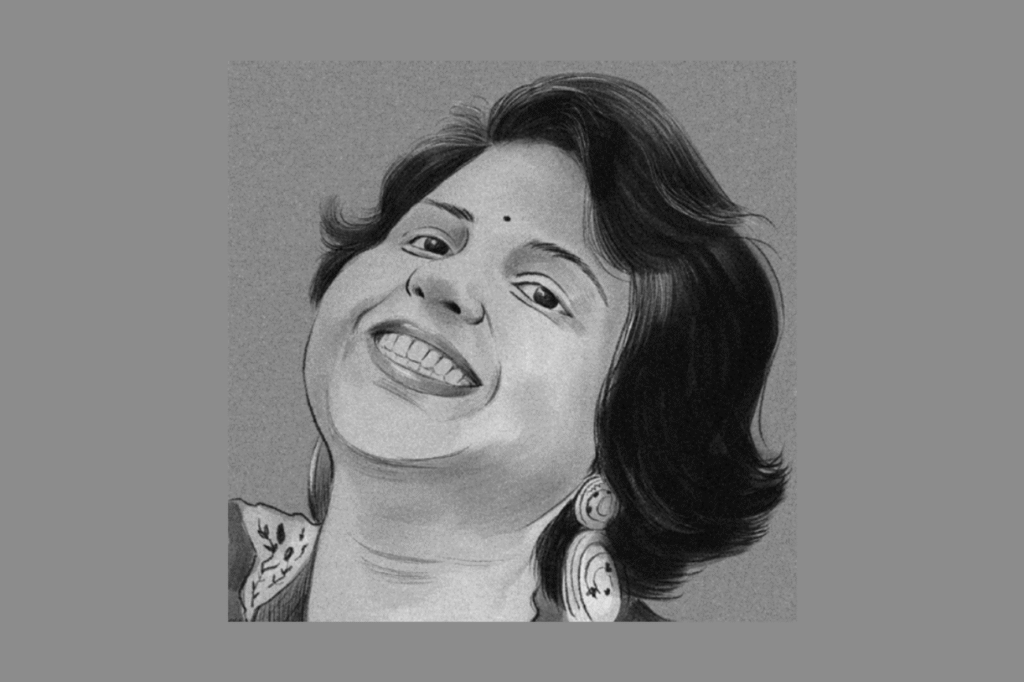
Priyanka Chatterjee, popularly known as “Golpodidi” (Your ‘Story Lady’), is a Rex Karmaveer Chakra Awardee, storyteller, design thinker, applied theatre faculty, and cultural ambassador. With her Story Bag, she has impacted over half a million lives worldwide. Her belief: “Change your story. Change your life.
About the Storytelling Fellowship
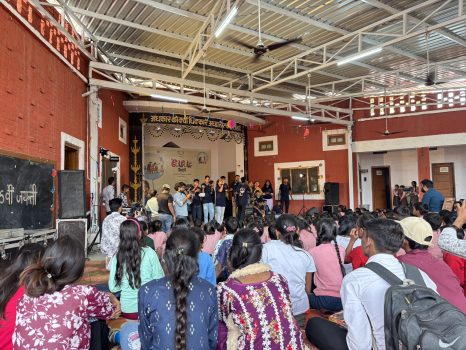
This fellowship was created to give people working at the heart of social change a rare space to pause, reflect, and write—not reports or case studies, but real stories. Ten fellows came together to explore what it means to witness, to listen, and to share experiences that are often left unseen. With time, mentorship, and care, they shaped narratives that move beyond data or impact statements—stories that evoke, that remind us what it truly means to care, to act, and to stay present

 )
)