

At the edge of Bengaluru’s expanding IT corridor—past glass-fronted towers and service lanes—are the settlements that rarely show up on maps. Many of the families here are migrant workers. They’ve moved to the city from different parts of the country, looking for more stable livelihoods. Most work in the unorganised sector—housekeeping, security, construction, delivery gigs. Wages are often tied to exploitative conditions, with little job security. Housing is unstable. Water and electricity are inconsistent. Many families don’t have proper ID documents, making it difficult to access healthcare, ration benefits, or school admissions.
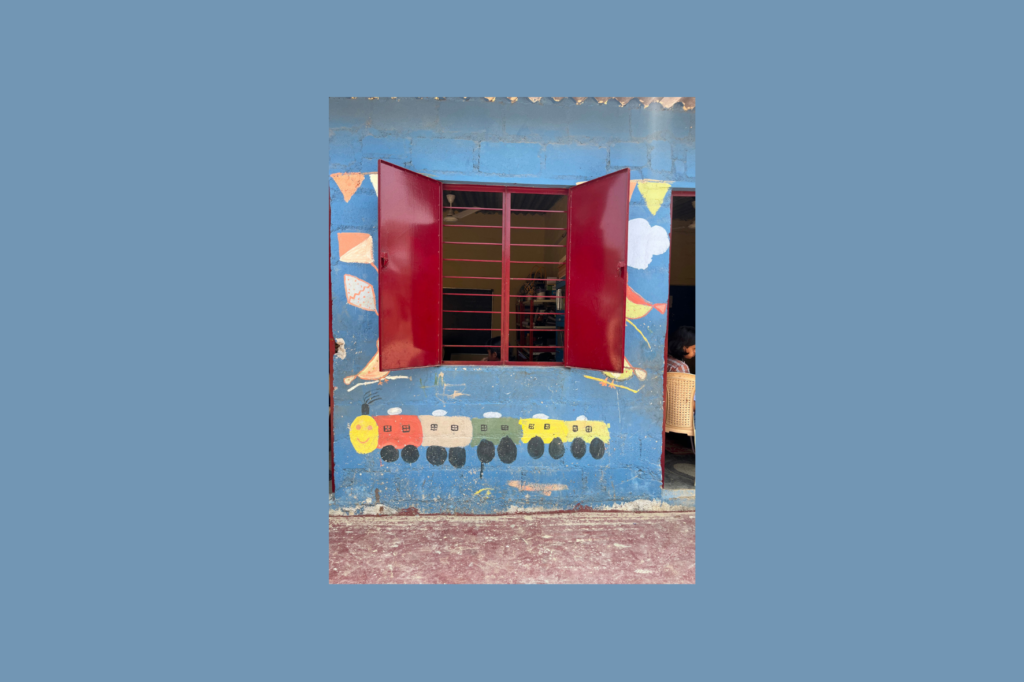
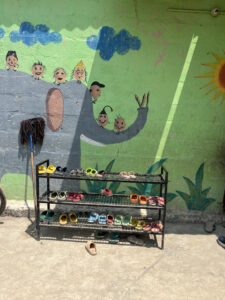
The Gubbachi Community Learning Centre sits quietly within the settlement—small classroom huts arranged around an open sandy patch. Clothes dry on nearby lines, and a few younger ones weave between the classrooms. It’s a simple space, but one that brings structure and familiarity to days that are often unpredictable.
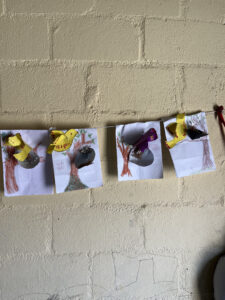
The Buds Preschool Programme is where the youngest children begin. The room is small, almost always full. Thirty children across different ages sit in groups, guided by teachers who prepare worksheets in advance—Kannada letters, tracing, lines. The morning starts with a prayer, a few songs, and gradually settles into quieter focus. It’s not a conventional classroom. But it works.
The coordinator, who has been here since the programme began, doesn’t describe herself as a teacher—but she notices everything. How each child enters the room. Who’s distracted. Who looks tired. Who hasn’t eaten. “The best part of my day,” she says, “is when the kids run in and say good morning, or bring me something they made. Or just come in for a hug.” It’s the everyday joy that signals something important: “it tells me that they feel safe here.”
For many children, especially those from households without proper documents or regular income, formal school is often out of reach. Some have never been enrolled. Others have dropped out. The centre helps bridge that gap—not just with early learning but through a broader School Support Initiative. This includes identifying out-of-school children through local surveys, facilitating ID documents like Aadhaar and caste or income certificates, and supporting parents in navigating government systems.
Workshops are held regularly to build parental awareness—on education, but also on social risks like child labour, early marriage, or substance abuse. Health camps are conducted to check for basic concerns—dental issues, vision, nutrition. It’s not just about classroom learning; it’s about giving the child a better chance at showing up and staying in the system.
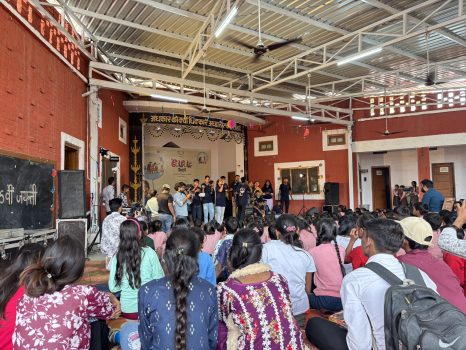
Across the centre, older children attend spoken English or computer sessions. Some come for remedial help after school. Others are being slowly mainstreamed into government schools with the centre’s support. Six days a week, the rhythm continues—not because it’s mandated, but because the need doesn’t pause.
And yet, even with so much happening, the preschool room remains a kind of anchor. The teachers here work with a 1:10 ratio, giving enough space for attention, for care. “You learn to read a child’s mood before you ask them to read anything,” the coordinator says.
Parents visit for quarterly check-ins, but many interactions happen more informally—at drop-off, through community workers, or over WhatsApp. Most parents ask the same questions:
“Will my child be okay?” “Will they manage in school?” “Will they catch up?”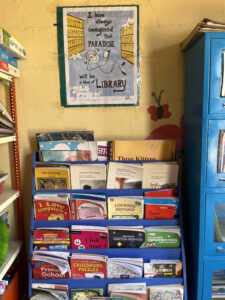
The teachers ask themselves those questions, too. They worry about more than just academic milestones. They worry about what’s happening at home, what’s not being said, and how that shows up in a child’s behaviour.
To support children who can’t always travel to the centre, Gubbachi recently opened a community learning space right in the heart of one of the settlements. It’s closer to home. Run by trained local caregivers, it provides a safe, familiar place for children to continue learning when school is out of reach. It’s not a full substitute—but it meets children where they are.
The coordinator isn’t listed in any official roster of frontline workers or caregivers. But that’s what she is. A quiet constant in many children’s days. Someone who keeps track not just of who is present—but how they’re present.
Because before learning can begin, someone has to notice how the child is arriving—tired, hungry, curious, distracted. At this Gubbachi space, that someone is often her—an unusual and often unseen caregiver, holding together the small things that make learning possible.
______________________________________________________________________________________________________________
This story is part of Voices of Care—an ongoing inquiry into the caregiving systems that shape childhood in India. By understanding what enables care to thrive,
we uncover what allows children to flourish.
Slate Scribbles—a series of on-ground reflections from our visits, documenting the people and practices that quietly hold up a child’s world.
A heartfelt thank you to the team at Gubbachi for opening up their space to us—and for letting us witness the everyday care, intention, and quiet leadership that runs through their work. This reflection is shaped by what we saw and felt during our visit: a space where learning begins with noticing, and where caregiving is both ordinary and extraordinary.
To learn more about Gubbachi’s work, visit their website here.


 )
)