




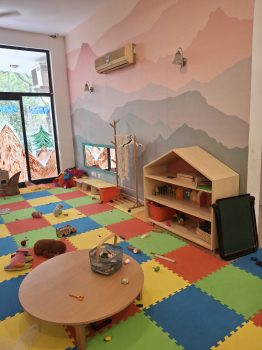
Childcare in India has always adapted to the changing realities of family life, work, and society. There was a time when extended families and close-knit communities took care of children together, but as more parents—especially mothers—entered the workforce, the need for formal daycare centres and crèches grew. Over the years, these spaces became essential for working families. But the COVID-19 pandemic changed everything. With job losses, remote work, and shifting migration patterns, many parents started managing childcare differently, relying more on in-home care and flexible arrangements. To understand how this shift is playing out, we visited daycare centres across Delhi—from Lajpat Nagar and Mayur Vihar to Gurgaon and North Campus. What we found was a sector struggling to survive, caught between financial strain, changing parental needs, and an uncertain future.
The Economic Fragility of Daycare Systems
Daycare centres have long been an essential support for working parents, providing not just supervision but also early education and socialisation for young children. However, the pandemic exposed just how vulnerable these systems are, pushing many to the brink of closure as demand plummeted and operational costs remained high. Even as workplaces reopened, daycare centres struggled to find their footing. These places rely on steady enrollment to stay open, but lockdowns, job losses, and shifting routines threw everything off balance. Parents who once depended on daycare started finding other ways to manage—some hired help at home, others adjusted their work schedules, and for many, the habit of sending kids to daycare just never returned.
Running a daycare isn’t cheap. Rent, staff salaries, and paperwork pile up, and with fewer children coming in, keeping the doors open has become an uphill battle. On top of that, the people who keep these places running—the teachers, ayahs, and support workers—are often migrant labourers. When the lockdowns hit, many of them left for their hometowns and never came back. Finding new staff hasn’t been easy, especially when the pay is low and the job demanding. This loss of trusted caregivers has made it even harder for parents to feel confident about sending their kids back. With fewer enrolments and a struggling workforce, many centres have had no choice but to shut down, leaving working parents with even fewer childcare options.
The Shift Towards In-Home Care and Informal Caregiving
More and more parents are choosing to manage childcare at home rather than sending their kids to daycare. When the pandemic forced families to adapt, they found new ways to manage—some hired domestic workers who doubled as caregivers, while others leaned on grandparents or other relatives for support. Now, even though life has mostly returned to normal, many of these setups have stuck. Parents who once relied on daycare have realised that home-based care is often more convenient, flexible, and sometimes even cheaper.
Another big shift has been the rise of virtual learning. During lockdowns, kids got used to being taught online, and many parents became comfortable overseeing their education at home. With hybrid and remote work becoming the norm for many professionals, it’s easier for parents to juggle childcare without needing a separate daycare space. For families who’ve settled into this rhythm, the idea of going back to drop-offs, pick-ups, and rigid schedules just doesn’t feel necessary anymore.
The Impact of School Closures and Air Quality Concerns
Daycare used to be a lifeline for working parents, especially in cities where school hours don’t always match up with office timings. But now, another unexpected challenge is keeping kids away—schools themselves have become unpredictable.
In Delhi, for example, air pollution has led to frequent school closures. Parents are already struggling with last-minute announcements about schools shutting down, often for days at a time. In this uncertain environment, committing to daycare feels like another layer of unpredictability. If schools aren’t open regularly, why go through the hassle of daycare pick-ups and drop-offs? Many parents have instead settled into home-based solutions, whether it’s a relative, a domestic worker, or simply adjusting their own work schedules. With fewer parents willing to rely on daycare, many centres are struggling to stay afloat.
The Future of Daycare: Can the Model Adapt?
Daycare centres are at a turning point. The old model—where parents dropped their kids off for a full day of care while they worked—isn’t working the way it used to. With more families choosing home-based care, flexible work schedules, and online learning, daycares need to rethink what they offer if they want to survive.
So what comes next? Maybe daycare centres won’t just be physical spaces anymore. They could offer a mix of in-person care and online early learning programs for parents who still want structured education but need flexibility. Workplaces could step up too, with companies providing on-site childcare or subsidising daycare to encourage employees to return to offices. Another possibility is small, community-run childcare networks—where a group of parents share caregiving responsibilities—offering an alternative to the traditional full-time daycare model.
The reality is, childcare in India is changing. The pandemic didn’t just disrupt things temporarily—it sped up shifts that were already happening. Parents now think differently about where and how their children are cared for. Daycare centres that can adapt to these new realities—whether through more flexible models, stronger community connections, or innovative learning approaches—will be the ones that remain relevant. The challenge now is figuring out what that future looks like.



 )
)