


November 30 | Saptaparni, Hyderabad
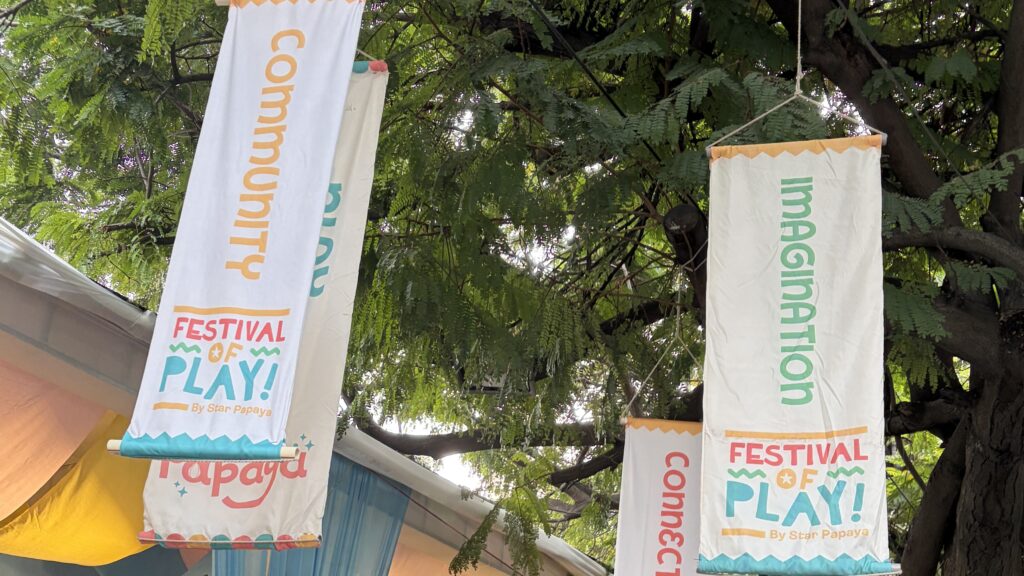
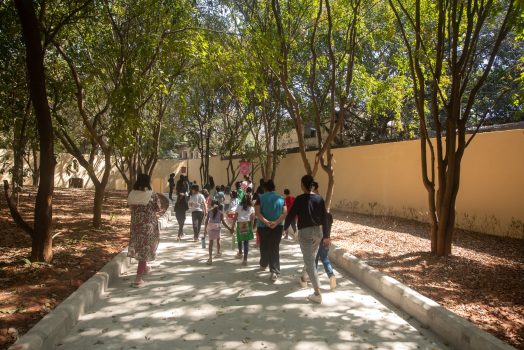
On a warm afternoon in Hyderabad, tucked away under trees and terracotta roofs at Saptaparni, we joined the Festival of Play, a new offering by Star Papaya, designed to spark reflection on early childhood, learning, and everything in between.
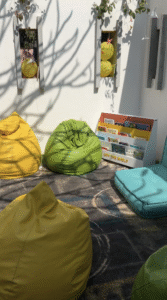
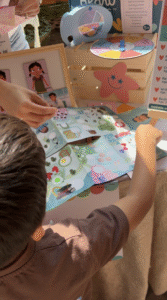
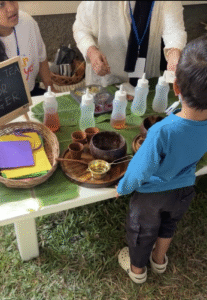
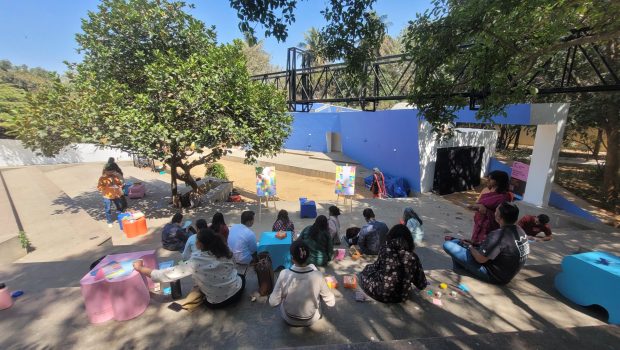
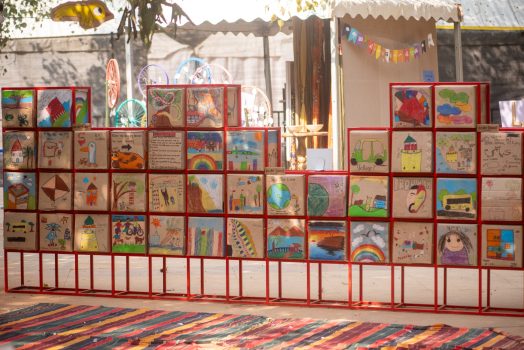
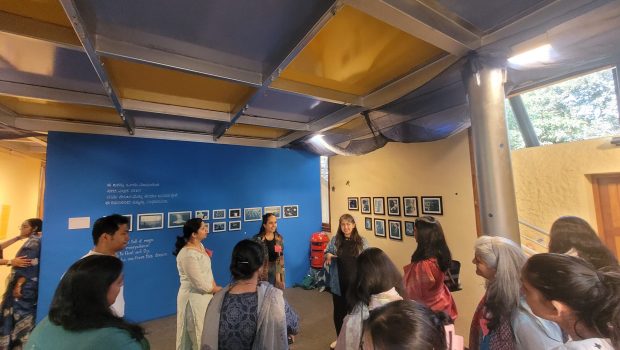
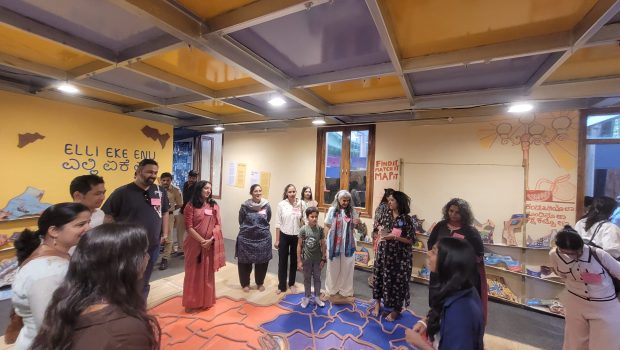
There were families walking around, kids playing at many pretend play stalls and walk through experiences from popular books like The Tiger Came to Tea and Gajapati Kulapati, stalls selling books, blocks, and balance boards. There were experiences set up like science labs to test the quality of milk as well as see and touch worms from a vermicompost bin. There toys and books that invite parents and children to slow down and connect and publishers who publish books by children. There was a reading nook and a tree dedicated to poems strung by children. Spaces and experiences curated by pre-schools, schools, non-profits, market players, influencers, authors, artists, and musicians. An open air amphitheater with workshops, performances and readings for children, parents and educators. Children and childhood, the common thread. But inside one of the quieter halls, a group of speakers gathered, each bringing stories from different corners of early childhood.
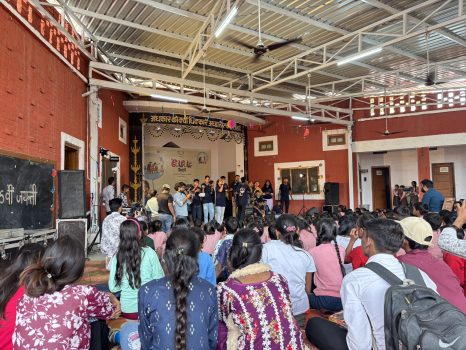
This was the BM8 Talks session on The Forgotten Language of Play, a story-led format designed to bring lived experience to the centre, a 45-minute session curated in the BM8 format, short, sharp, story-led reflections, each under 8 minutes. . A return to what we may have forgotten about how children actually learn, connect, and play.
Noticing what’s already there
Hita Kumar from the Bachpan Manao team at EkStep Foundation opened the session. No bullet points, just a story, about her daughter dragging a kitchen lid around like a drum, how she saw kids turning twigs into toothbrushes in rural Karnataka, how a piece of string at a railway platform became a skipping rope.
Her point was simple: play is already happening, we just forget to see it.
“We plan so many activities for our children, and yet we miss the moments when they’re already learning. We add toys, but not time. We create experiences, but not space.”
She spoke of how children turn everyday objects into playgrounds, but what they really need is emotional room.
- Room to repeat.
- Room to lead.
- Room to be slow, messy, unsure.
Her line, “Stay close for safety, step back for freedom”, stayed with the room.
A baby’s first playground
Natasha Uppal, founder of Matrescence India, followed with something that immediately shifted the mood.
“Your baby’s first playground isn’t a toy, or a mat, or a class. It’s you. It’s your nervous system.”
She spoke gently but clearly, explaining co-regulation in a way that felt less like neuroscience and more like real life.
When you’re regulated, babies feel safe enough to explore. When you’re anxious, even if you’re doing all the “right” activities, they withdraw. Their system mirrors yours.
She shared small practices, like a “three-breath reset” before picking up a child. Or letting go of milestone charts and just watching what your baby is curious about that day.
She also named the hard parts: That parenting when dysregulated doesn’t make you a bad parent. That repair matters more than perfection. And that play starts with presence, not performance.
Slow is not lazy
Then came Harshita Agarwal and Rozina Syal from Toddler’s Den, speaking across two developmental windows, 1-3 and 3-6 years.
They spoke about “deep time”, the natural biological rhythm toddlers live in, where things move slowly, repetitively, intuitively. But the world they’re growing up in runs on clock time.
Rozina told a story from her own life, of being so scheduled as a child that by her teenage years, she couldn’t tell what she liked. Her personality had been filled in by classes.
Harshita reminded us that most tantrums aren’t misbehaviour, they’re toddlers begging us to slow down. She gave real tips:
- Count to 10 after giving an instruction
- Let your child stop to look at the ant
- Build buffer time into every outing
- Replace “we’re late!” with “should we hop like a rabbit to the door?”
It wasn’t “gentle parenting” rhetoric. It was real-life reframing, grounded in neuroscience and seen daily in classrooms.
Holding tension with care
Last was Gayatri Prakash, a learning designer, who brought in something less often spoken about: the tension between structure and freedom.
She offered a “Yes, and” approach:
- Yes, children need space to lead, and yes, adults still have goals.
- Yes, they thrive in chaos, and yes, order helps them feel safe.
She broke down practical ways to balance both:
- Set up a ‘mess corner’ where chaos is welcome
- Offer playful constraints instead of instructions
- Name the contradiction and let children co-create within it
Her framing didn’t pretend there’s one perfect approach. It showed that play requires constant calibration, and a mindset of curiosity, not control.
A few things we noticed
The BM8 format held attention: Short, story-led talks brought people in, and kept them there. The rhythm worked well in a space that was otherwise full of movement. It gave listeners just enough to sit with, without overwhelming. Each speaker offered something distinct but connected.
The open setting invited casual listening: The marketplace layout meant that people could drop in and out, which also made the space feel accessible. While not a closed room, the energy was held well. People stayed longer than expected, and several stayed on to speak with the speakers afterward.
The reflections felt lived: These weren’t theory-heavy talks. They were full of personal stories, small pivots, and grounded insight, the kind you carry home quietly. There was no rush to fix or advise. Just an invitation to notice what we may have forgotten about how children play.
Why this space mattered
There’s a growing anxiety and uncertainty around parenting, to do more, teach more, buy more, prepare more. What this session quietly reminded us was: you are already enough.
- That noticing is more important than scheduling
- That repetition is not regression.
- That play is a way of being, not a task to perform.
We keep coming back to this. That the work is not to add more, but to protect what’s already there.

 )
)