

“If it’s not your story to tell,
You don’t tell it.” – Iyanla Vanzant

Play, the universal language of childhood transcends the boundaries of geography, culture, and background. It is far more than a leisure activity—it is a fundamental human experience that shapes cognitive, emotional, and social development. For children, especially those from marginalised communities, play is a source of joy, a tool for learning, and often a lifeline to connection and hope.
Around the International Day of Play on June 11, several organisations—Shiksharth Trust from Sukma, Chhattisgarh; Samanta Foundation from Dehradun; Umoya Sports from Gurgaon; Swataleem from Mewat; Aatman Academy from Mumbai; rZamba from Kargil; Bhumi from Chennai; EkStep Foundation and REACH India Collective, as a Bachpan Manao, Badhte Jao collab-action—joined hands to curate a one-of-its-kind event. “Voices of Play” was a groundbreaking initiative that flipped the conventional narrative. Instead of adults leading discussions about children, the event gave children the stage to tell their story, so adults could all listen.
Want to listen to this article? AI helped us to create an audio version. Click below!
What Voices of Play was about?

This platform celebrated the essence of childhood, amplifying young voices and creating a space for children to share their experiences, thoughts, and feelings about play. It was an opportunity to reimagine play from the perspective of those who know it best: the children. A lot of thought and assistance from partner organizations went into conceptualising the discussions that would be conducted at the conference:
We wanted to be inclusive and also shed light on some of the prevailing issues that stem from gender bias, diversity etc:
- Space2Grow along with our in-house legal hand Hita Kumar, helped us construct rules for adults in the conference to respect the participants and the space.
- We were mindful of creating a safe space online for everyone involved, especially children.
- Consent was taken from the parents and the guardians of every child much before the conference.
- We had a few dry runs with partner organisations and facilitators to ensure there were no technological issues that would disrupt the flow of the conference.

The entire event was facilitated by kids of Swatantra Talim, a Lucknow-based non-profit. Gillu and Gili the beautiful facilitators weaved the whole interaction together beautifully. Children represented diverse contexts, focusing on themes such as:
- Play in Urban Spaces
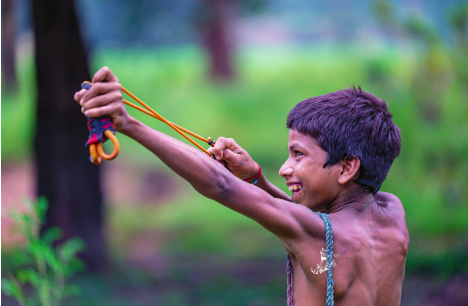
- Play in Rural and Tribal Geographies
- Play through a Gender Lens
- Play for Children with Special Needs
For every discussion, break-out rooms were created, and interested audience members were moved to the room of their choice to be the observers and listeners children needed. Volunteers from the organisation played the role of facilitators and assisted with the operational aspects to ensure a space where discussions thrived. Rahila, a volunteer from rZamba shared, “Seeing the kids grow in confidence as they interacted with peers from different states was so rewarding. They embraced diversity and shared their heritage with pride.”
The event also marked a milestone for children from Kargil, facilitated by rZamba. Four children participated as panellists, sharing traditional games from their region with peers from five different states. This was their first experience presenting on a platform of such diversity. They showcased their favourite games, connecting with children from different cultural backgrounds. This interaction was both empowering and enlightening, fostering collaboration and mutual respect among communities. For the children, it built confidence, honed their communication skills, and instilled pride in their cultural identity.
Tejal, an avid shooter and a participant who represented the voice of a child in the urban space breakout room, shared, “I heard the other children speak and how much they are involved in their game and strategy. I feel many children do not get an opportunity to play or get access to spaces for playing After the session, I felt grateful that I was getting that privilege to play.”
Why Play?

Play is not just a pastime—it is essential to childhood. It fuels creativity, builds problem-solving skills, and fosters emotional intelligence. For children in rural, tribal, and forest communities, play holds even deeper significance. It connects them to their natural environment, strengthens traditional skills, and reinforces community bonds. In these communities, play thrives on simplicity. A ball made from cloth, a game of tag in the forest, or imaginative role-play with friends is all it takes to spark joy and connection. Play in such contexts is a way of life, rooted in culture and tradition, nurturing a child’s sense of identity and belonging.
One story shared by Tanya Khera from the Samanta Foundation exemplifies this beautifully. “A child in a classroom, always silent and retreating into corners to avoid being noticed, rarely joined his peers during activities”. One day, during a library session, a teammate narrated the story Mujhe Koi Nahin Khilata—a tale about a child left out of play by others. As the story unfolded, the silent child surprised everyone by revealing that this was his story too. He shared how he longed to play but was often excluded, which led to his withdrawal. His vulnerability moved his classmates, who admitted they had never thought about how their actions affected him. They promised to include him in their games from that day forward. True to their word, the group dynamic transformed. Today, the once quiet child plays joyfully alongside his peers, his silence replaced by laughter.”


Play is also a powerful tool for inclusion. For children with disabilities, it offers more than physical activity—it fosters a sense of belonging and self-worth. While therapy often focuses on specific goals, play provides a holistic and engaging approach that promotes joy, friendship, and interaction.
A young girl from Aatman Academy, Mumbai, narrated her journey of turning to professional shooting after being excluded from sports like basketball and athletics due to her short height. Her pain and resilience shed light on the often-overlooked challenges children face and their ability to overcome them through play.
Similarly, Aditya from Umoya Sports, a non-profit working with children with disabilities, shared the story of Poornima, a young girl with an intellectual disability. Initially hesitant and isolated, Poornima would sit on the sidelines during activities. unsure of how to join in. Over time, through gentle encouragement and tailored activities, she began participating. Poornima gradually gained confidence, connecting with her peers and becoming an active participant. Her transformation is a testament to how inclusive play environments can nurture growth and self-assurance in every child.
How Play Motivated Us?

“Voices of Play” provided a unique opportunity for children to articulate their perspectives on play, answering questions like: Why do they play? How do they choose their games? What emotions do they experience while playing? The responses were eye-opening, illuminating stories often left unheard. Many children shared experiences of exclusion, bullying, and limited opportunities, while others spoke of the joy and connection play brought into their lives. By centering children’s voices, the event reminded everyone that play is not a luxury but a fundamental right. Listening to these narratives allows for a deeper understanding of children’s needs and inspires the creation of environments where play can thrive.
Volunteers from rZamba shared, “Watching the children present their games with pride was heartwarming. It wasn’t just about play—it was about connecting and learning from each other.”
Play is the heartbeat of childhood—a transformative activity that shapes children physically, emotionally, and socially. For children in rural, tribal, and forest communities, play is more than a pastime—it is a way of life. It fosters bonds, nurtures cultural traditions, and provides a gateway to self-expression and learning.
The narratives shared during “Voices of Play” were a testament to this truth. One child, for example, shared how her growing-up years were marked by bullying because of her height, which forced her away from team sports. Through the platform, children expressed their joys, struggles, and aspirations, many of which had previously been ignored.
Such reflections not only foster introspection among adults but also create a collective responsibility to protect play as a sacred space for every child. By celebrating play and advocating for its inclusion in policies and community programs, we can create environments where every child feels seen, heard, and supported.
What did we learn?

Collaborative spaces require a single vision to be functional. And that single vision was to highlight the voice of the child. While we wanted this space to be playful and not philosophical, we wanted the adults to ask themselves and everyone the right questions. Despite the dry runs to handle technological challenges, there were still many. We had teams joining us from different geographies where access to a fast internet connection was a challenge. In the bid to be diverse and inclusive, we did not address the challenges it could bring, like a lack of translators, interpreters, sign language experts etc.
Having said that, things have a way of finding a solution. Children are extremely resilient and understanding in creating a safe space for those around them. while as adults it is our responsibility to make sure such spaces are sustainably created, we undermine the strength of giving part of the onus to child themself. As adults, we learnt that too.
Some of the insights that we could share for creating spaces where children’s narratives are heard, fundamentally requires intentional design and collaboration.
First, empowering children as leaders by training them to facilitate discussions and share their perspectives builds confidence and ensures diverse voices are included.
Second, designing inclusive spaces that address accessibility needs, such as interpreters or sign language experts, creates a safe environment for all children.
Third, partnering with schools, communities, and organizations fosters opportunities for storytelling, debates, and child-led activities in familiar contexts.
Fourth, leveraging technology—such as secure online platforms and interactive apps—can connect children across geographies, amplifying their stories.
Lastly, documenting and sharing these narratives through media, blogs, or policy dialogues not only celebrates their voices but also inspires actionable change for more inclusive child-focused initiatives.
What Now?

Don’t miss out on this amazing video capturing
what play means to kids across India
Play is not just a right; it is a vital ingredient for holistic growth. It nurtures empathy, builds relationships, and strengthens the foundation for harmonious communities. Events like “Voices of Play” remind us of the wisdom and resilience children bring when allowed to express themselves.
“Despite being involved in the conceptualization, partnership, and promotion of this idea, the results still managed to surprise us. It makes me wonder if children could have taken the lead and achieved even greater success.”, shared Supriya Iyengar from Shiksharth.
This was a novel idea that came to fruition because many organisations that came in put the spotlight where it should really shine—the children. Apart from the many learnings, we intend to implement opportunities to create and sustain this space of discussions. What has started with a handful of organizations, hopefully transforms into a collaborative that needs minimal intervention from adults. A children-led movement for the children. As one of the volunteers, Kuldeep from Swatantra Talim Foundation shared, “I liked how children were talking and adults were listening. Children being the host conversations in a room gave them a lot of confidence, and they enjoyed this role thoroughly.”
As we move forward, let us continue to celebrate the transformative power of play—not just as a defining element of childhood but as a universal language that connects us all. Together, we can create a world where every child has the freedom to laugh, connect, and thrive.






 )
)