

When my teacher, Dr. Stuart Shanker said,
“The seeds of democracy and world peace are not sown in middle school, college or adulthood. They must be sown in early childhood,”
—it struck me as profound even then. But it’s taken years of raising twin daughters, sitting on classroom floors, making mistakes, and showing up again to even begin to unpack it.
And maybe I’m still unpacking it.
Because how does one model democracy to a toddler?
Certainly not by teaching it as a topic.
And definitely not by making them comply quietly and calling that “respect.”
It begins, I’ve found, by listening deeply—
And creating space where children feel heard.
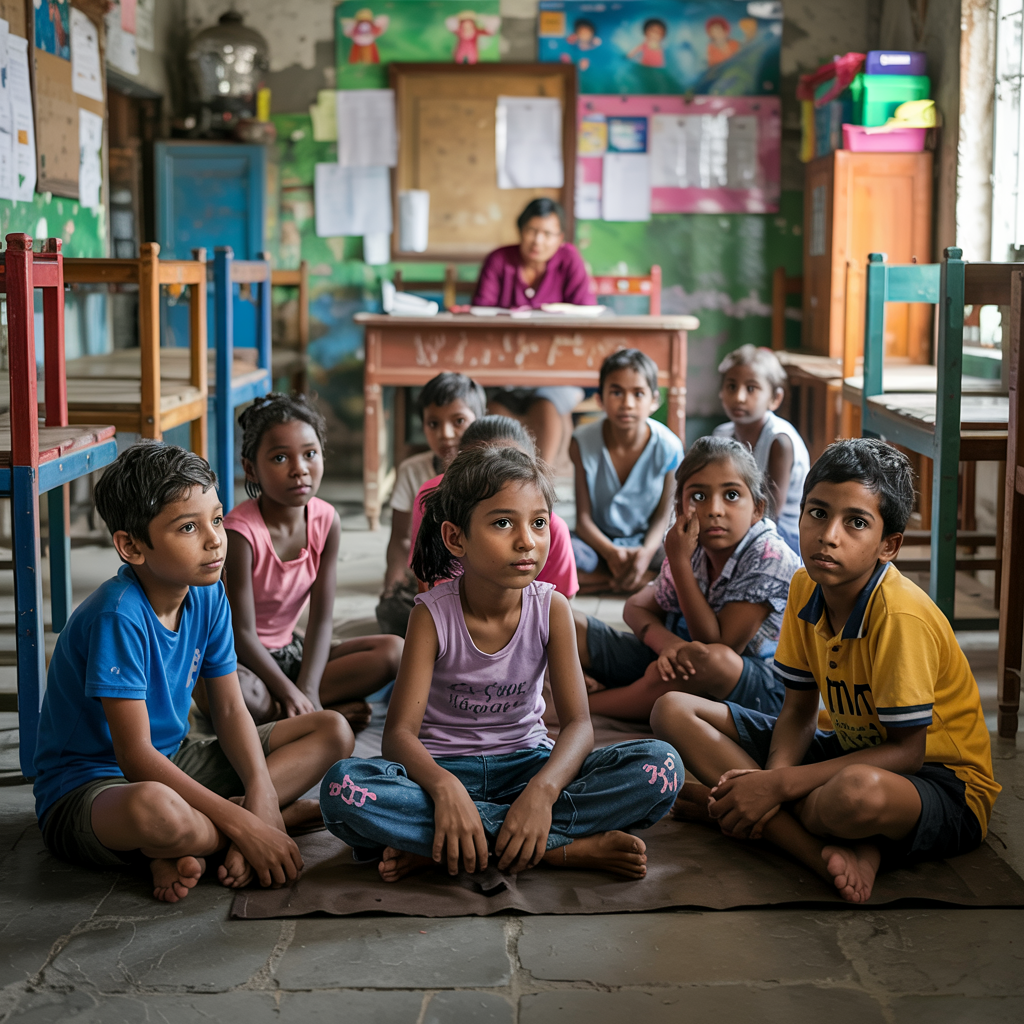
Every morning, we sit down together.
Not to be “taught” rules, but to co-create them.
We call it Rules of Play.
It’s not traditional circle time where the adult leads from the front and children follow.
It’s a moment where everyone checks in:
Did you sleep well?
Did you eat breakfast?
How will we play today?
What can we do if someone doesn’t want to share a toy?
What happens if someone knocks down something we spent so long building?
Sometimes Rafi’s Take a Breath plays softly in the background.
Sometimes we listen to Soop Doogg’s Affirmation Song.
We use a pretend microphone to practice not just speaking—but waiting to speak.
To hold the words sitting right at the tip of our tongues.
We use books like Isabella and Her 6-Inch Voice, What Else Can We Do When We Feel Like Hitting, and The Sound of Silence.
And we ask: “Do you agree with the character in this story?”
“What could we have done instead?”
“Would you like to suggest a different ending?”
This is not behaviour management.
This is political literacy.
This is co-regulation.
This is early citizenship.
And it’s not perfect. I’m not perfect.
There are days when I’ve reacted.
Days when my tone has echoed the control I was raised with.
But what keeps me going is this:
The children always remind me.
They hold me to the very agreements we made together.
And every time they do, I feel something loosen.
In me. In them. In this generational cycle we are all trying so hard to outgrow.
Because when children make the rules, they follow through.
Because when children are allowed to disagree, they learn to reflect.
Because when children challenge you, and you don’t flinch—you model something powerful:
That authority doesn’t have to fear dissent.
And when I hear a 3-year-old say to another:
“I didn’t like it when you took that. I’m still playing,”
Or when my daughter tells me gently, “That didn’t feel fair, Mama,”—
That’s when I know.
The seed has been planted.
Democracy doesn’t start with textbooks.
It starts with voice. With choice. With listening. With patience.
Pallavi is the Co-Founder & CEO at The Nurturant: Transforming early childhood education with holistic, research-driven approaches. She is also the Founder of Tinker Lab, leading a lab school revolution with child-led, inquiry-based learning






 )
)